
Spaced repetition is not limited to flashcards

Spaced repetition is a powerful learning technique often associated with flashcards, but its applications extend far beyond this familiar format. This method, rooted in cognitive science, leverages increasing intervals between review sessions to enhance long-term retention. While flashcards are a popular tool, spaced repetition can be integrated into diverse learning strategies—such as note-taking, digital apps, or even real-world practice. By systematically revisiting information at optimal intervals, learners can master complex subjects more efficiently. This article explores the versatility of spaced repetition, demonstrating how it can be adapted beyond flashcards to improve language acquisition, skill development, and knowledge retention in various contexts.
- Spaced Repetition Is Not Limited to Flashcards
- Are flashcards spaced repetition?
- How do you use spaced repetition without flashcards?
- How to do spaced repetition with paper flashcards?
-
Frequently Asked Questions (FAQ)
- What are some effective alternatives to flashcards for spaced repetition?
- How can spaced repetition be integrated into daily routines without flashcards?
- Why is spaced repetition more versatile than just using flashcards?
- Can spaced repetition improve long-term retention without digital tools or flashcards?
Spaced Repetition Is Not Limited to Flashcards
1. Spaced Repetition in Language Learning Beyond Flashcards
While flashcards are a popular tool for spaced repetition, language learners can also use techniques like listening exercises, reading passages, and conversation practice at timed intervals. For example, revisiting a difficult word in a book or recalling it during a conversation reinforces memory more naturally.
| Method | Application |
|---|---|
| Listening Exercises | Replay audio clips at increasing intervals |
| Reading Passages | Re-read challenging texts with spaced timing |
| Conversation Practice | Use target vocabulary in real dialogues |
2. Applying Spaced Repetition to Skill Acquisition
Spaced repetition isn’t just for memorization—it’s highly effective for skill-based learning, such as playing an instrument or coding. Practicing a specific technique with increasing time gaps between sessions helps solidify muscle memory and problem-solving abilities.
See AlsoBite-sized learning isn’t enough to learn Chinese| Skill | Spaced Repetition Strategy |
|---|---|
| Music | Revisit challenging scales/songs after breaks |
| Coding | Re-solve algorithms with delayed practice |
| Sports | Drill moves at spaced intervals |
3. Spaced Repetition in Professional Development
Professionals can leverage spaced repetition to master industry knowledge or soft skills. Instead of cramming, revisiting key concepts—like project management frameworks or negotiation tactics—over time ensures long-term retention.
| Area | Implementation |
|---|---|
| Certifications | Review materials periodically before exams |
| Presentations | Rehearse speeches with gaps between sessions |
| Leadership Training | Revisit case studies months later |
4. Digital Tools Expanding Beyond Traditional Flashcards
Modern apps like Anki or Quizlet now support multimedia-based spaced repetition, including videos, interactive quizzes, and audio clips. This broadens the scope beyond static flashcards.
| Tool | Feature |
|---|---|
| Anki | Embed videos/images in review sessions |
| Quizlet | Interactive games with spaced intervals |
| Memrise | Native speaker videos for language learning |
5. Spaced Repetition in Everyday Life
From remembering names to habit formation, spaced repetition can be applied daily. For instance, recalling a person’s name at increasing intervals or practicing a new habit (like meditation) with scheduled consistency enhances retention.
See AlsoHow Long Is Duolingo Chinese Course: Time to Complete| Use Case | How to Apply |
|---|---|
| Names/Faces | Recall after 1 hour, 1 day, then 1 week |
| Habit Building | Practice new routines with spaced triggers |
| Recipe Memorization | Cook dishes at timed intervals |
Are flashcards spaced repetition?
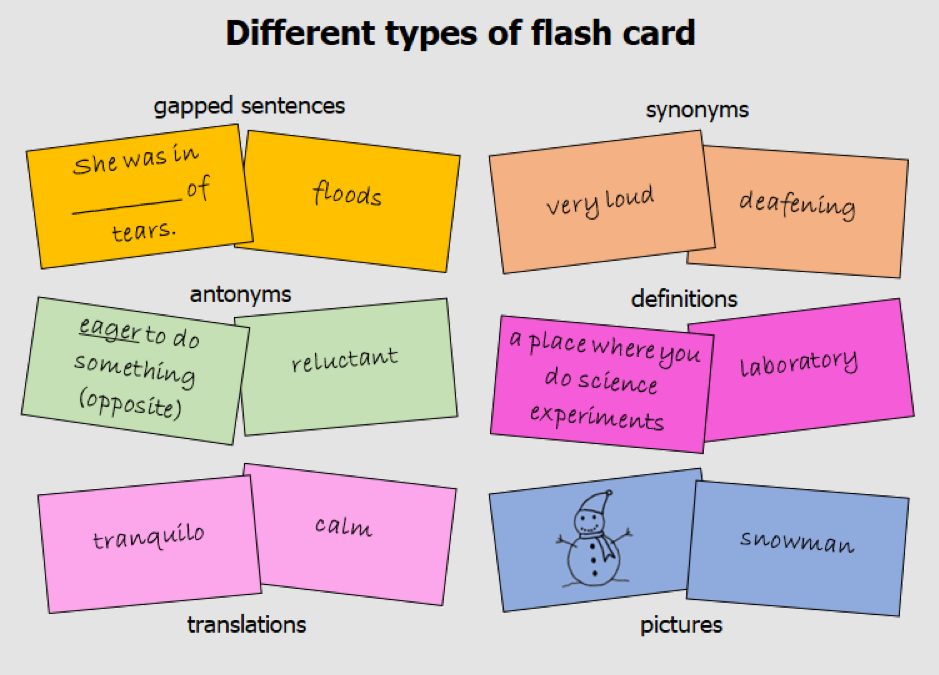
Are Flashcards a Form of Spaced Repetition?
Flashcards are a popular learning tool, but they are not inherently the same as spaced repetition. While flashcards can be used to implement spaced repetition techniques, they are simply a medium for presenting information. Spaced repetition is a learning method that schedules reviews of material at increasing intervals to improve long-term retention.
- Flashcards are versatile and can be used for rote memorization or active recall.
- Spaced repetition requires a systematic approach, often using algorithms to determine review timing.
- Combining flashcards with spaced repetition software (like Anki) maximizes learning efficiency.
How Do Flashcards Work with Spaced Repetition?
When flashcards are integrated into a spaced repetition system (SRS), they become a powerful tool for memory retention. The system schedules reviews based on how well you remember each card, optimizing the timing for maximum efficiency.
See AlsoTop 10 Most Followed Duolingo Account: Social Stars In 2025- New cards are introduced and reviewed frequently at first.
- Difficult cards appear more often, while easier cards are delayed.
- Algorithms adjust intervals dynamically based on your performance.
What Makes Spaced Repetition Different from Regular Flashcards?
Regular flashcards rely on manual review, while spaced repetition uses a structured, time-based approach. The key difference lies in the timing and optimization of reviews.
- Manual flashcard use may lead to over-studying or under-studying certain material.
- Spaced repetition ensures optimal review intervals to prevent forgetting.
- Efficiency is higher with SRS, as it targets your weakest areas.
Can You Use Flashcards Without Spaced Repetition?
Yes, flashcards can be used without spaced repetition, but their effectiveness may vary. Traditional flashcard methods rely on repetition without optimized timing.
- Cramming with flashcards can yield short-term results but poor long-term retention.
- Self-directed review lacks the precision of an SRS algorithm.
- Active recall is still beneficial, even without spaced intervals.
What Are the Best Tools for Spaced Repetition Flashcards?
Several digital tools combine flashcards with spaced repetition to enhance learning. These platforms automate the scheduling process for better results.
See AlsoWill Starbucks Survive Competition from Luckin Coffee?- Anki: A highly customizable SRS flashcard app.
- Quizlet: Offers spaced repetition features in its paid version.
- Memrise: Uses SRS for language learning with multimedia flashcards.
How do you use spaced repetition without flashcards?

Using Spaced Repetition with Note-Taking
Spaced repetition can be applied effectively through structured note-taking. Instead of flashcards, you can organize your notes in a way that prompts periodic review. Here’s how:
- Divide content into sections and assign review dates based on difficulty.
- Highlight key concepts and revisit them at increasing intervals (e.g., 1 day, 3 days, 1 week).
- Summarize notes in your own words during each review to reinforce memory.
Leveraging Digital Tools for Spaced Repetition
Several digital tools can replace flashcards while utilizing spaced repetition algorithms:
See AlsoKickstart your learning with the Skritter Character Course- Apps like Notion or Obsidian allow you to tag notes for scheduled reviews.
- Calendar reminders can be set to revisit topics at optimal intervals.
- Voice recordings of key points can be replayed at spaced intervals for auditory learners.
Applying Spaced Repetition in Active Recall
Active recall strengthens memory without flashcards by self-testing:
- Write questions in the margins of your notes and answer them later.
- Teach the material to someone else, forcing retrieval from memory.
- Use blank paper to jot down everything you remember about a topic, then check for gaps.
Incorporating Spaced Repetition into Daily Routines
Integrating spaced repetition into your daily habits ensures consistency:
- Morning reviews: Spend 10 minutes revisiting yesterday’s key learnings.
- Evening summaries: Briefly outline what you learned that day.
- Weekly reflections: Consolidate all material covered in the past week.
Using Physical Objects as Memory Triggers
Physical objects can serve as memory anchors for spaced repetition:
- Sticky notes placed in visible locations with key terms or formulas.
- Whiteboards to jot down and erase concepts after mastering them.
- Index cards (without traditional flashcards) arranged in stacks by priority.
How to do spaced repetition with paper flashcards?
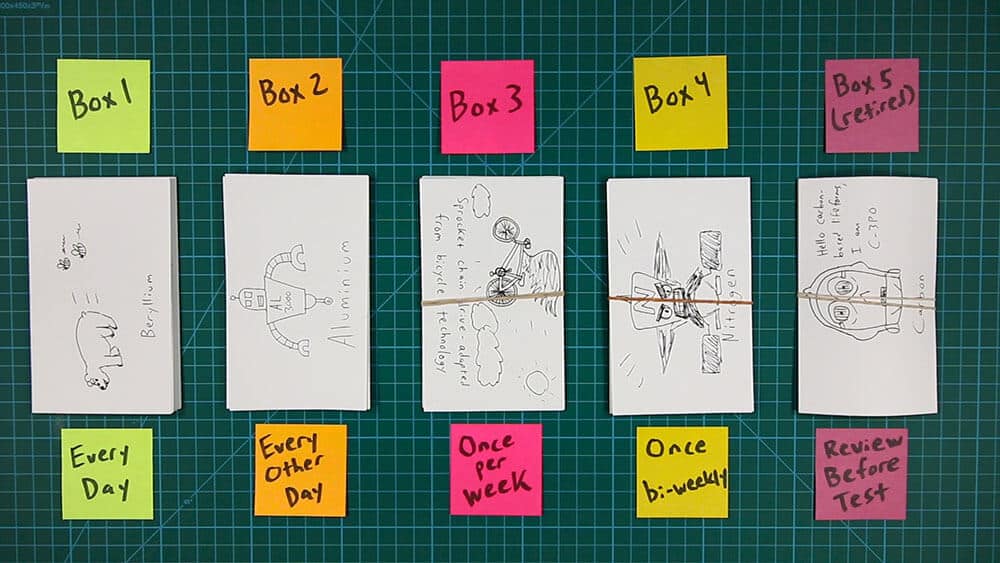
How to Create Effective Paper Flashcards for Spaced Repetition
To create effective paper flashcards, start by writing a clear question or term on one side and the answer or definition on the other. Use concise language to avoid confusion.
- Keep it simple: Focus on one concept per card to avoid cognitive overload.
- Use visuals: Add diagrams or symbols if they help reinforce memory.
- Organize by topic: Group related cards together for better context.
How to Organize Your Flashcards for Optimal Review
Organizing your flashcards systematically ensures efficient review. Separate them into different review piles based on familiarity.
- Label piles: Use categories like New, Learning, and Mastered.
- Rotate cards: Move cards between piles as you improve.
- Prioritize difficult cards: Spend more time on challenging concepts.
How to Schedule Spaced Repetition with Paper Flashcards
A spaced repetition schedule maximizes retention by increasing intervals between reviews.
- Start with short intervals: Review new cards daily.
- Gradually increase gaps: Extend to every few days, then weeks.
- Adjust based on performance: If you struggle, reduce the interval.
How to Track Progress with Paper Flashcards
Tracking progress helps refine your study strategy. Use a simple logging system to monitor retention.
- Mark difficult cards: Use symbols or colors to highlight trouble areas.
- Keep a review log: Note dates and performance for each session.
- Reassess periodically: Remove mastered cards to save time.
Common Mistakes to Avoid When Using Paper Flashcards
Avoiding common pitfalls ensures effective learning with flashcards.
- Overloading cards: Too much information reduces focus.
- Neglecting review: Skipping sessions weakens retention.
- Ignoring active recall: Merely reading cards is less effective than testing yourself.
Frequently Asked Questions (FAQ)
What are some effective alternatives to flashcards for spaced repetition?
Spaced repetition can be implemented in many ways beyond flashcards. Techniques like self-testing through written summaries, teaching concepts to others, or using digital apps with varied question formats (e.g., fill-in-the-blank or multiple-choice) can reinforce memory. Additionally, active recall methods such as creating mind maps or practicing problem-solving at intervals leverage the same principles without relying on traditional flashcards.
How can spaced repetition be integrated into daily routines without flashcards?
Incorporating spaced repetition into daily life can be seamless. For example, reviewing notes at increasing intervals (e.g., after 1 day, 3 days, then a week) or using voice memos to quiz yourself during commutes are effective. Another approach is scheduling mini-quizzes on topics you’re learning, or leveraging real-world applications, like practicing a language by conversing with native speakers at spaced intervals.
Why is spaced repetition more versatile than just using flashcards?
Spaced repetition is a learning principle, not a tool—it’s about timing and retrieval practice. While flashcards are popular, they’re just one method. The principle works equally well with varied stimuli, such as videos, podcasts, or hands-on activities, as long as the material is revisited at optimal intervals. This versatility makes it adaptable to different learning styles and subjects, from languages to complex skills like coding or music.
Can spaced repetition improve long-term retention without digital tools or flashcards?
Absolutely. Spaced repetition thrives on consistent review and active engagement, which don’t require technology. For instance, journaling key concepts and revisiting them weekly, or using a physical calendar to schedule review sessions, can be just as effective. Even discussion groups that revisit topics periodically harness the power of spacing without relying on flashcards or apps.
Leave a Reply
Related Posts