
Are mnemonics too slow for Chinese learners?

Learning Chinese characters is often seen as a daunting task, and mnemonics have long been recommended as a memory aid. By creating vivid associations, learners attempt to simplify the complex strokes and meanings of characters. However, some argue that mnemonics may slow down the learning process, requiring extra time to devise and recall stories for each character. While they can be helpful for beginners, advanced learners might find them inefficient as fluency demands quicker recognition. This article explores whether mnemonics are truly too slow for Chinese learners or if they remain a valuable tool in mastering the language’s intricate writing system.
Are Mnemonics Too Slow for Chinese Learners?
The Role of Mnemonics in Learning Chinese Characters
Mnemonics can be a powerful tool for Chinese learners, especially when tackling complex characters. By associating characters with vivid imagery or stories, learners can improve retention. However, some argue that creating and recalling mnemonics may slow down the learning process, particularly for those aiming for fluency in reading and writing.
| Advantages | Disadvantages |
|---|---|
| Enhances memory retention | Time-consuming to create |
| Makes abstract characters relatable | May delay natural character recognition |
Speed vs. Retention: The Mnemonic Trade-Off
While mnemonics improve long-term retention, they may not be the fastest method for immediate recall. Learners who prioritize speed—such as those preparing for exams—might find mnemonics less efficient than repetitive drilling. However, for those focused on deep learning, mnemonics provide a stronger foundation.
See AlsoPreparing for rainy days and dealing with slumps| Fast Methods | Mnemonics |
|---|---|
| Flashcards | Story-based associations |
| Repetition drills | Visual imagery |
Do Mnemonics Work for All Types of Learners?
Not all learners benefit equally from mnemonics. Visual learners tend to excel with this method, while auditory learners might prefer pinyin or spoken repetition. Additionally, advanced learners who have internalized character structures may find mnemonics unnecessary over time.
| Learner Type | Effectiveness of Mnemonics |
|---|---|
| Visual learners | High |
| Auditory learners | Moderate |
Are There Faster Alternatives to Mnemonics?
For learners seeking quicker results, methods like spaced repetition systems (SRS) or component analysis (breaking characters into radicals) may be more efficient. However, these methods may lack the depth of understanding that mnemonics provide.
| Method | Speed |
|---|---|
| Spaced Repetition (SRS) | Fast |
| Component Analysis | Moderate |
Balancing Mnemonics with Other Learning Strategies
A balanced approach may be optimal. Combining mnemonics with active recall and contextual learning (e.g., reading sentences) can mitigate the slowness issue while still leveraging mnemonic benefits.
See AlsoMeasuring your language learning is a double-edged sword| Strategy | Benefit |
|---|---|
| Mnemonics + Active Recall | Improved retention |
| Mnemonics + Contextual Learning | Faster application |
How can I memorize Chinese characters fast?
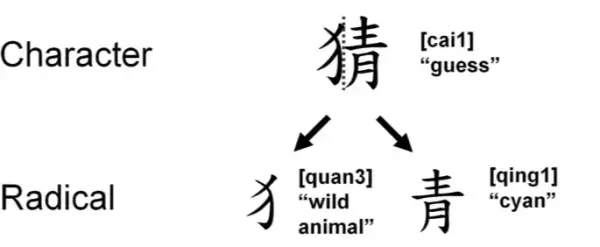
Use Mnemonics to Associate Characters with Stories
Mnemonics help by linking Chinese characters to vivid stories or images. Since many characters are pictographic or ideographic, creating mental associations makes them easier to recall. For example:
- Break down characters into radicals and components, then invent a story (e.g., 好 good = woman 女 + child 子 = a woman with a child is good).
- Use exaggerated imagery to make the connection memorable (e.g., 猫 cat = 犭(animal radical) + 苗 seedling = a cat playing with seedlings).
- Combine sound and meaning if the character has a phonetic component (e.g., 妈 mom sounds like ma).
Practice Writing Characters Repeatedly
Muscle memory reinforces retention. Writing characters by hand engages multiple senses, solidifying their structure. Follow these steps:
See AlsoEasy Chinese News Articles for Beginners- Trace characters first to understand stroke order and proportions.
- Write without looking at the original to test recall.
- Space out practice sessions (e.g., 10 minutes daily) to avoid burnout.
Leverage Spaced Repetition Systems (SRS)
SRS tools like Anki or Pleco optimize memorization by scheduling reviews at increasing intervals. Key tips:
- Create flashcards with characters on one side and meaning/pronunciation on the other.
- Prioritize high-frequency characters (e.g., HSK lists) for practical use.
- Adjust intervals based on difficulty—harder characters appear more often.
Learn Radicals and Components First
Radicals are building blocks of characters. Mastering them simplifies memorization:
- Study the 214 Kangxi radicals—many characters reuse them (e.g., 水 water appears in 河 river).
- Recognize patterns (e.g., characters with 扌often relate to hand actions).
- Group characters by shared radicals to learn multiple at once.
Immerse Yourself in Contextual Learning
Real-world exposure reinforces characters naturally. Methods include:
- Read graded readers or children’s books to see characters in sentences.
- Label objects at home with sticky notes (e.g., 门 door).
- Watch subtitled media to associate characters with spoken language.
What makes learning Chinese so difficult?

The Complexity of Chinese Characters
One of the biggest challenges in learning Chinese is mastering its logographic writing system. Unlike alphabetic languages, Chinese uses thousands of characters, each representing a word or a morpheme. Memorizing them requires significant time and effort.
- Stroke order: Each character must be written in a specific sequence, which affects readability and writing speed.
- Homophones: Many characters share the same pronunciation but have different meanings, adding confusion.
- Lack of phonetic clues: Unlike phonetic scripts, characters often don’t indicate pronunciation directly.
Tonal Nature of the Language
Chinese is a tonal language, meaning the pitch or intonation used when pronouncing a word can change its meaning entirely. Mandarin, for example, has four main tones and a neutral tone.
- Tone shifts: Mispronouncing a tone can lead to misunderstandings (e.g., mā (mother) vs. mà (scold)).
- Tone sandhi: Rules like the third-tone change add complexity to spoken fluency.
- Regional accents: Dialects like Cantonese have even more tones, making adaptation harder.
Grammar and Sentence Structure Differences
While Chinese grammar is often considered simpler than that of European languages, its lack of inflection and reliance on context can be confusing.
- No verb conjugations: Verbs don’t change based on tense or subject, requiring time words for clarity.
- Topic-comment structure: Sentences often prioritize context over strict subject-verb-object order.
- Measure words: Nouns require specific classifiers (e.g., 一本书 – one book uses 本).
Limited Exposure to Authentic Materials
Many learners struggle due to limited immersion in Chinese-speaking environments or authentic resources.
- Media barriers: Chinese films, books, and news often use advanced vocabulary or dialects.
- Cultural references: Idioms and historical allusions are common but hard to grasp without context.
- Regional variations: Differences between Mainland, Taiwanese, and overseas Chinese media can confuse learners.
Pronunciation and Phonetics Challenges
Chinese sounds don’t always align with those in other languages, making accurate pronunciation difficult.
- Unfamiliar sounds: Sounds like zh, x, or ü don’t exist in many languages.
- Pinyin system: While helpful, it can mislead learners accustomed to Roman letters.
- Liaisons and contractions: Rapid speech often blends syllables, reducing clarity for beginners.
What is the fastest way to learn Chinese spelling?
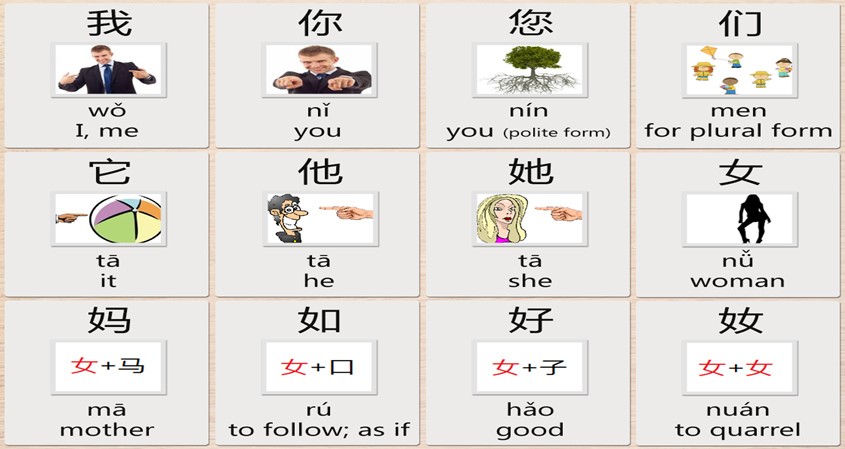
Understanding the Basics of Chinese Characters
To learn Chinese spelling quickly, start by mastering the fundamentals of Chinese characters. Each character represents a syllable and often a meaning, making them the building blocks of written Chinese. Focus on:
- Radicals: Learn common radicals (components of characters) to recognize patterns.
- Strokes: Practice stroke order to write characters correctly and efficiently.
- Pinyin: Use Pinyin (Romanization system) to associate sounds with characters.
Using Spaced Repetition Systems (SRS)
Spaced repetition is a powerful technique for memorizing Chinese characters. Tools like Anki or Pleco can help reinforce learning by scheduling reviews at optimal intervals. Key steps include:
- Create flashcards with characters on one side and meanings/pronunciations on the other.
- Review daily to strengthen long-term retention.
- Adjust difficulty based on how well you remember each character.
Practicing Writing Characters Regularly
Writing by hand reinforces memory and improves recall. Dedicate time daily to practice writing characters. Follow these steps:
- Use grid paper to maintain proper proportions.
- Copy characters from textbooks or apps to build muscle memory.
- Test yourself by writing characters from memory.
Engaging with Native Materials
Exposure to native content accelerates learning by providing context. Incorporate these methods:
- Read children’s books or graded readers to see characters in context.
- Watch Chinese media with subtitles to connect spoken and written language.
- Use language apps like Duolingo or HelloChinese for interactive practice.
Leveraging Mnemonics and Associations
Creating mnemonics helps link characters to their meanings or sounds. Effective strategies include:
- Visual associations: Relate characters to images or stories.
- Wordplay: Use puns or rhymes to remember pronunciations.
- Break down complex characters into simpler components with individual meanings.
What are the difficulties of learning Chinese?

The Complexity of Chinese Characters
Learning Chinese characters is one of the biggest challenges for learners. Unlike alphabetic languages, Chinese uses a logographic system, where each character represents a word or a morpheme. This requires memorizing thousands of unique characters, each with its own stroke order and meaning.
- Stroke order must be learned precisely to write characters correctly.
- Many characters look similar but have completely different meanings, leading to confusion.
- There is no phonetic consistency, making it hard to guess pronunciation from the character.
Tonal Nature of the Language
Chinese is a tonal language, meaning the pitch or intonation used when speaking a word can change its meaning entirely. Mandarin, for example, has four main tones and a neutral tone, which can be difficult for non-native speakers to master.
- Mispronouncing a tone can lead to miscommunication (e.g., mā (mother) vs. mà (scold)).
- Listening comprehension is challenging because tones must be distinguished quickly in speech.
- Some dialects, like Cantonese, have even more tones, adding to the difficulty.
Grammar Differences
While Chinese grammar is often considered simpler than that of many European languages, it still presents unique challenges due to its lack of inflection and reliance on word order and particles.
- There are no verb conjugations, but aspect markers (like 了 or 过) must be used correctly.
- Word order is strict, and mistakes can alter meaning (e.g., I eat rice vs. Rice eats me).
- Particles like 的, 得, and 地 have subtle but crucial differences in usage.
Lack of Cognates
Unlike learning Romance languages, where many words share Latin roots with English, Chinese has almost no cognates, making vocabulary acquisition more demanding.
- Every new word must be memorized from scratch, with no familiar roots to rely on.
- Compounding is common (e.g., computer is 电脑, literally electric brain), which can be unintuitive.
- Idioms and proverbs (成语) are deeply cultural and often opaque to learners.
Cultural Context and Nuances
Chinese language is deeply intertwined with its culture, and understanding cultural context is essential for fluency. This adds another layer of difficulty for learners.
- Politeness levels and honorifics are different from Western languages.
- Many expressions rely on historical or literary references unfamiliar to outsiders.
- Regional dialects and slang vary widely, making immersion challenging.
Frequently Asked Questions (FAQ)
Are mnemonics really too slow for learning Chinese characters?
Mnemonics may initially seem slower because they require creating and recalling vivid associations for each character. However, this method accelerates long-term retention by linking abstract symbols to memorable stories or images. While rote repetition might feel faster in the short term, mnemonics reduce the need for constant review, making them more efficient over time, especially for complex characters like those in Chinese.
Do mnemonics work for all types of Chinese learners?
Mnemonics are highly adaptable and can benefit most learners, but their effectiveness depends on individual learning styles. Visual learners often thrive with mnemonic techniques, while others might prefer supplementary methods like spaced repetition. For beginners, mnemonics provide a strong foundation, but advanced learners may combine them with contextual reading and writing practice for deeper mastery.
How do mnemonics compare to traditional repetition for Chinese character learning?
Traditional repetition relies on brute-force memorization, which can lead to quick but fragile recall. In contrast, mnemonics create meaningful connections, making characters easier to retrieve even after long periods. While repetition may seem faster initially, mnemonics offer superior retention and reduce the frustration of forgetting characters repeatedly, ultimately saving time.
Can mnemonics slow down reading fluency in Chinese?
At first, relying on mnemonic stories might add a mental step between seeing a character and understanding it. However, with consistent practice, these associations become automatic, leading to faster recognition. Mnemonics are a stepping stone—once characters are internalized, learners transition to direct comprehension, achieving fluency without sacrificing the benefits of deeper memorization.
Leave a Reply
Related Posts