
Learn to read Chinese… with ease?

Learning to read Chinese often seems like a daunting task, with its intricate characters and tonal pronunciation. However, mastering this ancient script is more achievable than many think. By breaking down the process into manageable steps—understanding radicals, recognizing patterns, and practicing consistently—anyone can build confidence in reading Chinese. Modern tools, such as apps and mnemonics, further simplify the journey, turning what appears complex into an engaging and rewarding experience. Whether for travel, business, or personal growth, unlocking the ability to read Chinese opens doors to a rich cultural and linguistic world. Discover how to approach this challenge with ease and enjoyment.
Learn to Read Chinese… with Ease: A Practical Guide
1. Understanding Chinese Characters: The Basics
Chinese characters, or Hanzi, are the building blocks of written Chinese. Unlike alphabetic systems, each character represents a syllable and often a distinct meaning. There are two main types: simplified (used in mainland China) and traditional (used in Taiwan and Hong Kong). Start by learning common radicals (components of characters) to recognize patterns.
| Key Concept | Description |
|---|---|
| Radicals | 214 foundational components aiding memorization. |
| Strokes | Basic brush/pen movements to write characters. |
2. Pinyin: Your Pronunciation Lifeline
Pinyin is the Romanization system for Mandarin, using the Latin alphabet to spell out sounds. Mastering it helps you pronounce characters correctly and use digital tools like dictionaries. Focus on tones (4 main ones + neutral), as they change meanings (e.g., mā (mother) vs. mà (scold)).
See AlsoNot for All the Tea in China… 10 Surprising Facts About Chinese Tea!| Element | Role |
|---|---|
| Tones | Mandatory for accurate speech. |
| Initials/Finals | Consonant-vowel sound pairs. |
3. Building Vocabulary Strategically
Prioritize high-frequency characters (e.g., 的, 是, 我) and words relevant to daily life. Use spaced repetition apps (like Anki) to reinforce memory. Group characters by themes (food, travel) or radicals to accelerate learning.
| Method | Benefit |
|---|---|
| Spaced Repetition | Boosts long-term retention. |
| Contextual Learning | Links characters to real-world usage. |
4. Reading Practice: Start Simple
Begin with graded readers or children’s books, then progress to news/articles. Use pop-up dictionaries (Pleco) to look up unknown words. Re-read texts to reinforce comprehension.
| Resource | Use Case |
|---|---|
| Graded Readers | Level-appropriate stories. |
| DuChinese | Interactive reading app. |
5. Overcoming Common Challenges
Many learners struggle with character overload or confusing homophones. Combat this by:
- Breaking characters into radicals + components.
- Listening while reading to connect sound + meaning.
| Challenge | Solution |
|---|---|
| Homophones | Learn words in context. |
| Memory Fatigue | Study in short, frequent sessions. |
What is the easiest way to learn Chinese language?
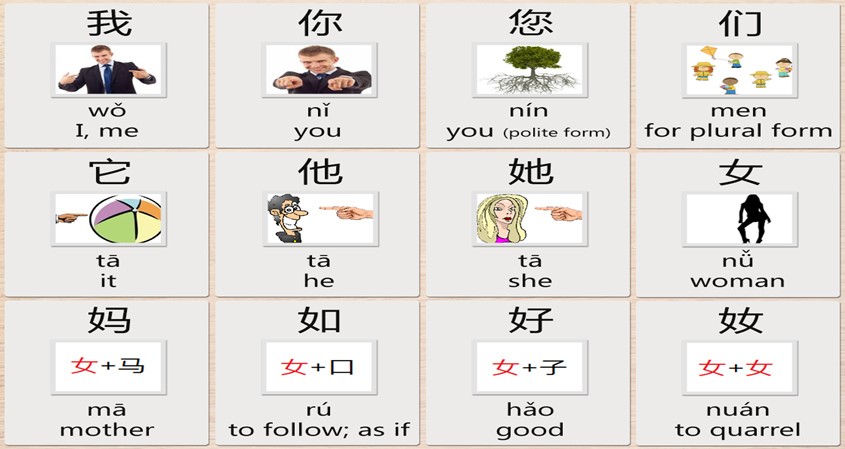
Start with Basic Vocabulary and Common Phrases
Learning basic vocabulary and common phrases is the foundation of mastering Chinese. Focus on words and expressions used in daily conversations to build confidence early.
- Memorize greetings like 你好 (nǐ hǎo) for hello and 谢谢 (xiè xie) for thank you.
- Learn numbers, days, and time-related terms to handle simple interactions.
- Practice survival phrases such as 多少钱? (duō shǎo qián?) meaning How much?
Use Pinyin for Pronunciation
Pinyin is the Romanization system for Chinese characters, making pronunciation easier for beginners.
See AlsoHow To Use Rhetorical Language Structures In Chinese- Study the four tones (flat, rising, falling-rising, falling) to avoid misunderstandings.
- Practice with audio resources or apps to refine your accent.
- Focus on common syllables like ma, which can mean different things based on tone.
Incorporate Flashcards and Spaced Repetition
Flashcards and spaced repetition tools like Anki help reinforce memory efficiently.
- Create cards for characters, pinyin, and meanings.
- Review cards daily to strengthen retention.
- Prioritize high-frequency words to maximize learning speed.
Engage with Native Speakers
Practicing with native speakers accelerates fluency and cultural understanding.
- Use language exchange platforms like Tandem or HelloTalk.
- Join Chinese-speaking communities online or locally.
- Ask for feedback on pronunciation and grammar.
Consume Chinese Media
Immersing yourself in Chinese media enhances listening and comprehension skills.
See AlsoThree steps to more and better Chinese listening practice- Watch Chinese dramas or movies with subtitles.
- Listen to Mandarin podcasts or music.
- Read simplified articles or children’s books.
How long does it take to learn how to read in Chinese?

Factors Affecting the Time to Learn Chinese Reading
The time it takes to learn how to read in Chinese depends on several variables, including prior language experience, study intensity, and the complexity of characters. Below are key factors:
- Prior exposure to logographic languages (e.g., Japanese kanji) may shorten learning time.
- Study consistency: Daily practice accelerates recognition of Hanzi (Chinese characters).
- Character complexity: Mastering basic 500-1,000 characters takes 6-12 months, while fluency (3,000+ characters) may require years.
Basic Literacy: Recognizing Common Characters
Achieving basic literacy in Chinese involves learning the most frequently used characters. Here’s what to expect:
See AlsoThe three factors that determine how much Chinese you learn- 300-500 characters enable reading ~60% of everyday texts (e.g., signs, menus).
- 1,000 characters cover ~90% of basic written communication.
- This stage typically takes 6-18 months with structured study.
Intermediate Proficiency: Reading Newspapers
To read Chinese newspapers or simple literature, learners must expand their character knowledge:
- 2,000-2,500 characters are needed for ~98% comprehension of general texts.
- Requires 2-3 years of dedicated study, including context and grammar.
- Supplementing with pleasure reading (graded readers) boosts retention.
Advanced Fluency: Literary and Technical Texts
Mastering advanced Chinese reading involves specialized vocabulary and rare characters:
- 3,000-5,000 characters are required for novels, academic papers, or technical content.
- May take 4+ years, depending on immersion and exposure to diverse materials.
- Radical and phonetic components become critical for deciphering unfamiliar characters.
Accelerating Learning with Effective Strategies
Optimizing study methods can reduce the time needed to read Chinese:
- Spaced repetition systems (SRS) like Anki enhance character retention.
- Contextual learning (e.g., reading articles) reinforces character usage.
- Writing practice improves stroke-order recall and character differentiation.
Is it better to learn Chinese or Mandarin?

What is the Difference Between Chinese and Mandarin?
Mandarin is a specific dialect of Chinese, while Chinese refers to the broader language family that includes multiple dialects. Mandarin is the most widely spoken and is the official language of China and Taiwan. Here are key distinctions:
- Mandarin is standardized, while Chinese encompasses dialects like Cantonese, Shanghainese, and Hokkien.
- Mandarin uses simplified characters in mainland China and traditional in Taiwan, whereas other dialects may use different writing systems.
- Learning Mandarin provides broader utility due to its official status and global recognition.
Why Should You Learn Mandarin Over Other Chinese Dialects?
Mandarin is the most practical choice for learners due to its widespread use and official status. Here’s why:
- Mandarin is spoken by over 1 billion people worldwide, making it the most useful for communication.
- It’s the language of business, education, and government in China and Taiwan.
- Most learning resources and courses focus on Mandarin, making it easier to study.
Are There Advantages to Learning Other Chinese Dialects?
While Mandarin is dominant, other Chinese dialects have unique benefits:
- Cantonese is useful in Hong Kong, Macau, and overseas Chinese communities.
- Some dialects preserve ancient linguistic features, appealing to cultural or historical enthusiasts.
- Learning a regional dialect can deepen connections with specific communities or family heritage.
Which Chinese Dialect is Easier to Learn?
Mandarin is generally considered the easiest Chinese dialect for beginners due to:
- Simplified grammar compared to dialects like Cantonese, which has more tones.
- Abundant learning materials, apps, and courses tailored for Mandarin learners.
- Standardized pronunciation, whereas other dialects may have varying regional accents.
How Does the Writing System Differ Between Mandarin and Other Chinese Dialects?
The writing system in Chinese is shared across dialects, but nuances exist:
- Mandarin primarily uses simplified characters in mainland China and traditional in Taiwan.
- Some dialects, like Cantonese, occasionally use unique characters or colloquial written forms.
- All dialects rely on Hanzi (Chinese characters), but pronunciation differs significantly.
Frequently Asked Questions (FAQ)
What is the best way to start learning to read Chinese characters?
Starting to read Chinese characters can seem daunting, but breaking it down into manageable steps is key. Begin by learning basic radicals, which are the building blocks of Chinese characters. Familiarize yourself with Pinyin, the romanization system, to understand pronunciation. Use flashcards or apps like Anki or Pleco to practice recognizing characters daily. Consistency and repetition are essential for building a strong foundation.
How long does it take to become proficient in reading Chinese?
The time it takes to become proficient in reading Chinese varies depending on your dedication and learning methods. For an English speaker, achieving basic literacy (around 1,000 characters) may take 6–12 months of consistent study. Advanced proficiency (3,000+ characters) can take several years. Immersing yourself in authentic materials, like books or news articles, accelerates progress by reinforcing recognition and comprehension.
Are there any shortcuts or mnemonics to remember Chinese characters?
Yes, using mnemonics and storytelling techniques can make memorizing characters easier. Many learners associate characters with images or stories that relate to their meaning or components. For example, the character 休 (xiū, meaning rest) combines 人 (person) and 木 (tree), picturing someone resting under a tree. Apps like Skritter or books like Remembering the Hanzi leverage these techniques to enhance retention.
What resources are recommended for learning to read Chinese effectively?
Several high-quality resources can aid your journey. Textbooks like Integrated Chinese provide structured lessons, while online platforms like Duolingo or HelloChinese offer interactive practice. For character recognition, tools like Pleco (a dictionary app) and Zhongwen (a browser extension) are invaluable. Supplement your learning with graded readers or children’s books to build confidence in reading progressively complex texts.
Leave a Reply
Related Posts