
How Do You Speak Chinese - 8 Easy Starting Points

Learning Chinese may seem daunting, but breaking it down into manageable steps can make the process much easier. Whether you're a complete beginner or looking to refine your skills, starting with the right foundations is key. This article explores eight simple yet effective ways to begin speaking Chinese, from mastering basic greetings to understanding tones and essential phrases. By focusing on practical, everyday language and consistent practice, you’ll build confidence and fluency over time. Discover how to navigate pronunciation, common expressions, and cultural nuances to kickstart your Chinese language journey. Let’s dive into these easy starting points to help you speak Chinese with ease.
How Do You Speak Chinese - 8 Easy Starting Points
Detailed Explanation:
Learning Chinese can seem daunting, but breaking it down into manageable steps makes it achievable. Here are 8 easy starting points to help you begin your journey in speaking Chinese effectively.
---
See AlsoLearn Chinese by playing Mahjong (麻将, májiàng)1. Master Basic Chinese Greetings
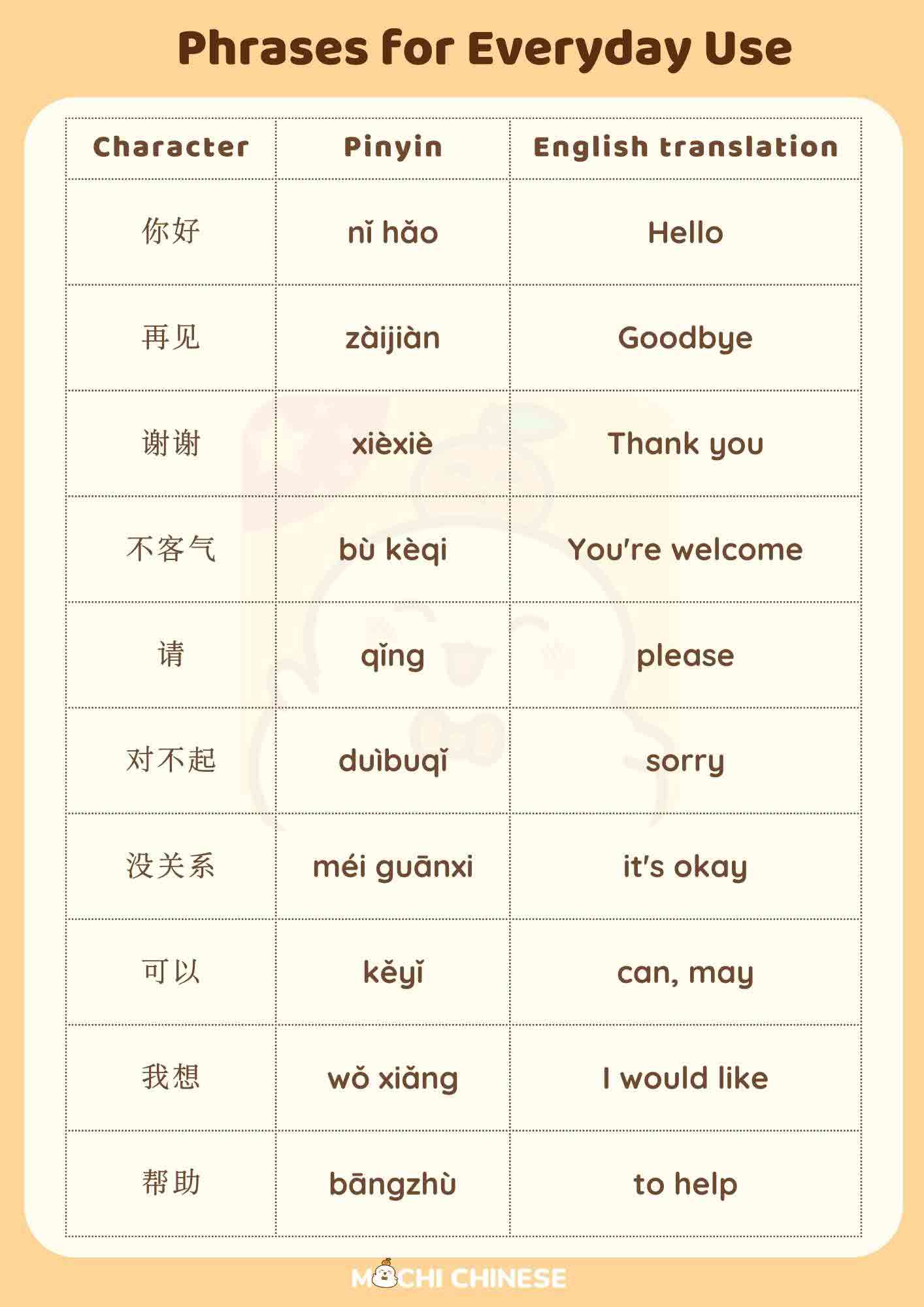
Start with essential greetings like 你好 (nǐ hǎo) for Hello and 谢谢 (xiè xiè) for Thank you. These phrases are the foundation of daily conversations.
| Phrase | Pinyin | Meaning |
|---|---|---|
| 你好 | nǐ hǎo | Hello |
| 谢谢 | xiè xiè | Thank you |
---
2. Learn Pinyin for Pronunciation
Pinyin is the Romanization system for Chinese characters, helping learners pronounce words correctly. Focus on tones, as they change meanings (e.g., mā (mom) vs. mà (scold)).
See AlsoEffective Language Learning: Building a Chinese Lesson Plan for Beginners| Tone | Example | Meaning |
|---|---|---|
| First Tone (¯) | mā | Mom |
| Fourth Tone (ˋ) | mà | Scold |
---
3. Build a Core Vocabulary
Focus on high-frequency words like numbers (一 yī = one), pronouns (我 wǒ = I), and common verbs (吃 chī = eat). This accelerates practical communication.
| Word | Pinyin | Meaning |
|---|---|---|
| 一 | yī | One |
| 我 | wǒ | I/Me |
---
See AlsoWhy good feedback matters and how to get it4. Practice Simple Sentences
Combine words into basic sentences, e.g., 我想喝水 (wǒ xiǎng hē shuǐ) = I want to drink water. This reinforces grammar patterns.
| Sentence | Pinyin | Meaning |
|---|---|---|
| 我想喝水 | wǒ xiǎng hē shuǐ | I want to drink water |
---
5. Use Language Apps and Tools
Leverage apps like Duolingo, HelloChinese, or Pleco for interactive learning. These tools offer vocabulary drills, listening exercises, and tone practice.
See AlsoEnjoying the journey while focusing on the destination| Tool | Focus Area |
|---|---|
| Duolingo | Vocabulary & Sentences |
| Pleco | Dictionary & Flashcards |
How do I start learning Chinese speaking?
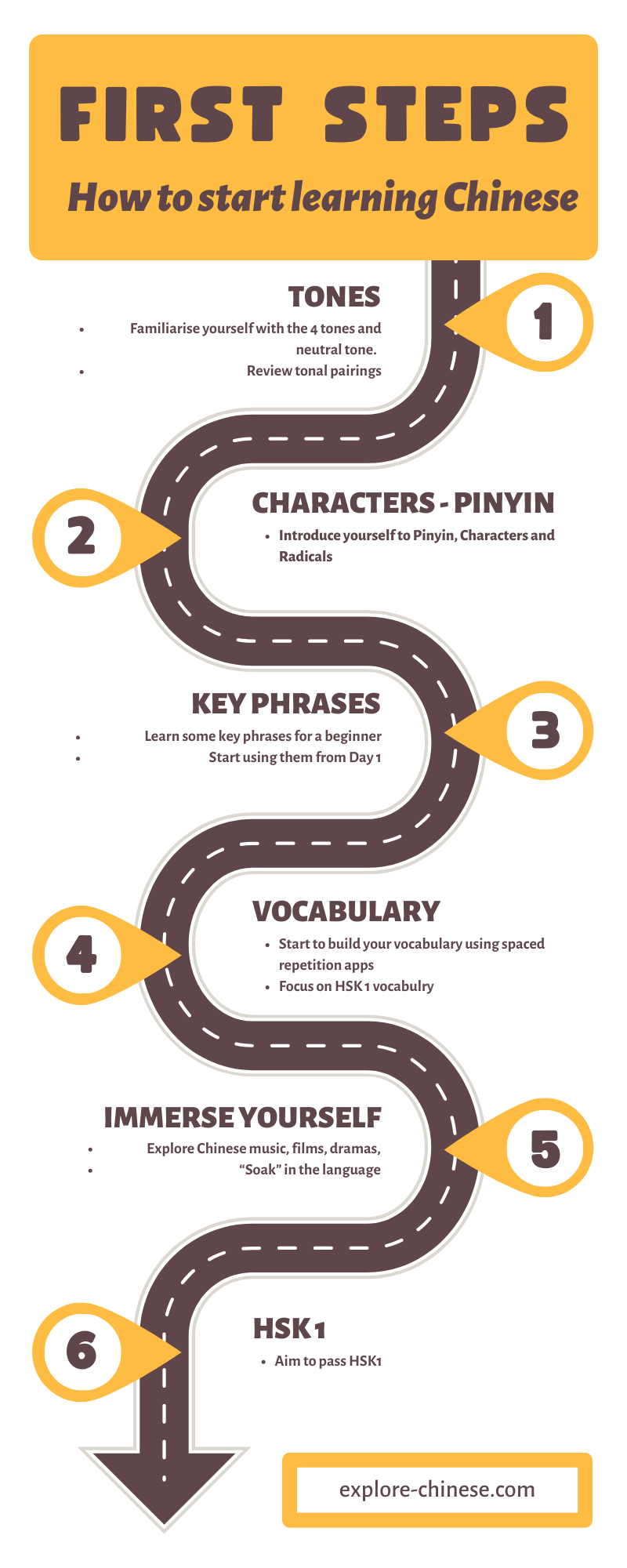
1. Understand the Basics of Chinese Pronunciation
To start learning Chinese speaking, you must first grasp the fundamentals of pronunciation. Chinese is a tonal language, meaning the tone of a word can change its meaning. Focus on the following:
- Pinyin: Learn the Romanization system for Chinese characters to understand pronunciation.
- Tones: Master the four main tones (flat, rising, falling-rising, falling) and the neutral tone.
- Initials and Finals: Study the consonant-vowel combinations that form syllables in Chinese.
2. Build a Strong Vocabulary Foundation
Expanding your vocabulary is essential for speaking Chinese fluently. Start with common words and phrases:
- Greetings: Learn basic phrases like 你好 (nǐ hǎo) for hello.
- Daily Use Words: Focus on numbers, days of the week, and common verbs.
- Contextual Phrases: Practice sentences you’ll use often, such as ordering food or asking for directions.
3. Practice Listening and Speaking Regularly
Consistent practice is key to improving your spoken Chinese. Use these methods:
- Listen to Native Speakers: Watch Chinese movies, TV shows, or podcasts to familiarize yourself with natural speech.
- Repeat and Mimic: Shadow native speakers by repeating their words and sentences aloud.
- Language Exchange: Partner with a native Chinese speaker for mutual practice.
4. Use Language Learning Apps and Resources
Leverage technology to enhance your learning process:
- Apps: Use platforms like Duolingo, HelloChinese, or Anki for structured lessons.
- Online Courses: Enroll in courses on Coursera or Udemy for guided learning.
- Flashcards: Create flashcards for vocabulary and sentence patterns.
5. Immerse Yourself in the Language
Immersion accelerates your ability to speak Chinese naturally:
- Travel or Study Abroad: If possible, spend time in a Chinese-speaking environment.
- Join Communities: Participate in local or online Chinese language groups.
- Think in Chinese: Challenge yourself to form thoughts and sentences in Chinese daily.
How do you start a Chinese speech?

Traditional Chinese Speech Opening Phrases
Starting a Chinese speech often involves using traditional phrases to show respect and set the tone. Here are some common ways to begin:
- 尊敬的各位领导、老师、同学们 (Respected leaders, teachers, and classmates) – Formal and respectful.
- 大家好 (Hello, everyone) – Simple and friendly.
- 今天我很荣幸站在这里 (Today, I am honored to stand here) – Expresses humility.
Cultural Considerations in Chinese Speeches
Understanding cultural norms is crucial when starting a Chinese speech. Key points include:
- Respect for hierarchy – Acknowledge senior members first.
- Modesty – Avoid sounding overly confident.
- Polite greetings – Use formal titles when addressing the audience.
Structuring the Introduction of a Chinese Speech
A well-structured opening ensures clarity and engagement. Follow these steps:
- Greet the audience – Use appropriate salutations.
- State the purpose – Clearly explain why you’re speaking.
- Provide context – Briefly introduce the topic.
Using Proverbs or Quotes in Chinese Speeches
Incorporating Chinese proverbs or quotes can add depth. Examples include:
- 千里之行,始于足下 (A journey of a thousand miles begins with a single step) – Motivational.
- 有志者事竟成 (Where there’s a will, there’s a way) – Inspirational.
- 学而时习之,不亦说乎 (Is it not a pleasure to learn and practice?) – Educational.
Engaging the Audience from the Start
To capture attention, use these engagement techniques:
- Ask a rhetorical question – Encourages reflection.
- Share a personal story – Builds connection.
- Use humor (if appropriate) – Lightens the mood.
What is the easiest word to say in Chinese?
What Makes a Chinese Word Easy to Pronounce?
The easiest Chinese words to pronounce typically have simple syllables, clear tones, and familiar sounds for English speakers. Key factors include:
- Single-syllable words: Shorter words like ma (妈/马) are easier to articulate.
- Neutral or first tone: High, flat tones (e.g., mā) require less pitch variation.
- Common consonants/vowels: Sounds like m, a, or sh exist in English.
Top 5 Easiest Chinese Words for Beginners
Here are the most beginner-friendly Chinese words, based on simplicity:
- 好 (hǎo): Means good and uses the third tone (falling-rising).
- 是 (shì): Means to be with a neutral, crisp pronunciation.
- 我 (wǒ): Means I/me and mimics the English woe.
- 你 (nǐ): Means you and sounds like knee with a third tone.
- 一 (yī): Means one and has a steady high first tone.
Why Is Ma Considered the Easiest Chinese Word?
Ma (吗/妈/马) is often the first word learners master because:
- No complex sounds: Just m + a, identical to English mama.
- Versatile meanings: It can mean mother (妈), horse (马), or a question marker (吗).
- Tone practice: Demonstrates how tones change meaning (e.g., mā vs. mà).
How Do Tones Affect Ease of Pronunciation?
Chinese tones can make words harder, but some are simpler:
- First tone (flat): Like mā (妈), sustained high pitch.
- Neutral tone: Lightweight, e.g., ma (吗) in questions.
- Avoiding complex tones: Third (nǐ) and fourth (bù) tones require more effort.
Tips to Practice Pronouncing Easy Chinese Words
To master simple words quickly:
- Start with pinyin: Learn the romanization (e.g., xiè for 谢).
- Use tone marks: Visual aids (ā, á, ǎ, à) help memorize pitch.
- Repeat aloud: Drill words like hello (nǐ hǎo) daily.
Frequently Asked Questions (FAQ)
What are the easiest ways to start learning Chinese?
Starting to learn Chinese can feel overwhelming, but breaking it down into manageable steps makes it easier. Begin with Pinyin, the Romanized system for Mandarin pronunciation, as it helps you read and speak without mastering characters first. Listening to native speakers through podcasts or videos improves your ear for tones and natural speech. Additionally, learning basic greetings and phrases builds confidence for early conversations. Consistency is key—practicing daily, even for short periods, accelerates progress.
How important are tones in speaking Chinese?
Tones are crucial in Mandarin Chinese because they change the meaning of words entirely. Mandarin has four main tones and a neutral tone, and mispronouncing them can lead to misunderstandings. For example, mā (mother) and mà (scold) sound similar but differ only in tone. Practicing with audio resources or language apps helps train your ear and mouth to distinguish and reproduce these tones accurately. Don’t worry about perfection at first—focus on gradual improvement.
Can I learn Chinese without studying characters?
While it’s possible to learn spoken Chinese without characters initially, relying solely on Pinyin limits long-term fluency. Characters are essential for reading, writing, and deeper cultural understanding. However, beginners can prioritize speaking and listening first, then gradually introduce basic characters like 你好 (nǐ hǎo - hello). Tools like flashcards or apps such as Pleco make character learning more approachable. Balancing both spoken and written skills is ideal for comprehensive mastery.
What resources are best for practicing Chinese pronunciation?
Pronunciation practice is vital for speaking Chinese clearly. Use language apps like Duolingo or HelloChinese, which offer interactive tone drills. Watching Chinese TV shows or YouTube channels exposes you to natural speech patterns. For personalized feedback, consider online tutors on platforms like iTalki or join language exchange communities. Repeating phrases aloud and recording yourself helps identify areas for improvement. Remember, consistent practice and patience are the foundations of accurate pronunciation.
Leave a Reply
Related Posts