
How long do you have to study Chinese to make it useful?

Learning Chinese is a rewarding yet challenging endeavor, and many learners wonder how long it takes to reach a useful level of proficiency. The answer depends on factors like study intensity, prior language experience, and learning methods. While basic conversational skills can be acquired in a few months of dedicated study, achieving fluency for professional or academic purposes may take years. Consistency, immersion, and practical application play crucial roles in accelerating progress. Whether for travel, business, or personal growth, understanding the time investment required helps set realistic expectations. This article explores the milestones and strategies to make your Chinese studies effective and meaningful in the shortest time possible.
How Long Do You Need to Study Chinese to Make It Useful?
The time required to make Chinese useful depends on various factors, including your learning goals, study intensity, and prior language experience. Generally, achieving basic conversational fluency may take 6–12 months with consistent study, while advanced proficiency could require 3–5 years or more. Below, we break down key aspects influencing this timeline.
1. What Defines Useful Chinese Proficiency?
Useful Chinese varies based on your objectives:
- Travel & daily interactions: ~300-500 words (3-6 months).
- Workplace communication: ~1,500-2,000 words (1-2 years).
- Academic/business fluency: 3,000+ words (3+ years).
| Proficiency Level | Vocabulary Size | Estimated Time |
|---|---|---|
| Basic Survival | 300-500 words | 3-6 months |
| Conversational | 1,000-1,500 words | 1 year |
| Advanced | 3,000+ words | 3+ years |
2. How Does Study Intensity Affect Progress?
Consistency and hours invested drastically impact results:
- Casual learners (5 hrs/week): ~2 years for conversational skills.
- Dedicated learners (15–20 hrs/week): ~6–12 months for basics.
- Immersion programs: Faster progress (e.g., 3–6 months for daily use).
3. Does Your Native Language Influence Learning Speed?
Yes. Speakers of tonal languages (e.g., Vietnamese) or character-based languages (e.g., Japanese) may adapt quicker. English speakers often struggle with tones and characters, adding 20–30% more time.
4. What Role Do Learning Methods Play?
Effective strategies accelerate proficiency:
- Tutors/classes: Structured learning (~30% faster).
- Apps (Duolingo, HelloChinese): Supplemental practice.
- Immersion (TV, conversations): Enhances retention.
5. Can You Measure Progress with HSK Levels?
The HSK exam (6 levels) benchmarks proficiency:
- HSK 1-2: Basic phrases (6–12 months).
- HSK 3-4: Intermediate communication (1.5–3 years).
- HSK 5-6: Advanced fluency (3–5+ years).
| HSK Level | Vocabulary | Use Case |
|---|---|---|
| HSK 1-2 | 150-300 words | Simple interactions |
| HSK 3-4 | 600-1,200 words | Work/social conversations |
| HSK 5-6 | 2,500+ words | Professional/academic |
How long do I need to study Chinese?
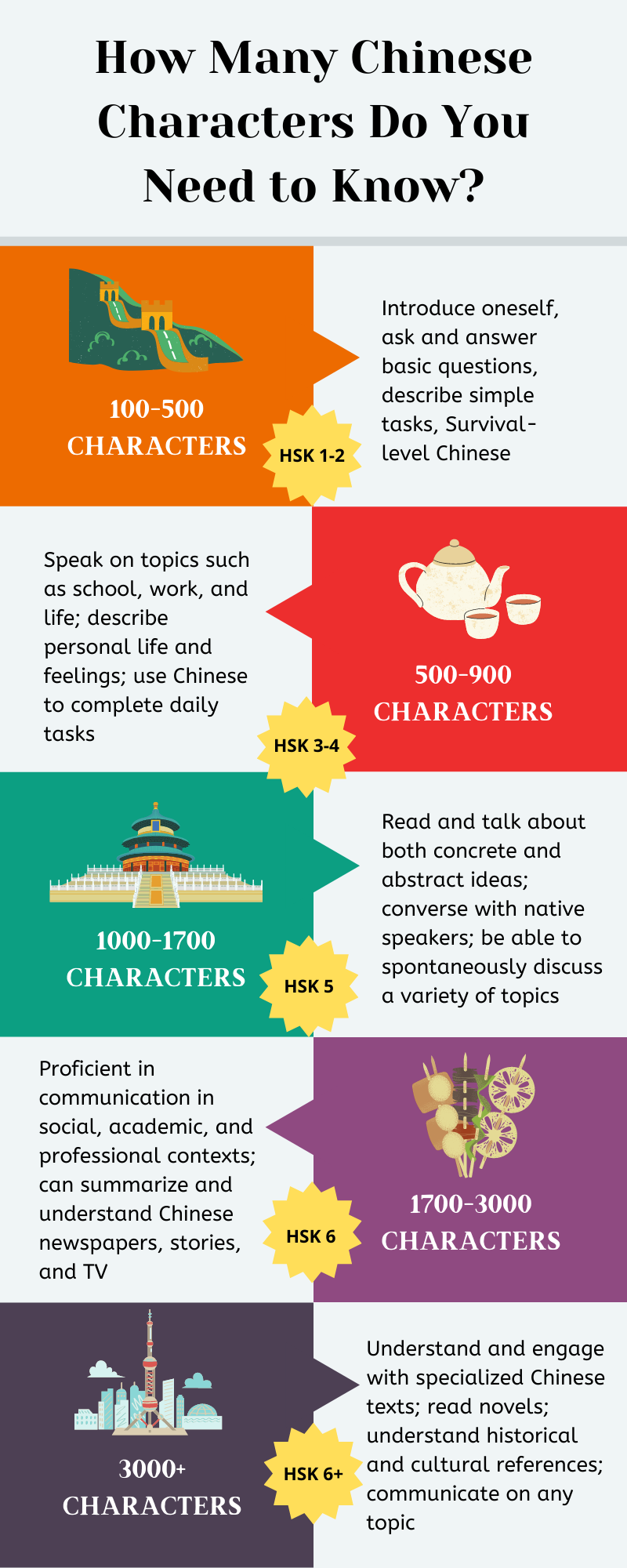
Factors Affecting the Time Required to Learn Chinese
The time needed to study Chinese depends on several key factors:
See AlsoAsking the experts: How to learn Chinese grammar- Prior language experience: Familiarity with tonal languages or characters (e.g., Japanese kanji) accelerates learning.
- Study intensity: Daily practice yields faster progress than sporadic sessions.
- Learning goals: Basic conversational fluency requires less time than mastering business-level Mandarin.
Estimated Timeframes for Different Proficiency Levels
Here are general benchmarks based on the HSK (Chinese Proficiency Test):
- HSK 1-2 (Basic): 3-6 months with consistent study (15-20 hours/week).
- HSK 3-4 (Intermediate): 1-2 years, focusing on complex sentences and vocabulary.
- HSK 5-6 (Advanced): 3-5 years, including specialized terminology and cultural nuances.
Effective Study Methods to Reduce Learning Time
Optimize your progress with these strategies:
- Immersion: Watch Chinese media, use language apps, and practice with native speakers.
- Spaced repetition: Tools like Anki reinforce character retention.
- Structured courses: Formal classes provide systematic grammar and pronunciation training.
Common Challenges That Prolong Learning
Be aware of these obstacles:
See AlsoHow to Learn Chinese in 6 Months - an Easy Guide- Tones: Mispronunciations can change meanings (e.g., mā vs. mà).
- Character memorization: Thousands of unique symbols require repetitive practice.
- Grammar differences: Lack of verb conjugations or tenses can confuse beginners.
Resources to Accelerate Chinese Mastery
Leverage these tools for efficiency:
- Textbooks: Integrated Chinese or New Practical Chinese Reader for foundational knowledge.
- Apps: Duolingo, HelloChinese, or Pleco for on-the-go learning.
- Tutoring: Platforms like iTalki connect learners with native instructors.
Is 2 years enough to learn Chinese?
Can You Become Fluent in Chinese in 2 Years?
Becoming fluent in Chinese in two years is ambitious but possible with intensive study and immersion. Fluency depends on multiple factors, including:
See AlsoAre there any shortcuts for learning Chinese?- Daily practice: Consistent study (2+ hours/day) is crucial.
- Immersion: Living in a Chinese-speaking environment accelerates learning.
- Learning methods: Prioritizing speaking and listening over memorizing characters early on.
What Level of Chinese Can You Reach in 2 Years?
In two years, a dedicated learner can achieve intermediate to advanced proficiency (HSK 4-5). Key milestones include:
- Basic conversations: Discussing daily topics with ease.
- Reading comprehension: Understanding ~1,200-2,500 characters.
- Workplace Chinese: Handling professional scenarios with preparation.
Challenges of Learning Chinese in 2 Years
Chinese presents unique hurdles that may slow progress:
- Tones: Mastering pronunciation requires rigorous practice.
- Characters: Memorizing thousands of symbols is time-consuming.
- Grammar nuances: Sentence structures differ significantly from English.
Effective Strategies for Learning Chinese Quickly
To maximize progress in two years, adopt these high-efficiency tactics:
- Spaced repetition: Use apps like Anki for vocabulary retention.
- Language partners: Practice with native speakers weekly.
- Media consumption: Watch Chinese shows with subtitles daily.
Is 2 Years Enough for Business Chinese?
A two-year timeline can suffice for industry-specific Chinese if focused correctly:
- Targeted vocabulary: Prioritize terms related to your field.
- Formal speech: Practice presentations and negotiations.
- Cultural norms: Study business etiquette to avoid misunderstandings.
Frequently Asked Questions (FAQ)
How long does it take to learn basic conversational Chinese?
Learning basic conversational Chinese typically takes around 6 to 12 months of consistent study, depending on the time invested and learning methods. If you dedicate 1-2 hours daily to practice, you can achieve a level where you can handle everyday interactions like greetings, ordering food, or asking for directions. Focus on high-frequency vocabulary and simple sentence structures to accelerate progress. Immersion through listening and speaking practice is key to making the language useful in real-life situations.
Can you become fluent in Chinese in 2 years?
Achieving fluency in Chinese in just 2 years is possible but requires intensive study and immersion. You would need to spend 3-5 hours daily practicing speaking, listening, reading, and writing, ideally in an immersive environment like living in a Chinese-speaking country. Fluency also depends on mastering tones, characters, and grammar, which take time. While advanced proficiency is attainable, reaching near-native fluency often takes longer.
How many hours of study are needed to pass the HSK 4 exam?
To pass the HSK 4 exam, which tests intermediate Chinese proficiency, most learners need approximately 600-800 hours of study. This includes mastering around 1,200 vocabulary words and understanding complex sentence structures. Consistent practice with mock exams, listening exercises, and writing practice is essential. The exact time varies based on prior language learning experience and study efficiency, but structured courses or tutoring can help streamline the process.
Is Chinese harder to learn than other languages for English speakers?
Yes, Chinese is considered one of the most challenging languages for English speakers due to its tonal nature, character-based writing system, and lack of cognates. While languages like Spanish or French share similarities with English, Mandarin requires learning entirely new sounds (tones) and thousands of characters. However, with dedicated practice and the right resources, it becomes manageable. The key is persistence and focusing on practical usage rather than perfection early on.
Leave a Reply
Related Posts