
A smart method to discover problems with Mandarin sounds and tones

Mastering Mandarin requires precise pronunciation and tone accuracy, both of which can be challenging for learners. Traditional methods often rely on repetitive practice without targeted feedback, making it difficult to identify persistent errors. A smart, systematic approach can streamline this process by pinpointing specific sound and tone issues efficiently. By leveraging phonetic analysis, tone recognition tools, and personalized exercises, learners can uncover hidden mistakes and refine their skills more effectively. This method not only accelerates progress but also builds confidence in speaking. Whether you're a beginner or an advanced student, adopting an intelligent problem-discovery strategy can transform your Mandarin learning experience and ensure clearer, more accurate communication.
A Smart Method to Identify and Correct Mandarin Pronunciation and Tone Errors
Why Mandarin Tones Are Challenging for Learners
Mandarin Chinese is a tonal language, meaning that the pitch contour of a syllable can change its meaning entirely. There are four main tones (plus a neutral tone), and mispronouncing them can lead to misunderstandings. For example, mā (妈 - mother) and mà (骂 - scold) differ only in tone. Many learners struggle because their native languages may not use tones, making it difficult to distinguish and reproduce them accurately.
| Challenge | Example |
|---|---|
| Confusing Tone 1 (high) and Tone 4 (falling) | mā (mother) vs. mà (scold) |
| Mixing up Tone 2 (rising) and Tone 3 (dipping) | mái (buy) vs. mǎi (sell) |
How Technology Helps Detect Tone Mistakes
Modern tools like speech recognition software and tone visualization apps analyze pronunciation in real-time. These tools compare a learner’s speech to native speaker models, highlighting inaccuracies in pitch or tone contours. For instance, apps like Pinyin Trainer or HelloChinese provide instant feedback, helping users adjust their tones before errors become habitual.
See AlsoFocusing on tone pairs to improve your Mandarin pronunciation| Tool | Function |
|---|---|
| Speech Recognition (e.g., Google Pinyin) | Flags mispronounced words |
| Tone Diagram Apps | Displays pitch curves for comparison |
Common Sound Errors Beyond Tones
Mandarin has unique consonants and vowels absent in many languages. For example, English speakers often mispronounce x (like in xièxie) as sh or struggle with the retroflex zh/ch/sh. These errors, combined with tone mistakes, can make speech unintelligible.
| Sound | Common Error |
|---|---|
| q / x | Pronounced as ch / sh |
| ü | Mistaken for u |
Practical Drills to Improve Accuracy
Minimal pair exercises (e.g., shī vs. shí) train the ear to detect subtle differences. Recording and comparing one’s speech to native audio is another effective method. Breaking down syllables into initial, final, and tone components helps isolate problem areas.
| Drill Type | Purpose |
|---|---|
| Minimal Pairs | Sharpens tone discrimination |
| Shadowing | Imitates native rhythm |
Tracking Progress Over Time
Consistent practice with feedback-driven tools ensures gradual improvement. Learners should document errors in a pronunciation journal and revisit troublesome sounds weekly. Apps with progress tracking (e.g., Skritter) motivate by showing measurable advancements.
See AlsoYou won’t learn Chinese simply by living abroad| Metric | Tool Example |
|---|---|
| Tone Accuracy % | Speechling |
| Error Frequency | Self-recordings |
What is the 3-3-3 rule in Mandarin?

What is the 3-3-3 Rule in Mandarin?
The 3-3-3 rule in Mandarin refers to a structured approach for learning the language, focusing on three key components: tones, characters, and grammar. It suggests dedicating equal time to mastering these elements to achieve balanced proficiency.
- Tones: Mandarin is a tonal language, meaning the pitch or intonation changes the meaning of words. Practicing the four main tones (plus the neutral tone) is crucial.
- Characters: Learning Chinese characters involves recognizing their structure, strokes, and meanings. The rule emphasizes memorizing at least three characters daily.
- Grammar: Mandarin grammar differs from English, so understanding sentence patterns and word order is essential for fluency.
Why is the 3-3-3 Rule Effective for Learning Mandarin?
The 3-3-3 rule is effective because it ensures a balanced approach to language acquisition, preventing learners from neglecting any critical aspect.
See Also10 Interesting Facts and Figures about Mandarin Chinese- Holistic Learning: By dividing focus equally, learners avoid overemphasizing one skill (e.g., speaking) while neglecting others (e.g., reading).
- Consistency: The rule encourages daily practice, which is vital for retaining tones, characters, and grammar rules.
- Measurable Progress: Tracking three characters, tones, and grammar points daily makes progress tangible.
How to Apply the 3-3-3 Rule Daily
Applying the 3-3-3 rule requires a structured routine tailored to Mandarin learning.
- Tones: Spend 10 minutes practicing tones using pinyin or audio resources.
- Characters: Write and review three new characters, focusing on stroke order and meaning.
- Grammar: Study one grammar point and construct three sentences using it.
Common Challenges When Using the 3-3-3 Rule
While the 3-3-3 rule is helpful, learners may face obstacles in implementation.
- Tone Confusion: Mixing up tones, especially for beginners, can lead to miscommunication.
- Character Overload: Memorizing multiple characters daily can feel overwhelming without proper repetition.
- Grammar Complexity: Mandarin’s lack of verb conjugations doesn’t eliminate the challenge of word order and particles.
Tools to Support the 3-3-3 Rule in Mandarin Learning
Several resources can enhance the effectiveness of the 3-3-3 rule.
- Apps: Use apps like Pleco or Anki for character and tone practice.
- Audio Guides: Listen to Mandarin podcasts or tone drills to improve pronunciation.
- Workbooks: Grammar-focused workbooks provide structured exercises for daily practice.
How do you identify tones in Mandarin?
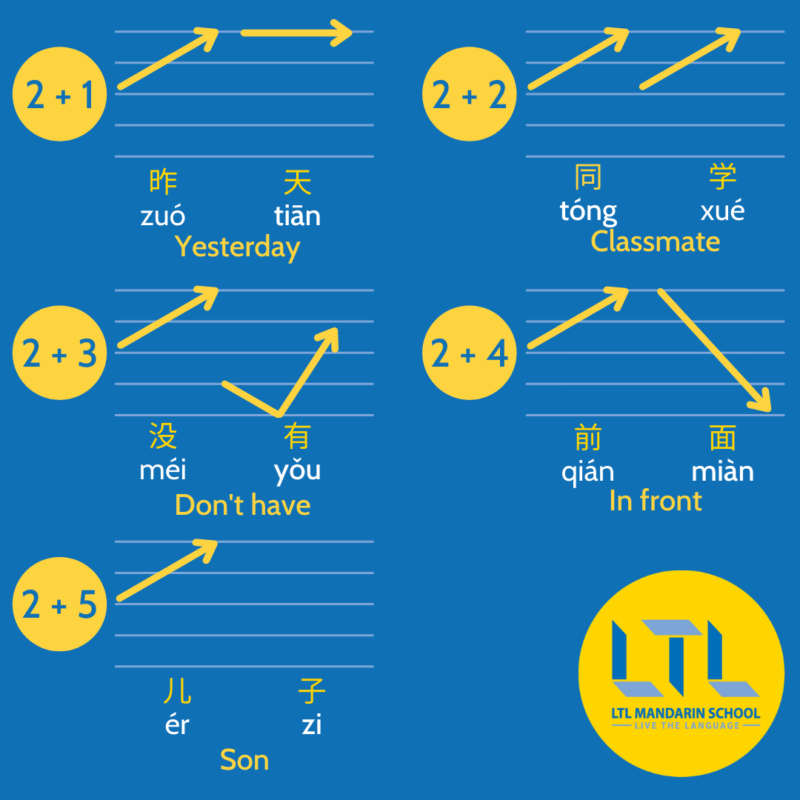
Understanding the Four Basic Mandarin Tones
Mandarin Chinese has four primary tones and a neutral tone, each distinguished by pitch contour and direction. Here’s how to identify them:
- First Tone (High-Level): A steady, high-pitched sound (e.g., mā 妈/mother).
- Second Tone (Rising): Starts mid and rises sharply (e.g., má 麻/hemp).
- Third Tone (Falling-Rising): Dips low before rising (e.g., mǎ 马/horse).
- Fourth Tone (Falling): Begins high and drops sharply (e.g., mà 骂/scold).
Recognizing Tone Marks in Pinyin
Pinyin uses diacritical marks to indicate tones visually. Here’s how they correspond:
- First Tone: Flat line (ā, ē, ī).
- Second Tone: Rising accent (á, é, í).
- Third Tone: Down-up curve (ǎ, ě, ǐ).
- Fourth Tone: Falling accent (à, è, ì).
Listening for Pitch Contours in Speech
Native speakers emphasize pitch changes to convey meaning. Key clues:
- First Tone: Sustained high pitch, like singing a note.
- Second Tone: Similar to an English question (e.g., Huh?).
- Third Tone: Often shortened in conversation, with a slight dip.
- Fourth Tone: Abrupt drop, like a command (Stop!).
Practicing Tone Pairs for Natural Flow
Mandarin tones interact in sequences, altering pronunciation. Focus on tone pairs:
- Third + Third: First tone becomes second (e.g., nǐ hǎo → ní hǎo).
- Half-Third Tone: Third tone before another third or fourth tone drops but doesn’t rise.
- Neutral Tone: Light, short, and unstressed (e.g., ma in nǐ hǎo ma).
Using Technology to Train Your Ear
Leverage tools to reinforce tone recognition:
- Tone Apps: Apps like HelloChinese or Pinyin Trainer provide drills.
- YouTube Tutorials: Watch videos with side-by-side tone comparisons.
- Speech Recognition: Use apps (e.g., Google Translate) to check accuracy.
How to learn Chinese Mandarin tones faster?
Understand the Four Basic Mandarin Tones
Mastering the four basic tones in Mandarin is the foundation for accurate pronunciation. Each tone has a distinct pitch contour:
- First tone (high-level): A steady high pitch, like singing a musical note (e.g., mā 妈).
- Second tone (rising): Starts mid and rises, similar to asking a question in Inglés (e.g., má 麻).
- Third tone (falling-rising): Dips low before rising, often shortened in speech (e.g., mǎ 马).
- Fourth tone (falling): Sharp drop from high to low, like a command (e.g., mà 骂).
Use Tone Pair Drills for Practice
Practicing tone combinations helps train your ear and mouth to transition smoothly between tones:
- Repeat tone pairs: Focus on two-syllable words (e.g., hǎo ma 好吗) to internalize patterns.
- Record and compare: Use apps or recordings to match native speakers' tone accuracy.
- Shadowing technique: Mimic audio clips in real-time to improve muscle memory.
Leverage Visual and Kinesthetic Learning
Engaging multiple senses accelerates tone retention:
- Tone diagrams: Draw pitch contours with your hand while speaking.
- Color-coding: Assign colors to tones (e.g., red for first tone) for visual reinforcement.
- Movement: Stand up/sit down for rising/falling tones to embody pitch changes.
Incorporate Tones into Daily Vocabulary
Integrate tones into every new word you learn:
- Label objects: Stick notes with pinyin + tones on household items.
- Flashcards: Include tone marks and audio in digital flashcards (e.g., Anki).
- Sentence drills: Practice tones in context, not isolation, for natural flow.
Seek Feedback from Native Speakers
Regular correction ensures progress:
- Language partners: Use platforms like Tandem or HelloTalk for real-time feedback.
- Tutors: Hire a tutor for structured tone correction (e.g., iTalki).
- Speech apps: Tools like Speechling analyze and grade your tone accuracy.
Is it difficult to follow the Mandarin tones?
Why Are Mandarin Tones Challenging for Beginners?
Mandarin tones can be difficult for beginners because they are unfamiliar to speakers of non-tonal languages. The four main tones (plus a neutral tone) require precise pitch control, which isn’t necessary in many other languages. Here’s why it’s tough:
- Pitch variations change word meanings entirely (e.g., mā vs. mà).
- English and other languages rely on intonation for emphasis, not lexical meaning.
- Listening and reproducing the tones accurately demands ear training and practice.
How Do Mandarin Tones Compare to Other Languages?
Unlike non-tonal languages like English or Spanish, Mandarin uses tones to distinguish words. Here’s how it differs:
- English uses stress and rhythm, not pitch, for word differentiation.
- Cantonese has even more tones (6–9), making Mandarin seem simpler in comparison.
- Vietnamese and Thai are also tonal, but their tone systems differ in complexity.
What Are Common Mistakes When Learning Mandarin Tones?
Learners often struggle with tone pairs and contextual flow. Common errors include:
- Mixing up the second (rising) and third (falling-rising) tones.
- Forgetting tone sandhi rules (e.g., two third tones change to second + third).
- Overemphasizing tones in natural speech, making sentences sound robotic.
Can You Improve Mandarin Tone Pronunciation?
Yes, with consistent practice and the right techniques. Effective methods include:
- Using pinyin charts with audio to mimic native speakers.
- Recording yourself and comparing to native pronunciations.
- Practicing minimal pairs (e.g., shū vs. shù) to sharpen tonal distinctions.
Are There Tricks to Mastering Mandarin Tones Faster?
While mastery takes time, these strategies can accelerate learning:
- Associate tones with hand gestures or visual cues (e.g., drawing the tone contour).
- Learn tones in context (phrases/sentences) rather than isolated words.
- Use mnemonics or songs to remember tone patterns for vocabulary.
Frequently Asked Questions (FAQ)
What is the smart method to discover problems with Mandarin sounds and tones?
The smart method involves using a combination of audio analysis tools and native speaker feedback to identify common pronunciation and tonal errors. By recording your speech and comparing it to native Mandarin speakers, you can pinpoint specific areas where your tones or sounds deviate from the standard. Additionally, leveraging AI-powered language apps can provide real-time corrections, helping you refine your pronunciation systematically.
Why is tone accuracy so important in Mandarin pronunciation?
Mandarin is a tonal language, meaning that the pitch contour of a word can change its meaning entirely. For example, the syllable ma can mean mother, hemp, horse, or a reproach depending on the tone used. Mispronouncing tones can lead to misunderstandings, making it crucial to master them early. The smart method emphasizes repetitive practice with targeted feedback to ensure tonal accuracy and avoid confusion in real conversations.
How can technology help in identifying Mandarin pronunciation issues?
Modern technology, such as speech recognition software and language learning apps, can analyze your pronunciation and provide instant feedback on errors. These tools often highlight incorrect tones, misplaced consonants, or mispronounced vowels, allowing you to correct mistakes in real time. Some advanced platforms even use machine learning to track your progress and suggest personalized exercises to address persistent weaknesses.
What role do native speakers play in improving Mandarin pronunciation?
Native speakers offer invaluable insights that technology alone cannot provide. They can detect subtle nuances in intonation, rhythm, and mouth positioning that automated tools might miss. Engaging in regular conversations with native speakers or seeking professional tutoring ensures that you receive contextual feedback and learn the natural flow of Mandarin. Combining this with the smart method accelerates your ability to speak accurately and confidently.
Leave a Reply
Related Posts