
Comprehension-based listening vs deep end immersion

Learning a new language involves various methods, each with distinct advantages. Two prominent approaches are comprehension-based listening and deep-end immersion. Comprehension-based listening focuses on understanding spoken language through gradual exposure, often starting with simpler content and building complexity over time. This method prioritizes clarity and confidence. In contrast, deep-end immersion plunges learners directly into authentic, unfiltered language use, simulating real-life scenarios where comprehension is initially challenging. While the former emphasizes structured progress, the latter encourages adaptability and rapid contextual learning. Both strategies have unique benefits, and choosing between them depends on individual goals, preferences, and learning styles. This article explores their differences, strengths, and practical applications.
- Comprehension-Based Listening vs. Deep End Immersion: Key Differences and Benefits
- Why is listening comprehension important for students?
- Is listening comprehension the foundation of reading comprehension?
-
Frequently Asked Questions (FAQ)
- What is the difference between comprehension-based listening and deep end immersion?
- Which method is more effective for beginners: comprehension-based listening or deep end immersion?
- Can comprehension-based listening and deep end immersion be combined?
- How does deep end immersion accelerate language acquisition compared to traditional methods?
Comprehension-Based Listening vs. Deep End Immersion: Key Differences and Benefits
What Is Comprehension-Based Listening?
Comprehension-based listening is an approach where learners focus on understanding spoken language at a level that matches their current proficiency. This method emphasizes gradual learning, using materials that are slightly challenging but still mostly comprehensible. The goal is to build confidence and reinforce vocabulary and grammar naturally.
| Aspect | Description |
|---|---|
| Focus | Understanding clear, leveled input |
| Materials | Podcasts, audiobooks, or dialogues at learner's level |
| Pace | Slower, with repetition and clarification |
What Is Deep End Immersion?
Deep end immersion involves exposing learners to authentic, unfiltered language from the beginning, even if it's far above their current level. This method relies on contextual learning and forces the brain to adapt quickly by picking up patterns and meaning from real-world usage.
See AlsoWhy Do Chinese People Give Red Envelopes?| Aspect | Description |
|---|---|
| Focus | Adapting to natural speech and native content |
| Materials | Movies, TV shows, native conversations |
| Pace | Fast, with minimal adjustments for learners |
Pros and Cons of Comprehension-Based Listening
This method is less overwhelming for beginners, as it provides a structured way to acquire language. However, it may limit exposure to natural speech patterns and slang, potentially slowing fluency in real-world scenarios.
| Pros | Cons |
|---|---|
| Builds confidence gradually | May lack real-world applicability |
| Reduces frustration | Slower path to fluency |
Pros and Cons of Deep End Immersion
While this approach can accelerate fluency by mimicking natural language acquisition, it may also lead to frustration and burnout if learners struggle to grasp meaning consistently.
| Pros | Cons |
|---|---|
| Exposes learners to authentic language | Can be discouraging for beginners |
| Encourages faster adaptation | Requires high motivation |
Which Method Is More Effective?
The effectiveness of each method depends on the learner's goals and personality. Comprehension-based listening suits those who prefer a structured approach, while deep end immersion benefits learners who thrive under pressure and seek rapid fluency.
See AlsoThe Many Meanings of the Word Yi Si| Comprehension-Based | Deep End Immersion |
|---|---|
| Better for beginners | Better for motivated intermediate/advanced learners |
| Lower stress | Higher initial difficulty |
Why is listening comprehension important for students?
The Role of Listening Comprehension in Academic Success
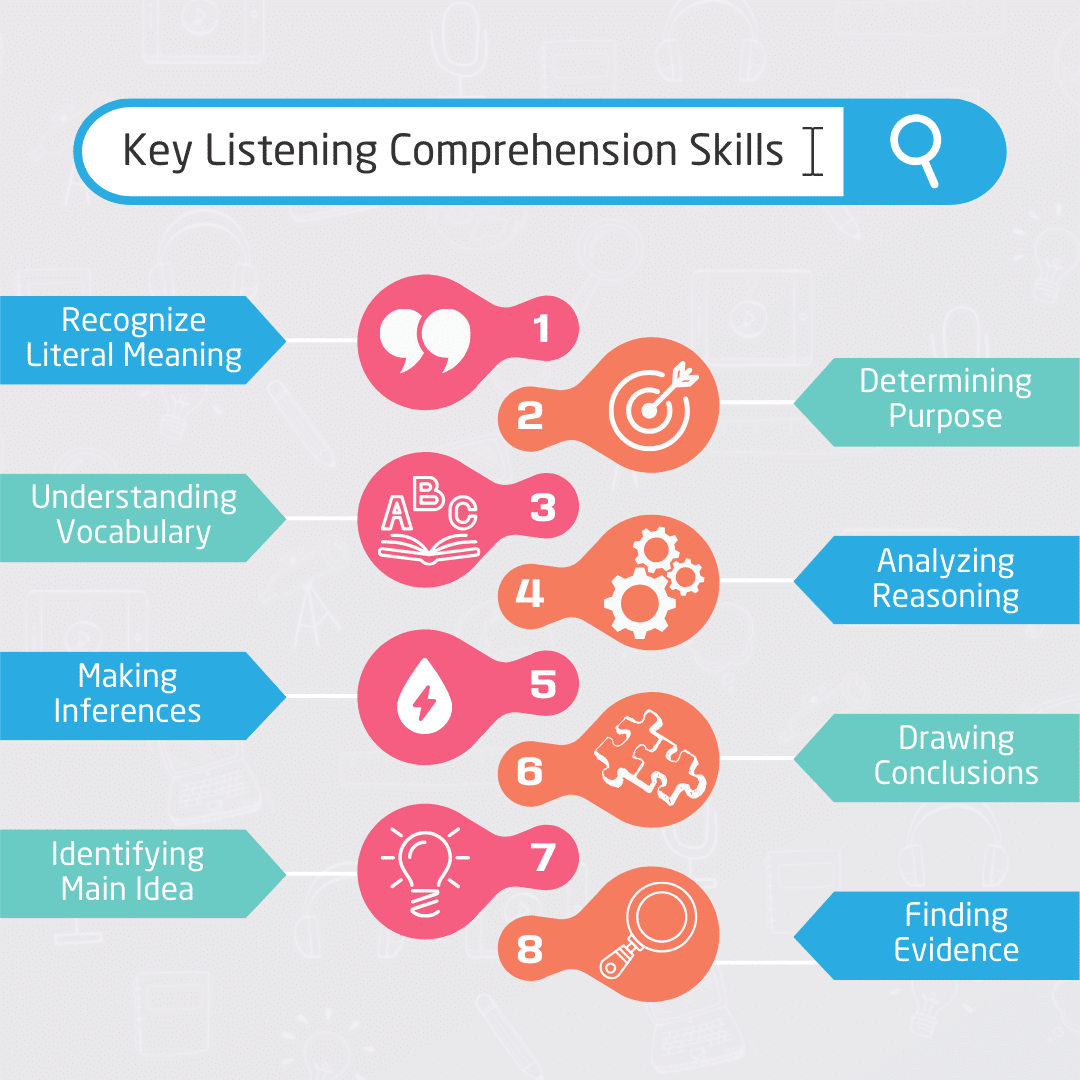
Listening comprehension is crucial for students because it directly impacts their ability to absorb and process information in academic settings. Effective listening skills enable students to understand lectures, follow instructions, and engage in classroom discussions. Here are key reasons why it matters:
- Enhances learning retention: Students who actively listen retain information better and perform well in exams.
- Improves critical thinking: Analyzing spoken language helps students evaluate ideas and form logical responses.
- Supports language development: For non-native speakers, listening is essential for vocabulary and pronunciation improvement.
Listening Comprehension and Communication Skills
Strong listening comprehension fosters better communication, allowing students to interact effectively with peers and teachers. It builds empathy and reduces misunderstandings. Key benefits include:
See AlsoIs Bilibili a Good Study Platform to Learn Chinese?- Encourages active participation: Students feel confident contributing to group discussions.
- Strengthens relationships: Attentive listeners build trust and rapport.
- Prepares for real-world scenarios: Workplace and social interactions rely heavily on listening skills.
Impact on Language Learning and Multilingualism
For students learning a new language, listening comprehension is the foundation of fluency. It accelerates language acquisition by exposing learners to natural speech patterns. Important aspects include:
- Exposure to accents and dialects: Helps students adapt to diverse speaking styles.
- Boosts grammar and syntax understanding: Hearing correct usage reinforces language rules.
- Facilitates faster vocabulary growth: Contextual listening introduces new words organically.
Listening Comprehension in Digital and Remote Learning
In online education, listening comprehension becomes even more vital due to the lack of physical cues. Students must rely on auditory input to stay engaged. Key considerations are:
- Improves focus in virtual classrooms: Reduces distractions during video lectures.
- Enhances podcast and audiobook comprehension: Useful for self-paced learning.
- Supports asynchronous learning: Helps students absorb pre-recorded materials effectively.
Long-Term Career Benefits of Strong Listening Skills
Beyond academics, listening comprehension prepares students for professional success. Employers value employees who listen attentively and respond thoughtfully. Advantages include:
See AlsoNegative Comparisons: 不比 and 没有 in Chinese- Better teamwork and collaboration: Listening minimizes conflicts and improves productivity.
- Effective leadership qualities: Leaders must understand team concerns and feedback.
- Higher customer satisfaction: In client-facing roles, listening ensures accurate problem-solving.
Is listening comprehension the foundation of reading comprehension?
The Role of Listening Comprehension in Language Development
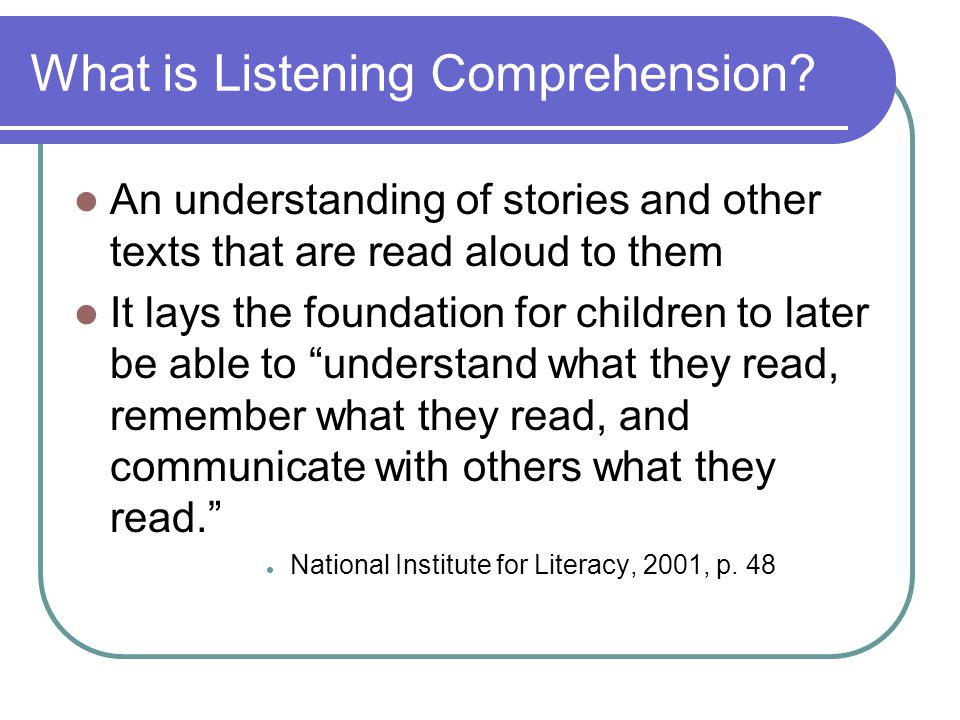
Listening comprehension is a critical skill in language acquisition, as it allows individuals to process and understand spoken language before transitioning to written forms. Research suggests that strong listening skills provide the groundwork for decoding written text, as both involve interpreting meaning from auditory or visual symbols. Key points include:
- Phonemic awareness develops through listening, helping learners connect sounds to letters.
- Vocabulary acquisition is enhanced through auditory exposure, which later supports reading.
- Understanding sentence structure and grammar in speech aids in comprehending written sentences.
How Listening Skills Transfer to Reading
The ability to decode spoken language directly influences reading proficiency. Children and language learners often rely on their auditory processing skills to make sense of written words. Important connections include:
- Predictive skills used in listening (anticipating words or phrases) apply to reading fluency.
- Recognizing intonation and rhythm in speech helps with punctuation and phrasing in text.
- Listening to narratives improves story structure comprehension, aiding reading analysis.
Neurological Links Between Listening and Reading
Studies show that brain regions activated during listening comprehension overlap with those used in reading. This suggests a shared cognitive foundation. Key findings include:
- The left temporal lobe processes both spoken and written language.
- Working memory plays a role in retaining auditory and visual linguistic information.
- Strong listening skills can reduce cognitive load when learning to read.
Listening Comprehension as a Predictor of Reading Success
Early listening abilities often correlate with later reading achievement. Educators emphasize its importance in literacy development. Notable observations include:
- Children with strong auditory processing tend to learn phonics more easily.
- Poor listening skills may lead to reading delays or difficulties.
- Interventions targeting listening comprehension often improve reading outcomes.
Practical Strategies to Strengthen Listening for Reading
Enhancing listening comprehension can directly benefit reading skills. Effective methods include:
- Read-aloud sessions to connect spoken and written words.
- Engaging in active listening exercises (e.g., summarizing spoken content).
- Using multisensory techniques (e.g., pairing audio with text).
Frequently Asked Questions (FAQ)
What is the difference between comprehension-based listening and deep end immersion?
Comprehension-based listening focuses on understanding spoken language through structured, level-appropriate materials, such as graded podcasts or simplified dialogues. The goal is to build familiarity with vocabulary and grammar in a controlled way. On the other hand, deep end immersion throws learners into authentic, unfiltered content—like native TV shows or conversations—from the beginning, forcing adaptation through context and repetition. While the former prioritizes gradual comprehension, the latter emphasizes rapid exposure to real-world language use.
Which method is more effective for beginners: comprehension-based listening or deep end immersion?
For beginners, comprehension-based listening is often more effective because it provides a scaffolded approach, reducing frustration and ensuring foundational understanding. However, some learners thrive under the challenge of deep end immersion, as it accelerates exposure to natural speech patterns and cultural nuances. The best choice depends on the learner's tolerance for ambiguity and their motivation—structured learners may prefer the former, while adventurous ones might benefit from the latter.
Can comprehension-based listening and deep end immersion be combined?
Absolutely. Combining comprehension-based listening with deep end immersion can create a balanced learning strategy. For example, beginners might start with simplified content to build confidence before gradually introducing authentic materials. Alternatively, alternating between the two methods can reinforce learning—structured practice solidifies basics, while immersion sharpens real-time processing skills. The key is to adjust the ratio based on progress and comfort level.
How does deep end immersion accelerate language acquisition compared to traditional methods?
Deep end immersion accelerates acquisition by mimicking the natural way humans learn languages—through constant exposure and necessity. Unlike traditional methods that rely on memorization and drills, immersion forces learners to decode meaning in real time, enhancing listening agility and intuitive grammar understanding. Over time, this method builds resilience to ambiguity and improves fluency faster, though it may initially feel overwhelming compared to comprehension-based approaches.
Leave a Reply
Related Posts