
You can’t learn Chinese characters by rote

Learning Chinese characters can seem like an insurmountable task, especially when approached through rote memorization alone. While repetition has its place, relying solely on this method often leads to frustration and limited retention. Chinese characters are not just random symbols; they are built on systematic patterns, radicals, and historical evolution. Understanding these underlying structures makes the learning process more logical and efficient. This article explores why rote memorization falls short and introduces alternative strategies—such as recognizing radicals, breaking down components, and contextual learning—that transform character acquisition into an engaging and sustainable journey. By shifting focus from repetition to comprehension, learners can unlock the true beauty of Chinese script.
- Why Memorizing Chinese Characters by Rote Doesn't Work
- Why is it so hard to learn Chinese characters?
- What is the most difficult thing in learning Chinese?
- How long does it realistically take to learn Chinese?
-
Frequently Asked Questions (FAQ)
- Why can't you learn Chinese characters by rote memorization alone?
- What are the drawbacks of relying solely on rote learning for Chinese characters?
- What alternative methods are more effective than rote memorization for learning Chinese characters?
- How does understanding radicals and components improve Chinese character learning?
Why Memorizing Chinese Characters by Rote Doesn't Work
The Complexity of Chinese Characters
Chinese characters are not just random symbols; they are logograms with intricate structures. Each character consists of radicals, strokes, and sometimes phonetic components. Rote memorization ignores these patterns, making learning inefficient. Understanding the composition of characters helps in retention and recognition.
| Component | Role |
|---|---|
| Radicals | Provide meaning or category |
| Phonetic Parts | Hint at pronunciation |
| Strokes | Building blocks of characters |
The Role of Context in Learning
Characters gain meaning through context, such as words, sentences, or phrases. Memorizing isolated characters without context leads to misunderstanding and poor recall. For example, the character 行 can mean walk or okay depending on usage. Learning in context reinforces practical application.
See Also12 Top-Rated Chinese Language Immersion Programs in China| Character | Multiple Meanings |
|---|---|
| 行 | Walk / Okay |
| 发 | Send / Hair |
The Importance of Active Recall
Active recall forces the brain to retrieve information, strengthening memory. Rote repetition is passive and less effective. Techniques like spaced repetition (SRS) and writing practice engage active recall. Tools like flashcards or apps leverage this principle for better long-term retention.
| Method | Effectiveness |
|---|---|
| Rote Memorization | Low |
| Active Recall | High |
Visual and Mnemonic Techniques
Chinese characters are highly visual, and mnemonics can simplify learning. Associating characters with images or stories taps into visual memory. For example, the character 休 (rest) depicts a person leaning against a tree. This approach is more engaging than repetitive writing.
| Character | Mnemonic |
|---|---|
| 休 | Person + Tree = Rest |
| 明 | Sun + Moon = Bright |
The Pitfalls of Short-Term Memorization
Rote learning often leads to short-term retention, with characters forgotten quickly. Without reinforcement through reading or writing, the knowledge fades. Studies show that spaced practice and varied exposure are key to mastery of Chinese characters.
See AlsoAn introduction to extensive reading for Chinese learners| Approach | Retention Rate |
|---|---|
| Rote Memorization | 20-30% |
| Spaced Learning | 70-80% |
Why is it so hard to learn Chinese characters?

1. The Complexity of Stroke Order and Structure
Learning Chinese characters is challenging due to their intricate stroke order and structure. Each character is composed of specific strokes that must be written in a precise sequence, which affects readability and meaning.
- Stroke order rules must be memorized, as incorrect sequences can make characters unrecognizable.
- Characters often combine radicals (components with meaning or pronunciation clues), adding layers of complexity.
- Some characters have similar structures but entirely different meanings, leading to confusion.
2. Lack of Phonetic Clues
Unlike alphabetic systems, Chinese characters rarely provide direct phonetic clues, making pronunciation difficult to deduce.
See AlsoThe History of Gourds in China- Only about 25% of characters include phonetic components, and even these are not always reliable.
- Learners must memorize both the pronunciation and the meaning separately for most characters.
- Tonal variations in Mandarin add another layer of difficulty, as the same sound can have multiple meanings.
3. The Vast Number of Characters
Mastering Chinese characters requires familiarity with thousands of symbols, far more than most writing systems.
- Basic literacy requires knowledge of 2,000–3,000 characters, while advanced fluency may demand over 5,000.
- Many characters are rarely used, but learners must still recognize them in specific contexts.
- The sheer volume makes retention and recall a significant challenge.
4. Contextual and Multiple Meanings
Chinese characters often have multiple meanings depending on context, requiring deep understanding.
- A single character can represent different words or ideas when combined with others.
- Idiomatic expressions (成语) use characters in non-literal ways, adding complexity.
- Learners must study contextual usage to avoid misunderstandings.
5. The Need for Constant Practice
Retaining Chinese characters demands consistent and repetitive practice due to their visual nature.
- Without regular use, characters are easily forgotten, unlike phonetic languages.
- Writing by hand reinforces memory, but typing (using pinyin) can weaken character recall.
- Mastery requires long-term exposure and immersion in reading and writing.
What is the most difficult thing in learning Chinese?

The Complexity of Chinese Characters
One of the most challenging aspects of learning Chinese is mastering its writing system. Unlike alphabetic languages, Chinese uses logograms, where each character represents a word or a morpheme. This requires memorizing thousands of characters, each with unique strokes and meanings.
- Stroke order must be learned precisely to write characters correctly.
- Many characters look similar but have completely different meanings (homophones).
- There is no phonetic consistency, making memorization more demanding.
Tonal Nature of the Language
Chinese is a tonal language, meaning the pitch or intonation used when pronouncing a word can change its meaning entirely. Mandarin, for example, has four main tones and a neutral tone, which can be difficult for non-native speakers to distinguish and reproduce accurately.
- Mispronouncing a tone can lead to miscommunication (e.g., mā vs. mà).
- Tones must be practiced consistently to develop muscle memory.
- Regional accents may further complicate tone recognition.
Grammar Structure Differences
While Chinese grammar is often considered simpler than that of many European languages, its lack of inflection (no verb conjugations, tenses, or plurals) can be confusing. Instead, meaning is derived from context, particles, and word order.
- Time indicators (e.g., yesterday, tomorrow) replace verb tenses.
- Particles like le (了) indicate completed actions but don’t follow strict rules.
- Word order is critical, as changing it can alter the sentence's meaning.
Cultural Context and Idioms
Chinese is deeply tied to its cultural context, with many idioms (成语 chéngyǔ) and expressions rooted in history or classical literature. Understanding these requires familiarity with Chinese culture, which adds another layer of difficulty.
- Idioms often cannot be translated literally.
- Historical references may be obscure to learners.
- Contextual usage varies widely in formal vs. informal settings.
Listening and Speaking Speed
Native Chinese speakers often speak quickly, and the language’s syllable-dense nature can make listening comprehension difficult. Additionally, regional dialects and accents may differ significantly from standard Mandarin.
- Words are often short and monosyllabic, making them harder to catch.
- Slang and colloquialisms are prevalent in everyday speech.
- Different dialects (e.g., Cantonese, Shanghainese) sound entirely distinct from Mandarin.
How long does it realistically take to learn Chinese?
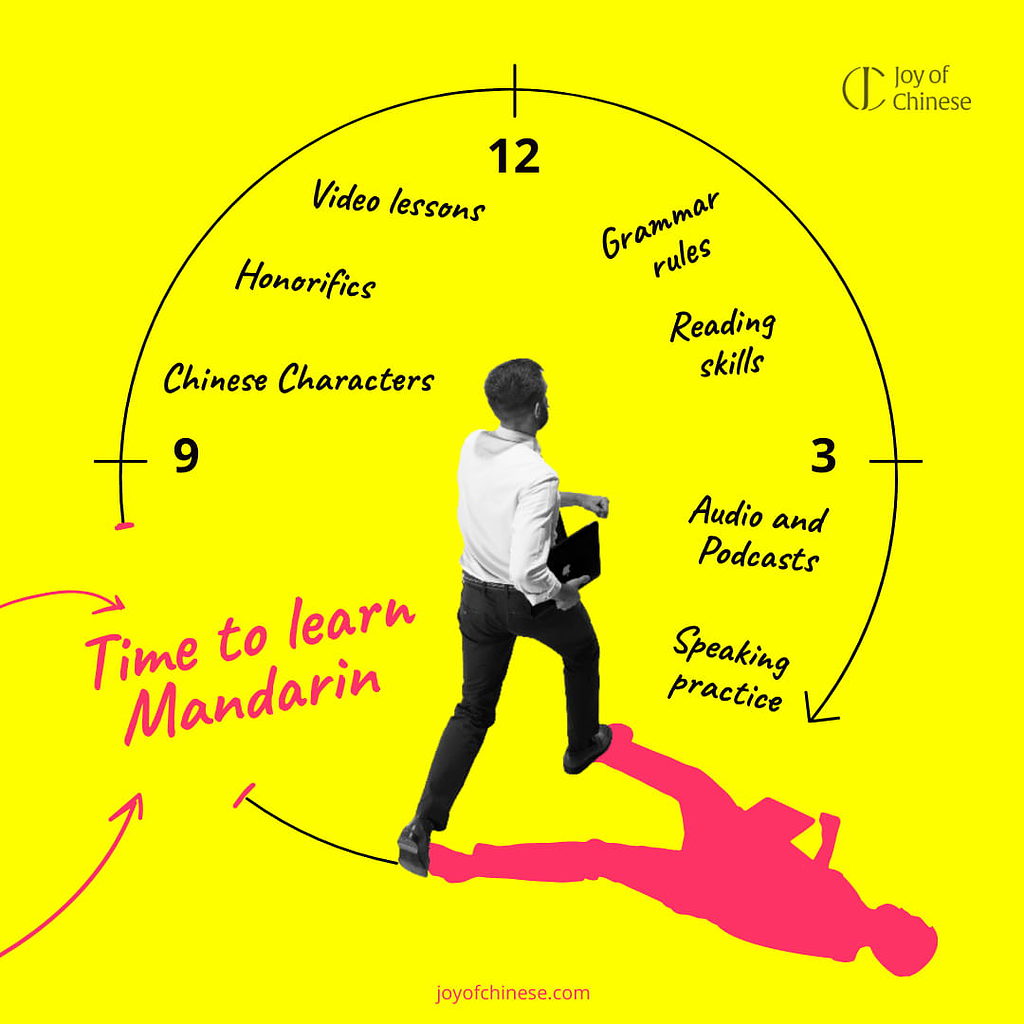
Factors That Influence Learning Chinese
The time it takes to learn Chinese depends on several factors, including:
- Prior language experience: If you already speak a tonal language like Vietnamese or Thai, you may adapt faster.
- Study intensity: Studying 20+ hours a week accelerates progress compared to casual learning.
- Learning methods: Immersion programs or one-on-one tutoring yield faster results than self-study.
Basic Conversational Fluency
Achieving basic conversational fluency in Chinese typically takes:
- 6-12 months with consistent daily practice (1-2 hours).
- Mastering Pinyin (phonetic system) can take 1-3 months.
- Learning 500-1,000 words is usually enough for simple daily interactions.
Intermediate Proficiency
Reaching an intermediate level generally requires:
- 1.5-3 years of dedicated study.
- Understanding 2,000-3,000 characters for reading basic texts.
- Grasping grammar patterns to form more complex sentences.
Advanced Fluency
Attaining advanced fluency often takes:
- 4-6+ years of immersive learning.
- Knowing 5,000+ characters to read newspapers or literature.
- Refining pronunciation to near-native levels.
Native-Like Mastery
Achieving native-like mastery is rare and demands:
- 8-10+ years of continuous study and immersion.
- Mastering idioms and cultural references beyond textbook knowledge.
- Living in a Chinese-speaking environment for extended periods.
Frequently Asked Questions (FAQ)
Why can't you learn Chinese characters by rote memorization alone?
Rote memorization is often ineffective for learning Chinese characters because they are logographic, meaning each character represents a word or a meaningful part of a word. Unlike alphabetic systems, where letters correspond to sounds, Chinese characters require understanding their structure, components, and context. Simply repeating characters without grasping their meaning or usage leads to poor retention and difficulty in real-world application.
What are the drawbacks of relying solely on rote learning for Chinese characters?
Relying only on rote learning can result in superficial knowledge, where learners recognize characters but struggle with reading comprehension, writing accuracy, and contextual usage. Without understanding radicals, stroke order, or etymology, learners may confuse similar-looking characters or fail to recall them in different contexts. This approach also makes learning tedious and demotivating over time.
What alternative methods are more effective than rote memorization for learning Chinese characters?
Effective methods include spaced repetition (SRS), mnemonics, and contextual learning. Spaced repetition helps reinforce memory over time, while mnemonics create mental associations to make characters memorable. Studying characters in sentences or stories provides context, improving comprehension and retention. Additionally, practicing writing and breaking characters into radicals or components deepens understanding.
How does understanding radicals and components improve Chinese character learning?
Radicals and components are the building blocks of Chinese characters, offering clues to their meaning (semantics) and pronunciation (phonetics). By analyzing these elements, learners can decode unfamiliar characters and remember them more efficiently. For example, the radical 水 (water) appears in characters related to liquids, like 河 (river). This systematic approach reduces reliance on memorization and enhances long-term retention.
Leave a Reply
Related Posts