
Is Duolingo Good? Honest Pros and Cons Reviewed


Duolingo has become one of the most popular language-learning platforms worldwide, praised for its accessibility and gamified approach. But is it truly effective for mastering a new language? This article delves into the honest pros and cons of Duolingo, examining its strengths and limitations. From its user-friendly interface and free accessibility to its potential drawbacks, such as limited conversational practice, we provide a balanced review to help you decide if it’s the right tool for your language-learning journey. Whether you’re a beginner or looking to refine your skills, understanding Duolingo’s capabilities is key to making an informed choice.
Is Duolingo Good? Honest Pros and Cons Reviewed
Duolingo is one of the most popular language-learning platforms worldwide, known for its gamified approach and accessibility. However, whether it is effective depends on your learning goals, preferences, and commitment. Below, we explore the pros and cons of Duolingo to help you decide if it’s the right tool for you.
1. What Makes Duolingo Stand Out?
Duolingo stands out due to its user-friendly interface and gamified learning experience. The app uses a combination of short lessons, rewards, and streaks to keep users engaged. It’s also free to use, with optional premium features for those who want an ad-free experience or offline access. The platform supports over 40 languages, making it a versatile choice for learners worldwide.
See AlsoDuolingo vs Rosetta Stone: Comparing Language Tools Effectively2. Pros of Using Duolingo
Duolingo offers several advantages:
- Accessibility: Available on mobile and desktop, making it easy to learn on the go.
- Gamification: Points, streaks, and leaderboards motivate users to stay consistent.
- Free Version: Most features are available without payment.
- Variety of Languages: From Spanish to Klingon, Duolingo caters to diverse interests.
- Beginner-Friendly: Ideal for those starting a new language or building basic vocabulary.
3. Cons of Using Duolingo
Despite its popularity, Duolingo has some limitations:
- Limited Depth: It focuses more on vocabulary and basic grammar rather than advanced fluency.
- Repetitive Exercises: Some users find the exercises monotonous over time.
- Lack of Speaking Practice: While there are speaking exercises, they are not as robust as other platforms.
- Over-Reliance on Translation: The app heavily relies on translation, which may not suit all learning styles.
- Premium Cost: The free version includes ads, and the premium subscription can be pricey for some users.
4. Who Is Duolingo Best For?
Duolingo is best suited for:
- Casual Learners: Those looking to learn a language for fun or travel.
- Beginners: Individuals starting from scratch or building foundational skills.
- Busy Individuals: People who prefer short, daily lessons over intensive study sessions.
- Gamers: Those who enjoy gamified learning and need motivation to stay consistent.
5. Alternatives to Duolingo
If Duolingo doesn’t meet your needs, consider these alternatives:
- Babbel: Focuses on conversational skills and grammar.
- Rosetta Stone: Emphasizes immersion and pronunciation.
- Memrise: Uses videos of native speakers for real-world context.
- Busuu: Offers personalized study plans and feedback from native speakers.
- Anki: A flashcard-based app for memorization and vocabulary building.
| Feature | Duolingo | Babbel | Rosetta Stone |
|---|---|---|---|
| Cost | Free (with ads) | Paid | Paid |
| Focus | Vocabulary & Basics | Conversation & Grammar | Immersion & Pronunciation |
| Gamification | Yes | No | No |
| Languages | 40+ | 14 | 25 |
What are the negatives of Duolingo?
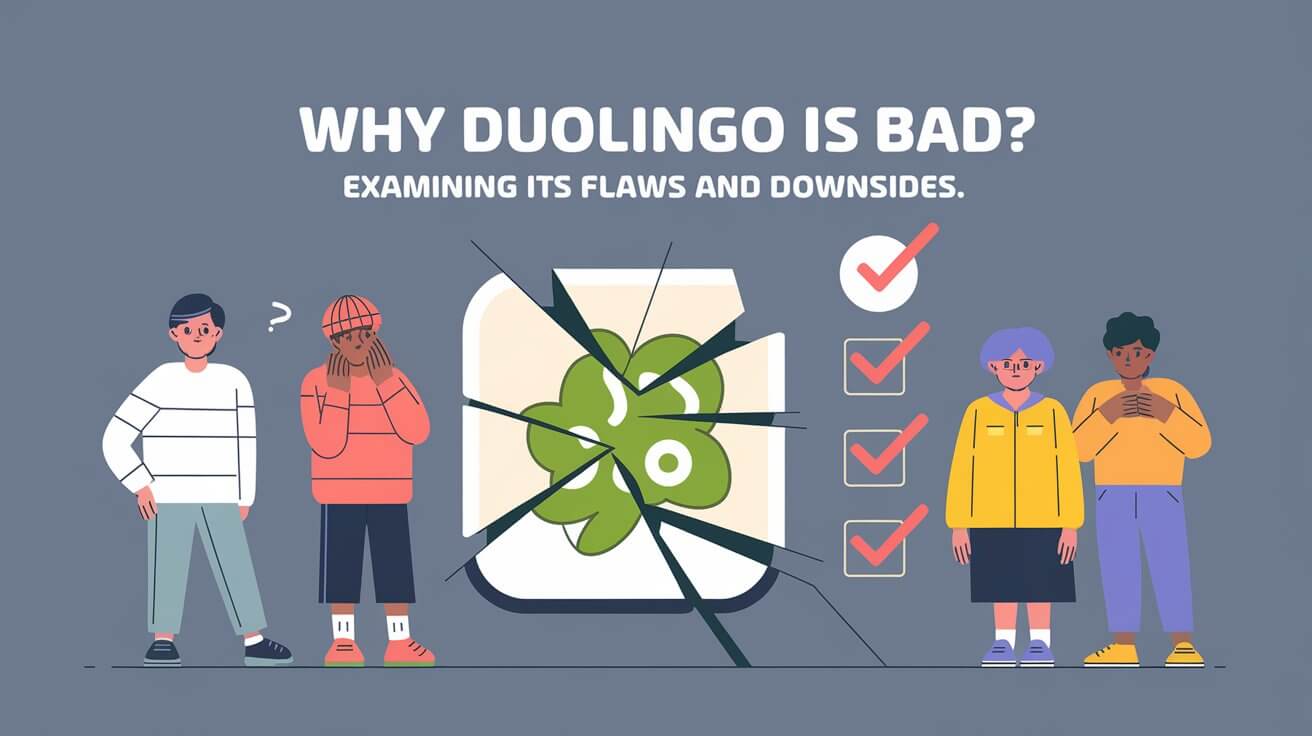
Limited Depth in Language Learning
Duolingo is often criticized for its superficial approach to language learning. While it is effective for beginners, it lacks the depth required for advanced learners. Here are some key points:
See AlsoDuolingo Accepted Countries: Global List & Requirements- Vocabulary: The app focuses on basic words and phrases, which may not be sufficient for complex conversations.
- Grammar: Grammar explanations are minimal, leaving users to figure out rules on their own.
- Context: The sentences used are often out of context, making it hard to apply them in real-life situations.
Over-Reliance on Gamification
Duolingo's gamified approach can be both a strength and a weakness. While it makes learning fun, it can also lead to several issues:
- Distraction: The focus on earning points and maintaining streaks can distract from actual learning.
- Superficial Engagement: Users may prioritize completing lessons quickly over understanding the material.
- Addiction: The game-like elements can lead to addictive behavior, where users are more concerned with the game than the language.
Lack of Speaking Practice
One of the major drawbacks of Duolingo is its limited focus on speaking skills. Here’s why:
- Voice Recognition: The app's voice recognition technology is not always accurate, leading to frustration.
- No Real Conversations: There are no opportunities for real-time conversations with native speakers.
- Repetition: Speaking exercises are often repetitive and do not challenge the user to think on their feet.
Inconsistent Quality Across Languages
Duolingo offers courses in many languages, but the quality varies significantly:
- Popular Languages: Courses for popular languages like Spanish and French are well-developed.
- Less Popular Languages: Courses for less commonly taught languages are often incomplete or poorly structured.
- Updates: Some languages receive frequent updates, while others are neglected.
Limited Cultural Context
Duolingo often fails to provide cultural context, which is crucial for language learning:
- Cultural Nuances: The app does not teach cultural nuances, idioms, or slang.
- Real-Life Scenarios: There are few lessons that simulate real-life scenarios, making it hard to understand cultural contexts.
- Historical Context: The app does not provide historical or social context that could enrich the learning experience.
What are the criticisms of Duolingo?

Limited Depth in Language Learning
One of the primary criticisms of Duolingo is its limited depth in teaching languages. While it is effective for beginners, it often falls short in providing advanced language skills. The platform focuses heavily on vocabulary and basic grammar but lacks in-depth explanations and cultural context. Users have noted the following issues:
- Superficial grammar explanations: The app often provides minimal context for grammar rules, making it difficult for learners to understand complex structures.
- Lack of conversational practice: Duolingo emphasizes translation and multiple-choice questions over real-life speaking and listening skills.
- Insufficient cultural immersion: The app rarely incorporates cultural nuances, idioms, or regional dialects, which are crucial for fluency.
Over-Reliance on Gamification
Duolingo's gamification approach, while engaging, has been criticized for prioritizing entertainment over effective learning. The app's focus on streaks, points, and rewards can sometimes distract from the actual goal of language acquisition. Key concerns include:
- Addiction to rewards: Users may focus more on maintaining streaks than on understanding the material.
- Repetitive exercises: The gamified structure often leads to repetitive tasks that may not challenge learners effectively.
- Limited progress tracking: The app's progress indicators, such as crowns and levels, do not always reflect true language proficiency.
Inconsistent Quality Across Languages
Duolingo offers courses in numerous languages, but the quality and depth of these courses vary significantly. Some languages are well-developed, while others feel incomplete or poorly designed. Common issues include:
- Uneven course development: Popular languages like Spanish and French receive frequent updates, while less common languages lag behind.
- Lack of native speaker input: Some courses rely on non-native speakers or automated systems, leading to inaccuracies.
- Incomplete content: Certain languages lack advanced lessons or sufficient vocabulary coverage.
Limited Speaking and Listening Practice
Duolingo's approach to speaking and listening has been criticized for being inadequate. While the app includes voice recognition and audio exercises, these features often fall short of providing meaningful practice. Key criticisms include:
- Poor voice recognition: The app's speech recognition technology can be inconsistent, leading to frustration for users.
- Lack of real-life scenarios: The speaking exercises often involve isolated sentences rather than conversational dialogue.
- Limited listening opportunities: The app does not provide enough exposure to natural speech patterns or accents.
Monetization and Ads Disrupt Learning
Duolingo's freemium model has drawn criticism for its reliance on ads and in-app purchases, which can disrupt the learning experience. Users have expressed concerns about:
- Frequent ads: Free users are bombarded with ads, which can break concentration and reduce engagement.
- High subscription costs: Duolingo Plus, the premium version, is considered expensive by some users.
- Paywalled features: Certain features, such as offline access and unlimited hearts, are locked behind a paywall, limiting accessibility.
Why do people stop using Duolingo?
Lack of Progress or Motivation
One of the main reasons people stop using Duolingo is the perceived lack of progress. Many users feel that the app does not help them achieve fluency or practical language skills quickly enough. This can lead to frustration and a loss of motivation. Additionally, the repetitive nature of the exercises can make the learning process feel monotonous over time.
- Slow progress towards fluency can discourage users.
- Repetitive exercises may lead to boredom.
- Users may feel they are not learning practical skills for real-life situations.
Limited Depth in Language Learning
Duolingo is often criticized for its lack of depth in teaching grammar, vocabulary, and cultural context. While it is great for beginners, advanced learners may find the content too simplistic. The app focuses heavily on gamification, which can sometimes overshadow the need for more comprehensive language instruction.
- Grammar explanations are often minimal or unclear.
- Advanced learners may find the content too basic.
- There is a lack of focus on cultural context and real-world usage.
Overemphasis on Gamification
While gamification makes learning fun, some users feel that Duolingo prioritizes game-like elements over actual learning. The focus on earning points, maintaining streaks, and competing with friends can distract from the primary goal of language acquisition. For some, this approach feels more like a game than a serious learning tool.
- Streaks and points can become more important than learning.
- The competitive aspect may not appeal to all users.
- Some users prefer a more structured and serious approach to learning.
Time Constraints and Commitment
Many users start Duolingo with enthusiasm but struggle to maintain consistency due to busy schedules. The daily commitment required to maintain streaks and progress can become overwhelming, especially for those with limited free time. Over time, this can lead to users abandoning the app altogether.
- Daily practice can be difficult to maintain for busy individuals.
- Users may feel pressured by the need to keep up with streaks.
- Lack of flexibility in learning schedules can deter long-term use.
Availability of Better Alternatives
As the language learning market grows, users have access to a variety of alternatives that may better suit their needs. Apps like Babbel, Rosetta Stone, or even private tutors offer more personalized and in-depth learning experiences. Some users switch to these alternatives after finding Duolingo insufficient for their goals.
- Other apps may offer more personalized learning experiences.
- Alternatives often provide deeper cultural and grammatical insights.
- Users may prefer platforms that focus less on gamification and more on serious learning.
Frequently Asked Questions From our Community
Is Duolingo effective for learning a new language?
Duolingo is a popular language-learning platform that offers a gamified approach to learning. While it is effective for beginners and those looking to build a basic vocabulary, it may not be sufficient for achieving fluency. The app focuses heavily on vocabulary and basic grammar, but it lacks in-depth conversational practice and cultural context. For casual learners or those looking to supplement their studies, Duolingo can be a useful tool, but it should not be relied upon as the sole method for mastering a language.
What are the pros of using Duolingo?
One of the main advantages of Duolingo is its accessibility. The app is free to use, with optional premium features, making it an affordable option for many users. Its gamified design keeps learners engaged with rewards, streaks, and levels, which can motivate consistent practice. Additionally, Duolingo offers a wide range of languages, including less commonly taught ones. The bite-sized lessons are perfect for busy individuals who want to learn in short, manageable sessions.
What are the cons of using Duolingo?
Despite its popularity, Duolingo has several limitations. The app often lacks contextual depth, meaning learners may struggle to apply their knowledge in real-world conversations. The focus on translation exercises can also be repetitive and may not adequately develop speaking or listening skills. Furthermore, the free version includes ads, which can be distracting. For advanced learners, Duolingo may feel too simplistic, as it does not offer advanced grammar or nuanced language usage.
Can Duolingo replace traditional language classes?
While Duolingo is a convenient and engaging tool, it is not a complete replacement for traditional language classes. Classroom settings provide opportunities for interactive speaking practice, personalized feedback, and cultural immersion, which Duolingo cannot fully replicate. However, Duolingo can serve as an excellent supplement to formal education, helping learners reinforce their skills and practice regularly. For those unable to attend classes, combining Duolingo with other resources like language exchange partners or online tutors can enhance the learning experience.
Leave a Reply
Related Posts