
Spaced repetition software and why you should use it

Spaced repetition software (SRS) is a powerful learning tool designed to help you retain information more effectively. By leveraging the psychological spacing effect, SRS schedules review sessions at optimal intervals, ensuring that knowledge moves from short-term to long-term memory. Whether you're learning a new language, studying for exams, or mastering complex subjects, SRS can significantly boost your efficiency. Unlike traditional cramming, this method minimizes forgetting and maximizes retention with minimal effort. In this article, we’ll explore how spaced repetition works, its benefits, and why integrating it into your study routine can transform the way you learn. Discover how SRS can make your learning smarter, not harder.
Spaced Repetition Software: Why You Should Use It for Effective Learning
What Is Spaced Repetition Software?
Spaced repetition software (SRS) is a digital tool designed to enhance memory retention by systematically reviewing information at optimal intervals. Based on the spacing effect, a psychological phenomenon where learning is more effective when spread over time, SRS algorithms determine the best moments to review material before it's forgotten. Popular applications like Anki, Quizlet, and Memrise use this method to help users master languages, medical terms, or any subject efficiently.
| Key Feature | Description |
|---|---|
| Algorithm | Adjusts review timing based on user performance. |
| Customizable Decks | Allows users to create or download flashcards. |
| Multimedia Support | Supports images, audio, and videos for richer learning. |
How Does Spaced Repetition Software Work?
SRS relies on the forgetting curve, a concept introduced by Hermann Ebbinghaus, which shows how information fades from memory over time. The software schedules reviews just as you're about to forget, reinforcing memory. For example, if you correctly recall a term, the next review is pushed further out. If you struggle, it appears more frequently. This adaptive scheduling maximizes long-term retention with minimal effort.
See AlsoSpaced repetition is not limited to flashcards| Stage | Action |
|---|---|
| First Encounter | Learn new material. |
| Review 1 | Revisit after a few hours/days. |
| Review 2 | Extend interval if recalled correctly. |
Benefits of Using Spaced Repetition Software
SRS offers time efficiency by focusing on weak areas, reducing unnecessary reviews. It also combats the illusion of competence—when learners mistake familiarity for mastery. Studies show SRS users retain information up to 80% longer compared to cramming. Additionally, it’s versatile for academic, professional, or personal learning goals.
| Benefit | Impact |
|---|---|
| Long-Term Retention | Information sticks for months/years. |
| Active Recall | Strengthens memory retrieval pathways. |
Top Spaced Repetition Software Tools
Leading SRS tools include Anki (highly customizable, open-source), Quizlet (user-friendly, ideal for classrooms), and SuperMemo (pioneer of SRS algorithms). Each offers unique features: Anki supports add-ons, Quizlet has collaborative modes, and SuperMemo focuses on algorithm precision.
| Tool | Best For |
|---|---|
| Anki | Advanced users, medical students. |
| Quizlet | Beginners, educators. |
Common Misconceptions About Spaced Repetition Software
Some believe SRS is only for rote memorization, but it’s equally effective for complex concepts when paired with understanding. Others assume it’s time-consuming, yet daily sessions can be as short as 10 minutes. A third myth is that all SRS tools are equal—algorithm quality varies significantly between apps.
See AlsoIs Duolingo Accessible: Features for All Users| Misconception | Reality |
|---|---|
| Only for vocab | Works for formulas, procedures, etc. |
| Requires hours | Short, consistent sessions suffice. |
What are the benefits of spaced repetition?

Improved Long-Term Retention
Spaced repetition enhances long-term memory by systematically reviewing information at increasing intervals. This method leverages the psychological spacing effect, ensuring knowledge is retained more effectively than cramming.
- Strengthens neural connections over time by revisiting material just before it's forgotten.
- Reduces forgetting curves, making recall more reliable for exams or real-world applications.
- Encourages deeper encoding of information through repeated exposure.
Efficient Time Management
Spaced repetition optimizes study time by focusing on material that’s closer to being forgotten, avoiding unnecessary repetition of well-known content.
See AlsoLearn Chinese Through Song- Minimizes redundant study sessions by targeting weak areas.
- Automates scheduling with algorithms (e.g., Anki or SuperMemo) to prioritize reviews.
- Maximizes productivity by reducing total study hours while improving outcomes.
Enhanced Focus and Reduced Cognitive Load
By breaking learning into smaller, spaced sessions, this technique prevents cognitive overload and maintains high engagement levels.
- Short, focused intervals prevent mental fatigue compared to marathon study sessions.
- Prioritizes active recall, which demands concentration and reinforces learning.
- Reduces stress by distributing learning evenly over time.
Versatility Across Subjects
Spaced repetition is adaptable to diverse fields, from language learning to medical studies, due to its universal cognitive benefits.
- Effective for vocabulary acquisition in language learning.
- Ideal for memorizing facts in history or science.
- Useful for mastering procedural skills like mathematics or coding.
Data-Driven Learning Progress
Digital tools for spaced repetition provide analytics and insights into retention rates, helping learners adjust strategies.
See AlsoEasy Chinese News Articles for Beginners- Tracks performance metrics (e.g., recall accuracy) to identify weaknesses.
- Adjusts intervals dynamically based on individual progress.
- Offers visual progress reports to motivate consistent practice.
What is the 2 3 5 7 revision rule?

What is the 2 3 5 7 Revision Rule?
The 2 3 5 7 revision rule is a spaced repetition technique designed to enhance memory retention by scheduling reviews at specific intervals. The numbers 2, 3, 5, and 7 represent the days after the initial learning session when the material should be revisited. This method leverages the psychological spacing effect, which suggests that information is better retained when reviewed at increasing intervals.
- Day 2: First review to reinforce short-term memory.
- Day 3: Second review to solidify the information.
- Day 5: Third review to transition knowledge to long-term memory.
- Day 7: Final review to ensure mastery and retention.
How Does the 2 3 5 7 Revision Rule Work?
The rule operates on the principle of spaced repetition, where reviews are strategically timed to combat the forgetting curve. By spacing out revisions, the brain is forced to recall information just as it begins to fade, strengthening neural connections.
See AlsoMeasuring your language learning is a double-edged sword- Initial Learning: Study the material thoroughly on Day 0.
- First Review (Day 2): Quick recap to prevent early forgetting.
- Second Review (Day 3): Deepen understanding and address gaps.
- Third Review (Day 5): Focus on challenging concepts.
- Final Review (Day 7): Confirm long-term retention.
Benefits of the 2 3 5 7 Revision Rule
This method offers several advantages for learners, including efficient time management and improved recall. It minimizes cramming and maximizes retention by aligning with natural memory processes.
- Reduced Forgetting: Counteracts the rapid decline of memory after learning.
- Optimized Effort: Focuses reviews on critical intervals for better results.
- Adaptability: Can be applied to various subjects, from languages to technical topics.
Applications of the 2 3 5 7 Revision Rule
The rule is versatile and can be used in academic studies, professional training, and personal skill development. It’s particularly effective for mastering large volumes of information.
- Exam Preparation: Ideal for retaining complex subjects like medicine or law.
- Language Learning: Helps memorize vocabulary and grammar rules.
- Workplace Training: Ensures employees retain critical procedures or policies.
Tips for Implementing the 2 3 5 7 Revision Rule
To maximize effectiveness, follow these practical strategies when applying the rule. Consistency and active engagement are key.
- Use Tools: Leverage apps like Anki or physical planners to track review schedules.
- Active Recall: Test yourself during reviews instead of passive rereading.
- Adjust Intervals: Modify intervals slightly based on personal retention rates.
What is the best way to use spaced repetition?
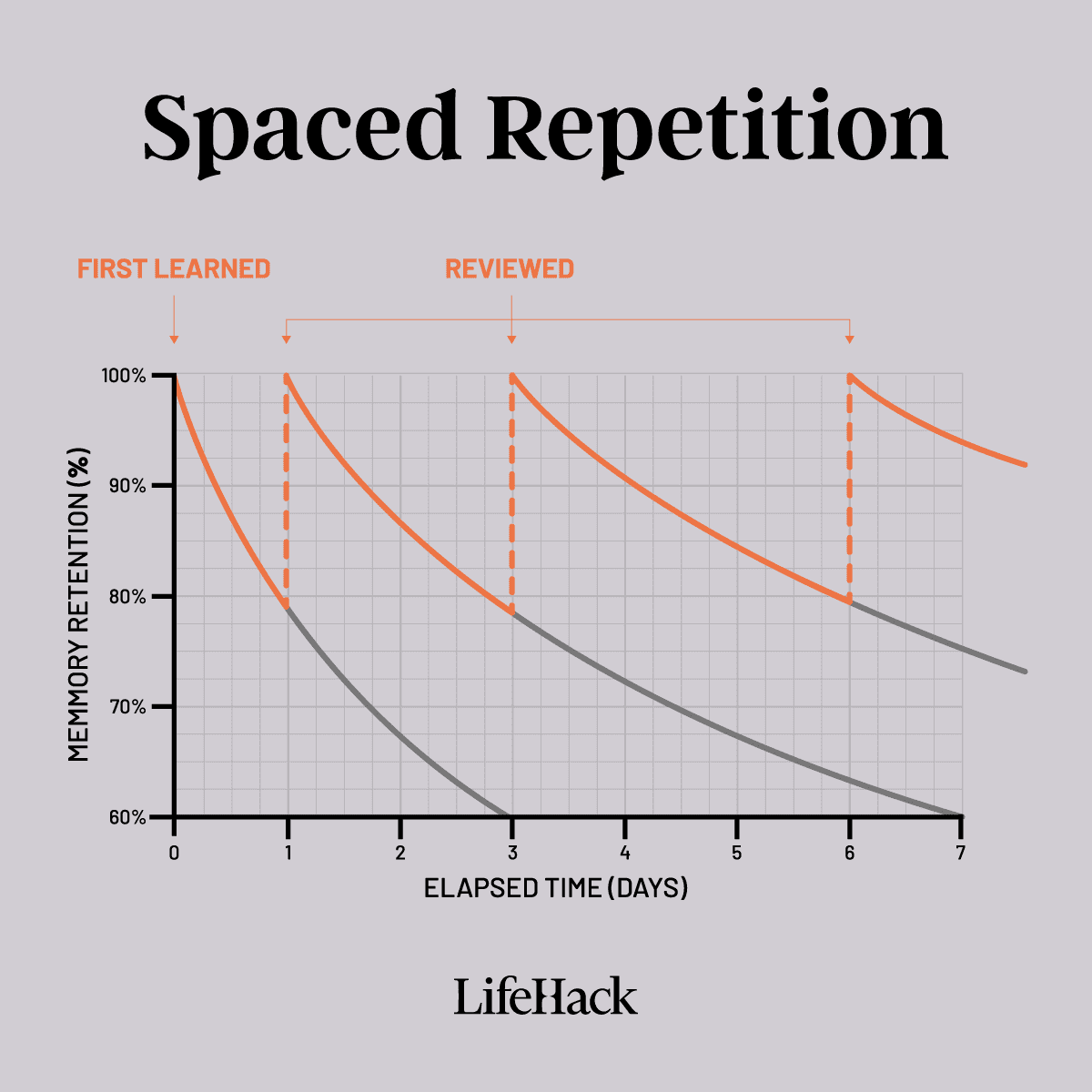
Understanding the Basics of Spaced Repetition
Spaced repetition is a learning technique that involves reviewing material at increasing intervals to enhance long-term retention. The method leverages the psychological spacing effect, which shows that information is better remembered when studied over spaced-out sessions rather than crammed. To use it effectively:
- Start with short intervals: Begin by reviewing new material after a day, then gradually increase the gap (e.g., 3 days, 1 week, 1 month).
- Use a structured system: Tools like Anki or SuperMemo automate interval scheduling based on your performance.
- Focus on active recall: Test yourself instead of passively rereading notes to strengthen memory.
Choosing the Right Spaced Repetition Tool
Selecting the right spaced repetition software (SRS) is critical for efficiency. Different tools cater to varied learning styles and subjects. Key considerations include:
- Anki: Highly customizable, ideal for flashcards, and supports multimedia.
- Quizlet: User-friendly for beginners but lacks advanced scheduling algorithms.
- SuperMemo: Pioneering algorithm but less intuitive for new users.
Optimizing Your Review Schedule
An effective review schedule balances frequency and retention. Over-reviewing wastes time, while under-reviewing leads to forgetting. Follow these steps:
- Adjust intervals based on difficulty: Harder material requires shorter intervals initially.
- Prioritize problem areas: Allocate more time to topics you struggle with.
- Track progress: Use analytics in SRS tools to refine your schedule.
Incorporating Active Recall and Testing
Active recall is the cornerstone of spaced repetition. Instead of passive review, engage your brain by retrieving information. Methods include:
- Flashcards: Write questions on one side and answers on the other.
- Self-quizzing: Cover notes and recite key points from memory.
- Practice exams: Simulate test conditions to reinforce learning.
Avoiding Common Spaced Repetition Mistakes
Even with a solid strategy, pitfalls can undermine progress. Steer clear of these common mistakes:
- Skipping reviews: Consistency is vital; missed sessions disrupt the spacing effect.
- Overloading cards: Keep flashcards concise to avoid cognitive overload.
- Ignoring feedback: Adjust intervals if you consistently forget material.
What is spaced repetition software?
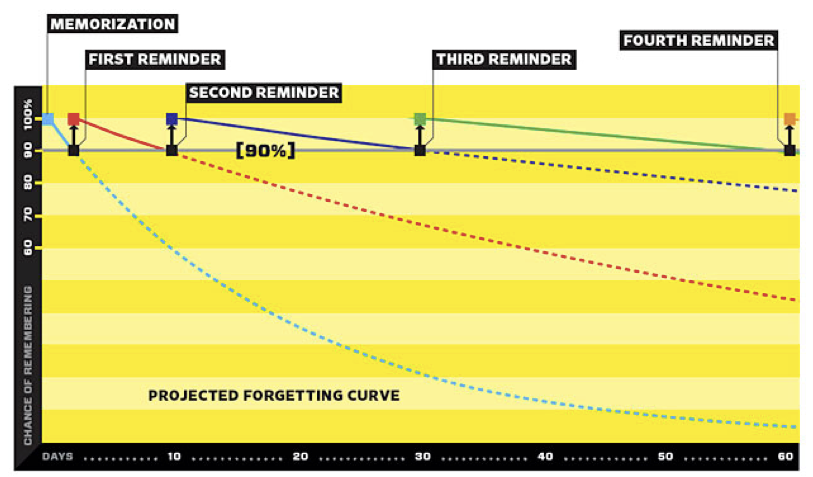
What is Spaced Repetition Software?
Spaced repetition software (SRS) is a digital tool designed to enhance memory retention by systematically reviewing information at optimal intervals. It leverages the spacing effect, a psychological phenomenon where information is better remembered if learning sessions are spaced out over time. SRS algorithms adjust review schedules based on user performance, prioritizing items that are harder to recall while reducing frequency for well-mastered material.
- Algorithm-driven: Uses mathematical models to determine the best time to review information.
- Adaptive learning: Adjusts intervals based on user input (e.g., correct/incorrect answers).
- Efficiency: Maximizes retention while minimizing study time.
How Does Spaced Repetition Software Work?
SRS operates by presenting flashcards or questions at increasing intervals. When a user correctly recalls an item, the software schedules the next review further in the future. If the answer is incorrect, the interval shortens, ensuring weaker material is revisited sooner. This method is rooted in the forgetting curve, a concept introduced by Hermann Ebbinghaus, which describes how memory retention declines over time without reinforcement.
- Initial learning: Information is introduced and reviewed frequently.
- Gradual spacing: Successful recalls extend intervals (e.g., days, weeks, months).
- Dynamic adjustments: The algorithm adapts to individual learning patterns.
Benefits of Using Spaced Repetition Software
SRS offers significant advantages for learners, particularly in retaining large volumes of information over long periods. It is widely used for language learning, medical studies, and exam preparation. By focusing on active recall and spaced intervals, it combats the natural tendency to forget and promotes long-term memory formation.
- Improved retention: Enhances memory consolidation through timed repetition.
- Time efficiency: Reduces unnecessary reviews of already mastered content.
- Customizable: Allows users to focus on challenging material.
Popular Spaced Repetition Software Tools
Several SRS applications have gained popularity due to their effectiveness and user-friendly interfaces. These tools often include features like multimedia support, shared decks, and progress tracking. Examples include Anki, SuperMemo, and Memrise, each catering to different learning styles and needs.
- Anki: Open-source, highly customizable, and supports plugins.
- SuperMemo: Pioneered the SRS concept, with advanced algorithms.
- Memrise: Focuses on language learning with gamified elements.
Scientific Basis of Spaced Repetition
The effectiveness of SRS is backed by decades of cognitive science research. Studies confirm that spaced repetition outperforms cramming by aligning with the brain's natural learning mechanisms. The spacing effect and testing effect are key principles that validate this approach, demonstrating that retrieval practice and distributed learning yield superior retention.
- Ebbinghaus' Forgetting Curve: Shows memory decay and the need for reinforcement.
- Testing Effect: Active recall strengthens memory more than passive review.
- Neuroplasticity: Repeated retrieval rewires the brain for better recall.
Frequently Asked Questions (FAQ)
What is spaced repetition software?
Spaced repetition software (SRS) is a digital tool designed to enhance learning and memory retention by leveraging the psychological principle of spaced repetition. This technique involves reviewing information at gradually increasing intervals, which helps move knowledge from short-term to long-term memory. Unlike traditional cramming, SRS schedules reviews based on algorithmic calculations that predict when you're likely to forget a piece of information. Popular examples include Anki, Quizlet, and Memrise, which use flashcards and quizzes to reinforce learning efficiently.
Why should I use spaced repetition software?
Using spaced repetition software can significantly improve your ability to retain and recall information over time. Studies show that this method is far more effective than passive rereading or last-minute cramming. By focusing on active recall and optimizing review timing, SRS helps you learn faster and remember longer. It's particularly useful for mastering languages, medical terms, technical concepts, or any subject requiring memorization. Additionally, it saves time by prioritizing difficult material and reducing unnecessary repetition of already mastered content.
How does spaced repetition software work?
Spaced repetition software operates by presenting information just as you're about to forget it, based on your previous performance. When you answer a flashcard correctly, the system schedules the next review further in the future. If you struggle, it shows the card again sooner. This adaptive scheduling is powered by algorithms like the Leitner system or the SM-2 algorithm, which adjust intervals dynamically. Over time, this ensures that difficult concepts are reviewed more frequently, while easier ones are gradually spaced out, maximizing efficiency.
Can spaced repetition software be used for any subject?
Yes, spaced repetition software is highly versatile and can be applied to virtually any subject that involves memorization. Whether you're learning vocabulary, historical dates, mathematical formulas, or even musical notes, SRS can help. The key is creating well-structured flashcards with clear, concise information. Some platforms also support multimedia, allowing you to include images, audio, or videos for richer learning experiences. However, it's less effective for abstract or skill-based subjects that require practice beyond rote memorization, such as creative writing or physical activities.
Leave a Reply
Related Posts