
Action Completion: 了 in Chinese Grammar

Understanding the use of 了 (le) in Chinese grammar is essential for mastering action completion, a key aspect of expressing past events. This particle often confuses learners due to its nuanced applications, but it primarily signals that an action has been completed or a change has occurred. Whether placed after a verb or at the end of a sentence, 了 provides clarity about timing and context. This article explores its fundamental rules, common mistakes, and practical examples to help learners grasp its correct usage. By demystifying 了, you’ll gain confidence in constructing accurate and natural-sounding Chinese sentences.
Understanding Action Completion with 了 in Chinese Grammar
1. What Does 了 Indicate in a Sentence?
The particle 了 (le) is used in Chinese to indicate the completion of an action or a change of state. It often appears after a verb to show that an action has been finished. For example:
- 我吃了饭。 (Wǒ chī le fàn.) – I ate (finished eating) the meal.
| Function | Example |
|---|---|
| Action Completion | 他买了一本书。(Tā mǎi le yī běn shū.) – He bought a book. |
| Change of State | 下雨了。(Xià yǔ le.) – It started raining. |
2. Position of 了 in a Sentence
The placement of 了 is crucial for meaning. It usually comes after the verb but before the object if the action is completed. However, at the end of a sentence, it can indicate a change of situation.
See AlsoWhat’s your next step to master Chinese?| Position | Example |
|---|---|
| After Verb | 我看了电影。(Wǒ kàn le diànyǐng.) – I watched the movie. |
| End of Sentence | 他生病了。(Tā shēngbìng le.) – He got sick. |
3. Common Mistakes When Using 了
Learners often misuse 了 by placing it incorrectly or overusing it. Key mistakes include:
- Adding 了 to habitual actions (e.g., I eat breakfast every day should not use 了).
- Using it with future actions (unless indicating a change).
| Mistake | Correction |
|---|---|
| 我每天吃了早饭。(Incorrect for habits) | 我每天吃早饭。(No 了 needed) |
| 明天我买了衣服。(Incorrect for future) | 明天我要买衣服。(Use 要 instead) |
4. 了 vs. 过: What's the Difference?
Both 了 and 过 (guo) relate to past actions, but:
- 了 emphasizes completion.
- 过 focuses on past experience.
| Particle | Usage |
|---|---|
| 了 | 我喝了咖啡。(I drank coffee.) |
| 过 | 我喝过咖啡。(I have tried coffee before.) |
5. Negative Sentences with 了
To negate a completed action, 没 (méi) is used instead of 不 (bù), and 了 is omitted.
See AlsoHow Appears If You Pass 365 Days On Duolingo: Rewards & Progress| Structure | Example |
|---|---|
| 没 + Verb | 我没吃饭。(Wǒ méi chī fàn.) – I didn’t eat. |
| 不 + Verb (for habits/future) | 我不吃肉。(Wǒ bù chī ròu.) – I don’t eat meat. |
When to use guo vs le?

Basic Differences Between Guo and Le
The primary distinction between guo and le lies in their focus. Guo emphasizes past experience, while le highlights the completion or change of an action. Here’s a breakdown:
- Guo indicates that an action happened at least once in the past, without specifying when.
- Le marks the completion of an action or a change of state, often tied to a specific time.
- Guo can imply the action may happen again, whereas le suggests finality.
Using Guo for Past Experiences
Guo is used to express that someone has experienced something before. It doesn’t matter when it happened, only that it occurred at some point.
See AlsoLearning to read handwritten Chinese- Example: Wǒ chī guo zhōngguó cài (I have eaten Chinese food before).
- It often appears in questions like Nǐ qù guo ma? (Have you been there before?).
- The action may or may not be repeated in the future.
Using Le for Completed Actions
Le is used to show that an action is finished or a situation has changed. It often refers to recent or specific events.
- Example: Wǒ chī le fàn (I ate a meal).
- It can indicate a new state, like Tiān qíng le (The weather cleared up).
- Le is commonly used in narratives or when reporting events.
When to Avoid Guo and Use Le
Guo is inappropriate when discussing specific or recent actions. Use le instead in these cases.
- Example: Wǒ zuótiān kàn le diànyǐng (I watched a movie yesterday).
- Avoid guo when the action is tied to a particular moment.
- Le is better for sequential events, like Wǒ mǎi le piào, ránhòu jìn le chǎng (I bought a ticket, then entered the venue).
Common Mistakes When Using Guo and Le
Learners often confuse guo and le due to their overlapping past-tense functions. Here are key errors to avoid:
See AlsoChildren Learning Chinese (Is It Possible)?- Using guo for recent actions (incorrect: Wǒ jīntiān qù guo).
- Omitting le when describing completed actions (incorrect: Wǒ xiě wán instead of Wǒ xiě wán le).
- Overusing le for habitual or general experiences (incorrect: Wǒ měi tiān kàn le diànshì).
What does the particle 地 de indicate in a sentence?
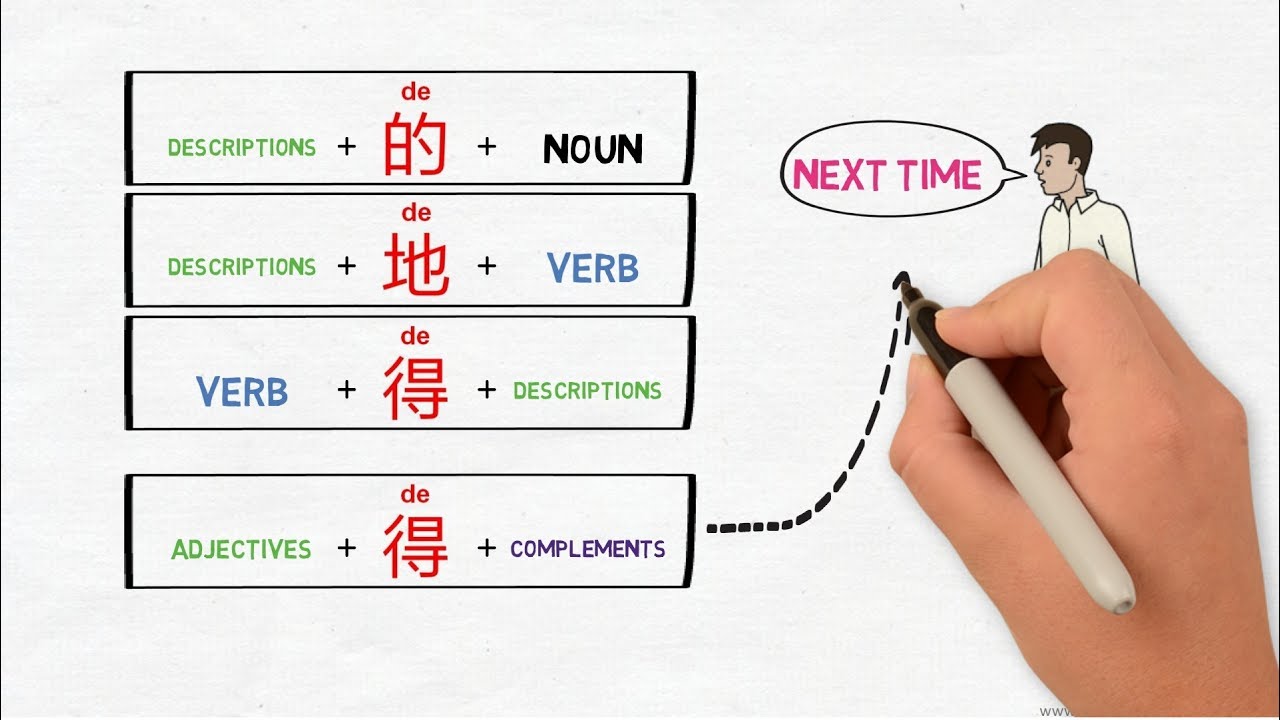
What is the Function of the Particle 地 (de) in Chinese Grammar?
The particle 地 (de) is used in Chinese to connect an adverb or adverbial phrase to a verb or adjective. It indicates how an action is performed or the manner in which something happens. For example:
- Modifies verbs: 他地跑 (tā kuàide pǎo) means He runs quickly.
- Links adverbial phrases: 她地说 (tā xiǎoxīnde shuō) translates to She speaks carefully.
- Describes adjectives: 非常地漂亮 (fēichángde piàoliang) means extremely beautiful.
How is 地 (de) Different from 的 (de) and 得 (de)?
While all three particles are pronounced de, they serve distinct grammatical roles:
- 的 (de): Marks possession or modifies nouns (e.g., 我的书 (wǒde shū) – my book).
- 得 (de): Links verbs to complements (e.g., 跑得快 (pǎode kuài) – runs fast).
- 地 (de): Exclusively connects adverbs to verbs/adjectives (e.g., 高兴地笑 (gāoxìngde xiào) – laughs happily).
When Should You Use 地 (de) in a Sentence?
地 (de) is required when:
- Describing actions: 安静地听 (ānjìngde tīng) – listens quietly.
- Using adverbial phrases: 一步一步地走 (yī bù yī bùde zǒu) – walks step by step.
- Emphasizing manner: 热情地欢迎 (rèqíngde huānyíng) – welcomes warmly.
Common Mistakes When Using 地 (de)
Learners often confuse 地 (de) with other de particles. Avoid these errors:
- Using 的 instead of 地: Incorrect: 高兴的跑 (should be 高兴地跑).
- Omitting 地 with adverbs: Incorrect: 慢慢走 (should be 慢慢地走).
- Misplacing 地: It must directly follow the adverb (e.g., 认真地学习).
Examples of 地 (de) in Real-Life Contexts
Here are practical uses of 地 (de):
- Daily speech: 她温柔地说话 (tā wēnróude shuōhuà) – She speaks gently.
- Written texts: 雨不停地下 (yǔ bù tíngde xià) – The rain falls continuously.
- Instructions: 小心地使用 (xiǎoxīnde shǐyòng) – Use carefully.
What is the Chinese grammar rule?
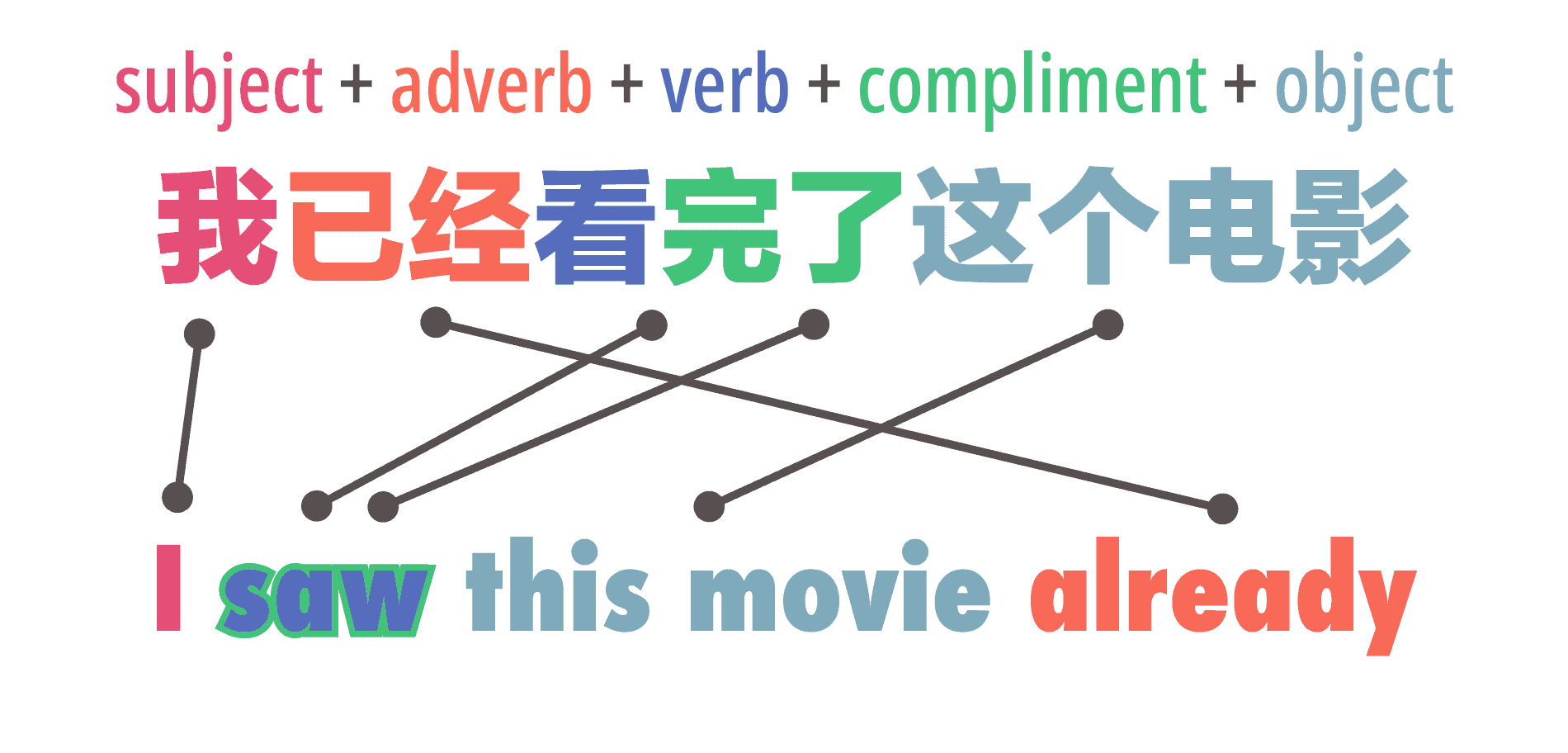
Basic Structure of Chinese Grammar
Chinese grammar follows a subject-verb-object (SVO) structure, similar to English. However, it lacks verb conjugations, tenses, and plural forms, making it relatively simple in some aspects. Key features include:
- No verb conjugation: Verbs remain the same regardless of tense or subject.
- Particles indicate tense: Words like 了 (le) or 过 (guò) mark completed actions.
- Context-driven meaning: Time phrases often replace tense markers.
Word Order and Sentence Patterns
Chinese relies heavily on word order to convey meaning. Deviations can change the sentence's intent. Common patterns include:
- Adjectives before nouns: E.g., 漂亮的花 (piàoliang de huā) means beautiful flower.
- Time phrases at the start: E.g., 昨天我去了公园 (Zuótiān wǒ qùle gōngyuán) means Yesterday, I went to the park.
- Questions with 吗 (ma): Adding 吗 turns statements into yes/no questions.
Use of Measure Words
Chinese requires measure words (量词 liàngcí) when counting nouns. Each noun category has a specific measure word. Examples:
- 个 (gè): General measure word for people or objects.
- 只 (zhī): Used for animals like 一只猫 (yī zhī māo) (a cat).
- 张 (zhāng): For flat objects like paper or tables.
Tense and Aspect Markers
Chinese uses particles and adverbs instead of verb conjugations to indicate time. Key markers include:
- 了 (le): Signals a completed action.
- 正在 (zhèngzài): Indicates an ongoing action.
- 会 (huì): Used for future intentions.
Negation in Chinese
Negation is straightforward, using words like 不 (bù) and 没 (méi). Rules include:
- 不 for habitual actions: E.g., 我不吃辣 (Wǒ bù chī là) (I don’t eat spicy food).
- 没 for past actions: E.g., 我没去 (Wǒ méi qù) (I didn’t go).
- Double negation: Phrases like 不得不 (bùdébù) mean have to.
Frequently Asked Questions (FAQ)
What is the function of 了 (le) in Chinese grammar?
The particle 了 (le) in Chinese grammar primarily indicates completed actions or changes of state. When placed after a verb, it signals that the action has been finished, such as in the sentence 我吃了饭 (Wǒ chī le fàn), meaning I ate (finished eating) the meal. Additionally, 了 can appear at the end of a sentence to denote a change or new situation, like in 下雨了 (Xià yǔ le), which means It started raining. Understanding these two key functions—action completion and state change—is essential for mastering 了.
How do you distinguish between the two uses of 了 (le)?
The distinction lies in the placement and context of 了. When used after a verb (verb + 了), it emphasizes completion, as in 他写了信 (Tā xiě le xìn), meaning He wrote the letter (and finished it). When placed at the end of a sentence (sentence-final 了), it often indicates a change or new information, like 她病了 (Tā bìng le), translating to She got sick (and wasn’t before). Paying attention to word order and the speaker’s intent helps clarify which function 了 serves.
Can 了 (le) be used for future actions?
Generally, 了 (le) is not used for future actions because it marks completion or changes that have already occurred. However, in specific contexts, such as when a future action is framed as a completed step within a sequence, 了 might appear. For example, 你到了就给我打电话 (Nǐ dào le jiù gěi wǒ dǎ diànhuà) means Call me once you have arrived. Here, the arrival is treated as a completed step relative to the future action of calling. This usage is nuanced and less common.
What are common mistakes learners make with 了 (le)?
Learners often overuse or misplace 了, such as adding it to every past action (even when unnecessary) or confusing its two functions. For instance, saying 我昨天去了商店了 (Wǒ zuótiān qù le shāngdiàn le) with both a verb-了 and sentence-final 了 can sound redundant. Another mistake is omitting 了 when it’s needed, like in 我吃晚饭 (Wǒ chī wǎnfàn), which lacks the sense of completion conveyed by 我吃了晚饭 (Wǒ chī 了 wǎnfàn). Practicing contextual usage and avoiding direct translations from English tenses are key to avoiding errors.
Leave a Reply
Related Posts