
What are the 5 stages of Language Acquisition?

Language acquisition is a fascinating process that unfolds in distinct stages, each marking a critical milestone in mastering a new language. Whether learning as a child or an adult, individuals progress through predictable phases, from initial exposure to fluency. Understanding these stages helps educators, learners, and parents support effective language development. The five key stages—pre-production, early production, speech emergence, intermediate fluency, and advanced fluency—outline the journey from silent comprehension to confident communication. This article explores each phase in detail, highlighting the characteristics, challenges, and strategies for success. By recognizing these steps, learners can navigate their path to proficiency with greater clarity and confidence.
What Are the 5 Stages of Language Acquisition?
Language acquisition refers to the natural process through which individuals learn a language, whether it’s their first (L1) or second (L2) language. Linguists and educators have identified five key stages that learners typically progress through. These stages are universal, though the speed and proficiency may vary depending on factors like age, exposure, and motivation. Below, we explore each stage in detail.
1. The Pre-Production Stage (Silent Period)
The Pre-Production Stage, also known as the Silent Period, is the initial phase where learners are exposed to the new language but do not yet produce speech. During this time, they focus on listening and comprehension, absorbing vocabulary and sounds.
See Also14 of the Hardest Chinese Characters to Write| Key Characteristics | Examples |
|---|---|
| Minimal verbal output | Pointing, nodding, or using gestures |
| High focus on listening | Recognizing common words like hello or goodbye |
2. The Early Production Stage
In the Early Production Stage, learners begin to speak in short phrases or single words. Their vocabulary is limited, but they can respond to simple questions and use repetitive language patterns.
| Key Characteristics | Examples |
|---|---|
| One- or two-word responses | Yes, No, My name |
| Basic comprehension | Understanding simple commands like sit down |
3. The Speech Emergence Stage
The Speech Emergence Stage marks a significant leap in language ability. Learners form simple sentences, ask questions, and engage in basic conversations, though with grammatical errors.
| Key Characteristics | Examples |
|---|---|
| Short sentences | I go to school, She likes apples |
| Improved vocabulary | Using common verbs and nouns correctly |
4. The Intermediate Fluency Stage
At the Intermediate Fluency Stage, learners express more complex thoughts, use a broader vocabulary, and demonstrate better grammar. They can participate in discussions and write paragraphs.
See AlsoChristmas Greetings in Chinese| Key Characteristics | Examples |
|---|---|
| Longer sentences | I think the movie was interesting because... |
| Debating and reasoning | Expressing opinions with supporting details |
5. The Advanced Fluency Stage
The final stage, Advanced Fluency, is where learners achieve near-native proficiency. They speak fluently, understand nuances, and use the language academically or professionally.
| Key Characteristics | Examples |
|---|---|
| Near-native fluency | Giving presentations or writing essays |
| Idiomatic usage | Understanding slang, jokes, and cultural references |
What is stage 5 of language acquisition?

Understanding Stage 5 of Language Acquisition
Stage 5 of language acquisition, often referred to as the Advanced Fluency stage, is the final phase where learners achieve near-native proficiency. At this point, individuals can:
See AlsoHow to Get Duolingo Max: Unlocking the Next Level of Language Learning- Engage in complex conversations with minimal errors.
- Understand and use idiomatic expressions and cultural nuances.
- Produce coherent and sophisticated written and spoken discourse.
Key Characteristics of Stage 5
Learners in this stage exhibit several defining traits:
- Near-native pronunciation and intonation.
- Ability to debate abstract topics effectively.
- Mastery of low-frequency vocabulary and specialized terminology.
How Long Does It Take to Reach Stage 5?
The timeline varies based on factors such as:
- Exposure to the target language environment.
- Consistency in practice and immersion.
- Individual aptitude and learning strategies.
Challenges Faced in Stage 5
Even at this advanced level, learners may encounter difficulties like:
See AlsoTop 10 Most Followed Duolingo Account: Social Stars In 2025- Perfecting subtle grammatical nuances.
- Overcoming occasional fossilized errors.
- Adapting to regional dialects or slang.
Strategies to Excel in Stage 5
To refine skills further, learners should focus on:
- Engaging with native content (books, films, podcasts).
- Seeking feedback from proficient speakers.
- Practicing advanced writing (essays, reports).
What are the 5 C's of language acquisition?
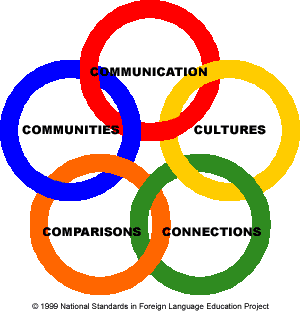
What Are the 5 C's of Language Acquisition?
The 5 C's of language acquisition are a framework designed to guide effective language learning and teaching. These principles emphasize holistic development in communication, cultural understanding, and cognitive skills. Below is a detailed breakdown of each component:
- Communication: The ability to convey and interpret meaning in spoken, written, or signed forms.
- Cultures: Understanding the practices, perspectives, and products of the communities that speak the target language.
- Connections: Linking language learning to other disciplines and real-world contexts.
- Comparisons: Analyzing similarities and differences between the native and target languages and cultures.
- Communities: Engaging with multilingual communities to apply language skills beyond the classroom.
Why Is Communication Key in Language Acquisition?
Communication is the cornerstone of language learning, enabling learners to express ideas and understand others. It involves:
- Interpersonal skills: Exchanging information through conversation or writing.
- Interpretive skills: Comprehending spoken, written, or visual materials.
- Presentational skills: Creating messages for an audience, such as speeches or essays.
How Does Culture Influence Language Learning?
Culture shapes language use and meaning, making it essential for learners to explore:
- Social norms: Gestures, etiquette, and traditions that affect communication.
- Historical context: How history influences language evolution and idioms.
- Artistic expressions: Literature, music, and media that reflect cultural values.
What Role Do Connections Play in Language Acquisition?
Connections bridge language learning with other subjects and real-life applications, including:
- Academic integration: Using the target language to study science, history, or math.
- Professional relevance: Applying language skills in careers like diplomacy or business.
- Personal growth: Building relationships with speakers of the target language.
Why Are Comparisons Important for Language Learners?
Comparisons deepen understanding by contrasting languages and cultures, focusing on:
- Linguistic structures: Grammar, syntax, and vocabulary differences.
- Cultural perspectives: Values, beliefs, and societal norms unique to each culture.
- Metacognitive awareness: Reflecting on how language shapes thought.
How Can Communities Enhance Language Proficiency?
Communities provide immersive environments to practice and refine language skills through:
- Local interactions: Engaging with native speakers in everyday settings.
- Online forums: Participating in discussions or language-exchange platforms.
- Cultural events: Attending festivals, workshops, or meetups to experience the language authentically.
What are the steps of language acquisition?

The Prelinguistic Stage
The prelinguistic stage occurs before a child produces recognizable words. During this phase, infants develop foundational communication skills through sounds and gestures. Key milestones include:
- Cooing: Around 2-4 months, babies produce vowel-like sounds (e.g., oo, ah).
- Babbling: Between 6-12 months, infants experiment with consonant-vowel combinations (e.g., ba-ba, ma-ma).
- Gestures: Non-verbal cues like pointing or waving emerge to convey meaning.
The One-Word (Holophrastic) Stage
Between 12-18 months, children begin using single words to express complex ideas. These holophrases often represent objects, actions, or emotions. Examples include:
- Naming: Words like milk or dog label familiar items.
- Requests: Terms like up or more communicate desires.
- Emotions: Exclamations such as no! or uh-oh reflect feelings.
The Two-Word Stage
Around 18-24 months, toddlers combine two words to form simple sentences. These telegraphic utterances omit grammatical markers but convey clear meaning:
- Subject + Verb: Mommy go or Baby sleep.
- Verb + Object: Eat cookie or Throw ball.
- Possession: My toy or Daddy car.
The Telegraphic Stage
From 2-3 years, children construct longer sentences while still omitting minor grammatical elements. Key features include:
- Multi-word phrases: I want juice or Where is cat?
- Emerging grammar: Use of plurals (dogs) or simple past tense (played).
- Question formation: Rising intonation for queries (You go?).
The Fluency and Refinement Stage
By age 4-5, children refine syntax, vocabulary, and pronunciation, nearing adult-like fluency. Developments include:
- Complex sentences: Use of conjunctions (because, and).
- Grammar mastery: Correct verb tenses (ran, eating) and pronouns (he, they).
- Narrative skills: Ability to tell stories or describe events sequentially.
What are the five areas of language acquisition?
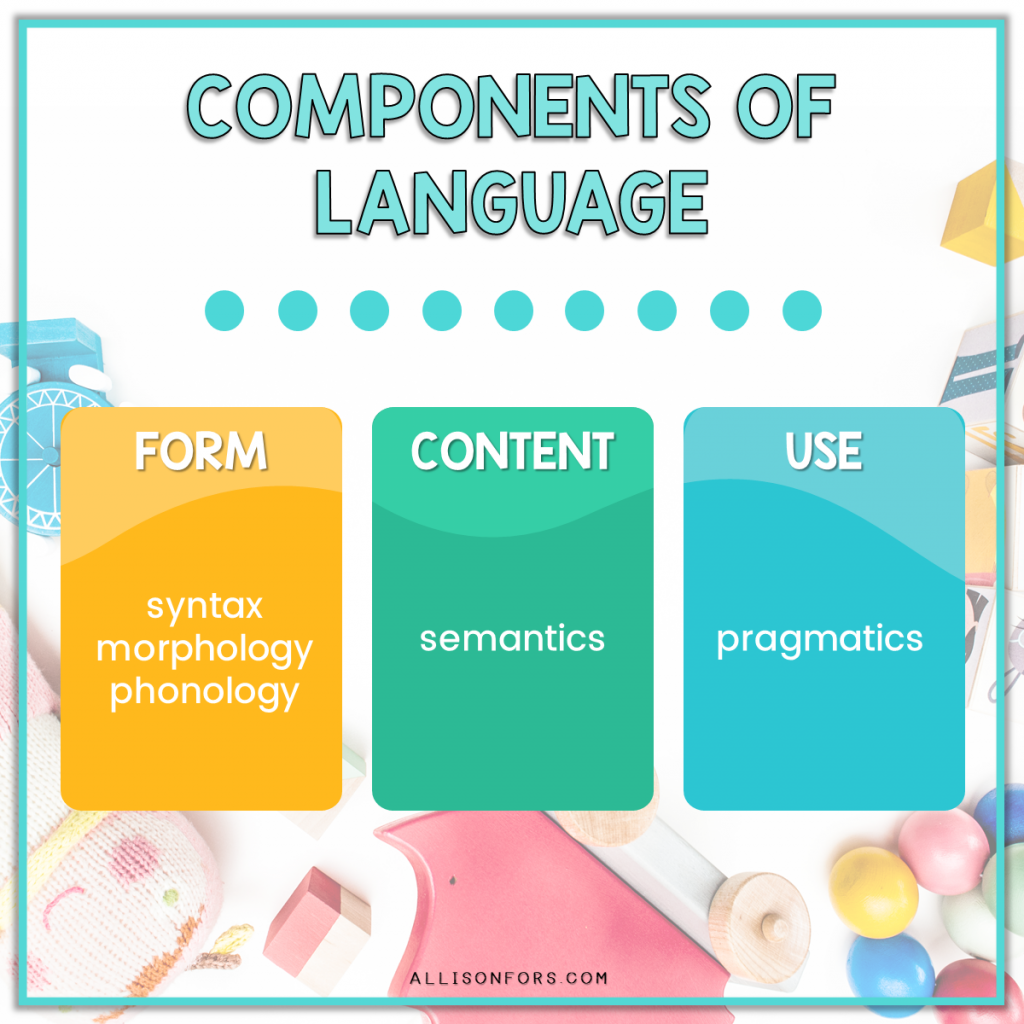
Phonology: The Sound System of Language
Phonology refers to the study of the sound system in a language, including how sounds are organized and used. This area focuses on pronunciation, intonation, and stress patterns. Key aspects include:
- Phonemes: The smallest units of sound that distinguish meaning.
- Intonation: The rise and fall of pitch in speech.
- Stress patterns: Emphasis on certain syllables or words.
Morphology: The Structure of Words
Morphology deals with the formation and structure of words, including prefixes, suffixes, and root words. This area helps learners understand how words are built and modified. Important elements include:
- Morphemes: The smallest meaningful units in a language.
- Derivational morphology: Creating new words by adding affixes.
- Inflectional morphology: Modifying words to indicate tense, number, or gender.
Syntax: The Rules of Sentence Structure
Syntax involves the rules governing how words combine to form grammatically correct sentences. It covers sentence order, clauses, and phrases. Key components include:
- Word order: The arrangement of words in a sentence.
- Sentence types: Declarative, interrogative, imperative, and exclamatory.
- Agreement: Ensuring subjects and verbs match in number and tense.
Semantics: The Meaning of Words and Sentences
Semantics focuses on the meaning of words, phrases, and sentences. It explores how context influences interpretation. Essential aspects include:
- Lexical meaning: The definition of individual words.
- Figurative language: Metaphors, idioms, and similes.
- Ambiguity: When a word or sentence has multiple meanings.
Pragmatics: The Use of Language in Context
Pragmatics examines how language is used in social contexts, including politeness, tone, and implied meaning. Crucial elements include:
- Speech acts: How utterances perform actions (e.g., requests or apologies).
- Conversational rules: Turn-taking and topic maintenance.
- Cultural norms: How context shapes language use.
Frequently Asked Questions (FAQ)
What are the 5 stages of language acquisition?
The 5 stages of language acquisition are a framework used to describe how individuals learn a new language. These stages include: pre-production (silent period), early production (limited vocabulary), speech emergence (simple sentences), intermediate fluency (complex ideas), and advanced fluency (near-native proficiency). Each stage represents a progression in comprehension, speaking, reading, and writing abilities, with learners gradually developing confidence and accuracy over time.
How long does each stage of language acquisition take?
The duration of each stage of language acquisition varies depending on factors like age, exposure, and learning environment. For example, pre-production may last a few weeks to months, while advanced fluency can take several years. Immersion and consistent practice can accelerate progress, but learners should focus on mastery rather than speed to build a strong linguistic foundation.
Can adults progress through the stages of language acquisition as quickly as children?
While adults may have cognitive advantages like prior learning experience, children often acquire languages more effortlessly due to their brain plasticity. Adults can still progress through the 5 stages effectively with structured practice, immersion, and motivation. However, achieving advanced fluency may require more deliberate effort compared to younger learners.
What strategies help learners move through the stages of language acquisition faster?
To advance through the stages of language acquisition, learners should engage in active listening, conversational practice, and vocabulary building. Immersive experiences, such as living in a country where the language is spoken, or using multimedia resources (e.g., films, podcasts) can significantly enhance progress. Additionally, consistent feedback from teachers or native speakers helps refine skills at each stage.
Leave a Reply
Related Posts