
How To Use Rhetorical Language Structures In Chinese

Mastering rhetorical language structures in Chinese can elevate your communication, making it more persuasive and engaging. Chinese rhetoric, deeply rooted in its rich literary tradition, employs techniques like parallelism, metaphor, and allusion to convey meaning with elegance and impact. Whether in formal writing, speeches, or everyday conversation, these structures enhance clarity and emotional resonance. Understanding their use not only improves fluency but also provides insight into Chinese culture and thought patterns. This article explores key rhetorical devices, their applications, and practical tips to incorporate them effectively. By learning these techniques, you can refine your Chinese expression and connect more deeply with native speakers.
How To Use Rhetorical Language Structures In Chinese
Understanding Rhetorical Questions in Chinese
Rhetorical questions are a powerful tool in Chinese to engage the listener or reader without expecting an answer. They often emphasize a point or provoke thought. For example, 难道你不知道吗? (Nándào nǐ bù zhīdào ma?) translates to Don’t you know? but implies the listener should already know.
| Structure | Function |
|---|---|
| 难道...吗? | Emphasizes obviousness |
| 不是...吗? | Confirms agreement |
Using Parallelism for Emphasis
Parallel structures (排比 páibǐ) repeat grammatical patterns to create rhythm and persuasion. For instance, 我爱我的家,我爱我的国,我爱我的文化 (I love my home, I love my country, I love my culture) reinforces unity.
See AlsoTop Chinese Brands for Cultural Significance| Example | Effect |
|---|---|
| 重复动词 (Repeated verbs) | Strengthens conviction |
| 对称句式 (Symmetrical clauses) | Enhances memorability |
Leveraging Metaphors in Chinese
Metaphors (隐喻 yǐnyù) compare unrelated things to convey abstract ideas vividly. Common ones include 时间就是金钱 (Time is money). These simplify complex concepts.
| Metaphor | Meaning |
|---|---|
| 如鱼得水 (Like a fish in water) | Comfort in a situation |
| 画蛇添足 (Draw legs on a snake) | Unnecessary additions |
Employing Hyperbole for Impact
Exaggeration (夸张 kuāzhāng) amplifies emotions or importance. Phrases like 我饿死了! (I’m starving to death!) are common in spoken Chinese but rare in formal writing.
| Hyperbole | Usage Context |
|---|---|
| ...死了 (…to death) | Casual speech |
| 千万... (Absolutely...) | Warnings/advice |
Incorporating Antithesis for Contrast
Antithesis (对偶 duìǒu) juxtaposes opposites for balance, like 虚心使人进步,骄傲使人落后 (Modesty brings progress, pride brings lag). It’s prevalent in proverbs and speeches.
See AlsoChinese Food Made Easy: Stir Fry King Prawn with Broccoli| Antithesis Pair | Purpose |
|---|---|
| 快 vs. 慢 (Fast vs. slow) | Highlight differences |
| 新 vs. 旧 (New vs. old) | Emphasize change |
What are the Chinese rhetorical devices?

Common Chinese Rhetorical Devices
Chinese rhetorical devices are linguistic techniques used to enhance expression, persuasion, and aesthetic appeal. Some of the most common ones include:
- Parallelism (对偶, Duì'ǒu): Balanced phrases or clauses with similar structure and meaning.
- Metaphor (比喻, Bǐyù): Implied comparisons to convey deeper meanings.
- Repetition (反复, Fǎnfù): Repeating words or phrases for emphasis.
- Hyperbole (夸张, Kuāzhāng): Exaggeration for dramatic effect.
- Allusion (用典, Yòngdiǎn): Referencing historical or literary figures/events.
Chinese Rhetorical Devices in Classical Literature
Classical Chinese literature heavily relies on rhetorical devices to convey philosophical and artistic depth. Key examples include:
See AlsoChinese Streamer Banned for Eating Too Much at Buffet- Antithesis (对仗, Duìzhàng): Contrasting ideas in parallel structures.
- Symbolism (象征, Xiàngzhēng): Using objects to represent abstract concepts.
- Ellipsis (省略, Shěnglüè): Omitting words for brevity and impact.
Modern Usage of Chinese Rhetorical Devices
In contemporary Chinese, rhetorical devices are used in speeches, advertising, and media to engage audiences:
- Pun (双关, Shuāngguān): Wordplay with multiple meanings.
- Rhetorical Question (设问, Shèwèn): Questions posed to make a point rather than seek answers.
- Irony (反语, Fǎnyǔ): Saying the opposite of what is meant.
Chinese Rhetorical Devices in Poetry
Chinese poetry, especially Tang and Song styles, employs unique rhetorical techniques:
- Imagery (意象, Yìxiàng): Vivid descriptions to evoke emotions.
- Personification (拟人, Nǐrén): Giving human traits to non-human entities.
- Synesthesia (通感, Tōnggǎn): Blending sensory descriptions.
Cultural Significance of Chinese Rhetorical Devices
These devices reflect cultural values and historical influences in Chinese communication:
See AlsoHow to learn Chinese in the long term with intrinsic motivation- Harmony (和谐, Héxié): Emphasis on balance and symmetry.
- Indirectness (含蓄, Hánxù): Valuing subtlety over directness.
- Confucian Influence: Many devices align with moral and ethical teachings.
How do you use rhetorical language?
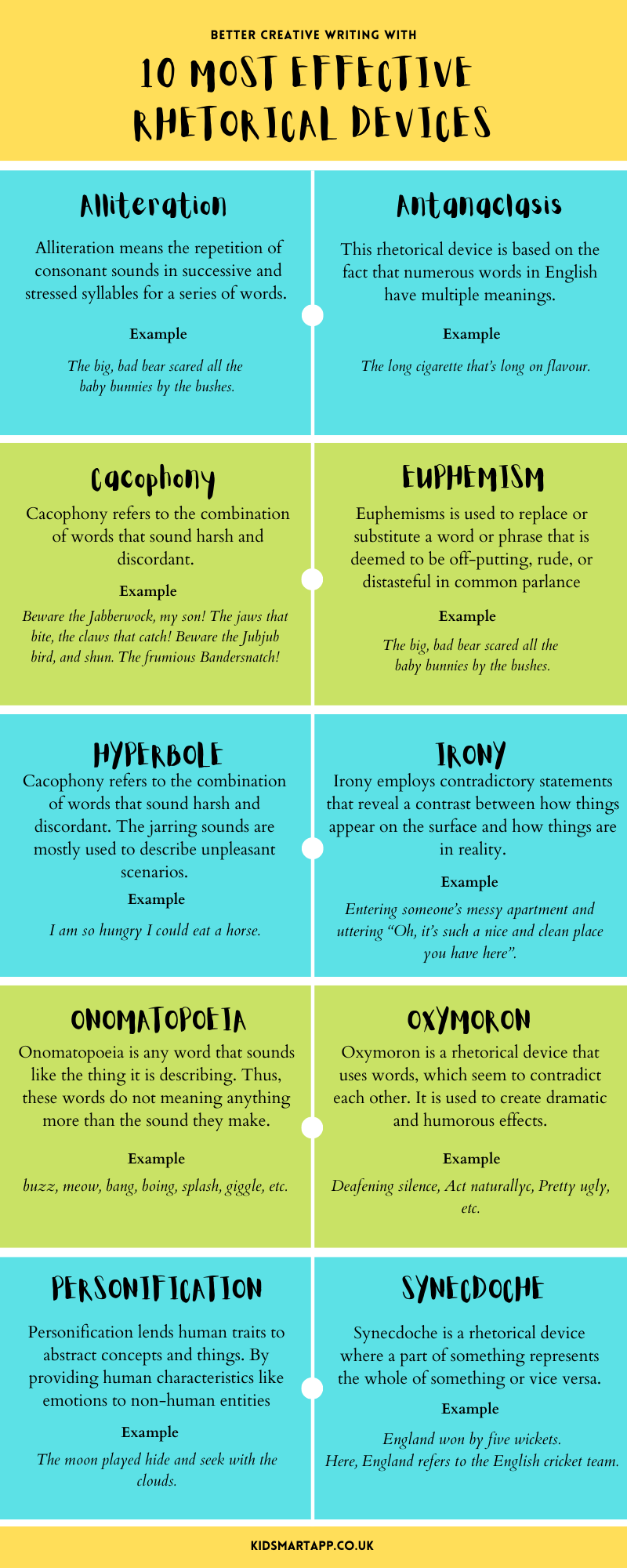
Understanding Rhetorical Language
Rhetorical language is a technique used to persuade, engage, or emphasize a point without expecting a direct answer. It relies on stylistic devices to make speech or writing more compelling. Here are key aspects:
- Purpose: It aims to influence the audience’s emotions or logic.
- Devices: Includes metaphors, hyperbole, and rhetorical questions.
- Effectiveness: Enhances memorability and emotional impact.
Common Rhetorical Devices
Several rhetorical devices are frequently used to strengthen arguments or narratives. Below are prominent examples:
See AlsoEnjoying the journey while focusing on the destination- Anaphora: Repetition of a word/phrase at the start of clauses.
- Alliteration: Repetition of initial consonant sounds for rhythm.
- Irony: Saying the opposite of what’s meant for effect.
Using Rhetorical Questions
Rhetorical questions are questions posed to make a point rather than elicit an answer. They engage the audience by prompting reflection. Key uses include:
- Engagement: Draws listeners into the discussion.
- Emphasis: Highlights contradictions or obvious truths.
- Persuasion: Guides the audience toward a specific conclusion.
Applying Rhetorical Language in Speeches
In public speaking, rhetorical language amplifies a speaker’s message. Techniques to master:
- Repetition: Reinforces key ideas (e.g., Martin Luther King’s I Have a Dream).
- Parallelism: Uses similar structures for balance and rhythm.
- Pathos: Appeals to emotions to build connection.
Rhetorical Language in Writing
Written rhetoric employs devices to persuade or inform effectively. Strategies for writers:
- Analogies: Simplifies complex ideas through comparison.
- Hyperbole: Exaggeration to emphasize importance.
- Antithesis: Contrasts ideas to highlight differences.
How to use question words in Chinese?
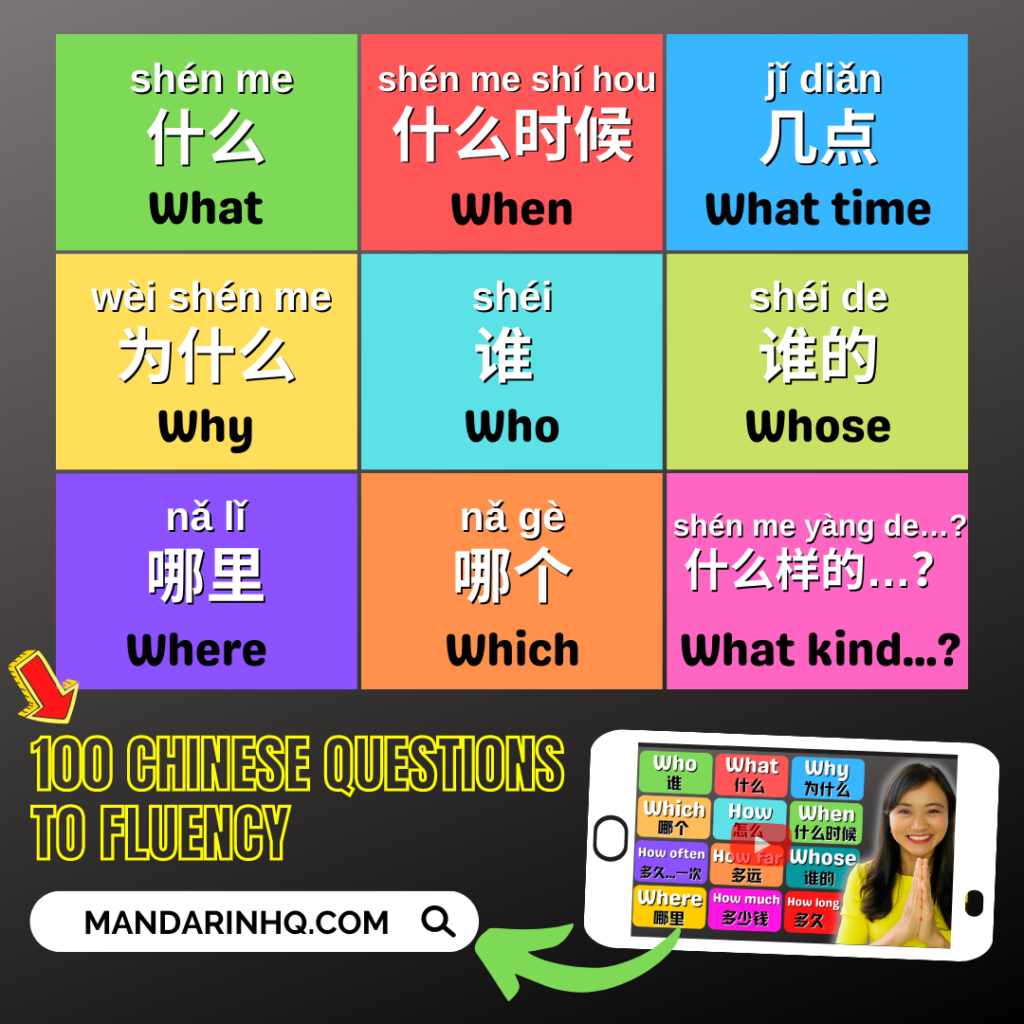
What Are the Basic Question Words in Chinese?
In Chinese, question words are used to form inquiries, similar to English. Here are the most common ones:
- 什么 (shénme) - What (e.g., 这是什么? - What is this?)
- 谁 (shéi) - Who (e.g., 他是谁? - Who is he?)
- 哪里/哪儿 (nǎlǐ/nǎr) - Where (e.g., 你在哪里? - Where are you?)
- 为什么 (wèishénme) - Why (e.g., 你为什么迟到? - Why are you late?)
- 怎么 (zěnme) - How (e.g., 你怎么做? - How do you do it?)
How to Structure Questions with Question Words in Chinese?
Chinese questions with question words follow a straightforward structure. The word replaces the part of the sentence you're asking about.
- Place the question word where the answer would go in a statement.
- No word order change is needed (unlike English do or inversion).
- Example: 你喜欢什么? (You like what? meaning What do you like?)
Can Question Words Be Used with Measure Words?
Yes, question words often pair with measure words when referring to objects or quantities.
- 哪 (nǎ) + measure word: 哪个 (nǎge) - Which one?
- 几 (jǐ) + measure word: 几个 (jǐge) - How many? (for small quantities)
- 多少 (duōshǎo) + noun: 多少钱? (duōshǎo qián?) - How much money?
How to Use 吗 (ma) vs. Question Words?
吗 (ma) turns statements into yes/no questions, while question words seek specific information.
- Example with 吗: 你喜欢茶吗? (Do you like tea?)
- Example with question word: 你喜欢什么茶? (What tea do you like?)
- Never use 吗 and a question word together.
Are There Polite Ways to Ask Questions in Chinese?
Adding polite phrases softens questions with question words.
- Use 请问 (qǐngwèn) - May I ask...: 请问,厕所在哪里? (May I ask, where is the toilet?)
- Add 可以吗 (kěyǐ ma) for permission: 我可以问一个问题吗? (Can I ask a question?)
- Use 能不能 (néng bù néng) for ability: 你能不能帮我? (Can you help me?)
What language technique is a rhetorical question?
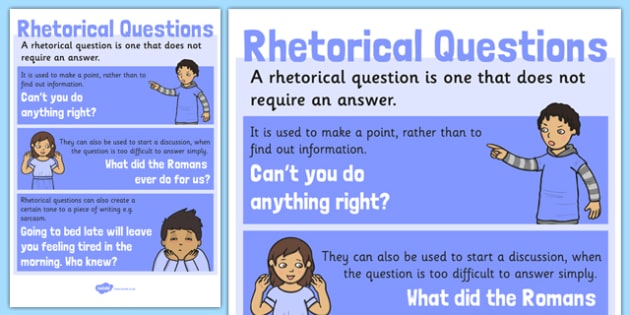
What Is a Rhetorical Question?
A rhetorical question is a language technique where a question is asked not to elicit an answer but to make a point or persuade the audience. It is commonly used in speeches, debates, and literature to emphasize an idea or provoke thought.
- Purpose: Designed to engage the listener or reader without expecting a reply.
- Effect: Creates emphasis, drama, or reinforces an argument.
- Examples: Isn't it obvious? or How could anyone ignore this?
How Does a Rhetorical Question Function in Communication?
Rhetorical questions serve as a persuasive tool by guiding the audience toward a specific viewpoint. They simplify complex ideas and make arguments more relatable.
- Engagement: Keeps the audience actively thinking.
- Persuasion: Subtly leads to a desired conclusion.
- Clarity: Breaks down abstract concepts into digestible questions.
Types of Rhetorical Questions
Rhetorical questions can be categorized based on their intent, such as provoking thought, emphasizing a point, or dismissing an opposing view.
- Hypophora: Posing a question and immediately answering it.
- Erotesis: A series of rapid rhetorical questions for dramatic effect.
- Anthypophora: Challenging an opponent’s argument with a rhetorical question.
Examples of Rhetorical Questions in Literature and Speeches
Famous writers and orators frequently use rhetorical questions to enhance impact. Shakespeare’s To be or not to be? and Martin Luther King Jr.’s When will you be satisfied? are iconic examples.
- Shakespeare: Shall I compare thee to a summer’s day?
- Political Speeches: Are we not entitled to justice?
- Advertising: Why settle for less?
Why Are Rhetorical Questions Effective in Writing?
They add depth and engagement to texts by encouraging readers to reflect rather than passively absorb information.
- Reader Involvement: Stimulates critical thinking.
- Emotional Appeal: Evokes empathy or strong reactions.
- Structural Flow: Breaks monotony in long passages.
Frequently Asked Questions (FAQ)
What are rhetorical language structures in Chinese?
Rhetorical language structures in Chinese refer to stylistic techniques used to persuade, emphasize, or create a more engaging and expressive form of communication. These structures include parallelism, repetition, rhetorical questions, and metaphors, which are deeply rooted in Chinese literary traditions. Unlike straightforward speech, rhetorical structures add layers of meaning, making arguments more compelling or poetic. For example, classical Chinese texts like Confucian analects or Tang poetry often employ these techniques to convey wisdom or emotions effectively.
Why are rhetorical structures important in Chinese communication?
In Chinese culture, indirectness and elegance in speech are highly valued, making rhetorical structures essential for effective communication. They help speakers or writers convey subtlety, authority, and emotional depth without being overly explicit. For instance, using a metaphor or analogy can soften criticism while still delivering the message. Additionally, these techniques are crucial in formal settings, such as business negotiations, academic writing, or public speeches, where persuasion and nuance are key.
How can I practice using rhetorical questions in Chinese?
To master rhetorical questions in Chinese, start by studying common phrases in literature or speeches, such as 难道不是吗? (Isn’t it obvious?) or 何必呢? (Why bother?). Practice incorporating them into conversations to challenge assumptions or provoke thought without expecting an answer. Watching Chinese debates or reading opinion pieces can also help you identify how native speakers use this technique. Over time, you’ll learn to balance tone and context to avoid sounding aggressive or unnatural.
What are some examples of parallelism in Chinese rhetoric?
Parallelism is a hallmark of Chinese rhetoric, seen in proverbs like 一分耕耘,一分收获 (You reap what you sow) or historical texts. This structure uses balanced phrases or clauses to create rhythm and reinforce ideas. Modern examples include political slogans like 和谐社会,人人有责 (A harmonious society is everyone’s responsibility). To use parallelism effectively, focus on symmetry in word choice and grammar, ensuring each part mirrors the other in structure and meaning.
Leave a Reply
Related Posts