
Will a Chinese-only rule improve your learning?

Learning a new language often involves immersion, but does enforcing a Chinese-only rule truly enhance your progress? While some argue that limiting communication to Mandarin accelerates fluency by eliminating reliance on other languages, others believe it can create unnecessary pressure and hinder comprehension. This approach forces learners to think and respond solely in Chinese, potentially improving retention and confidence. However, it may also discourage beginners struggling with vocabulary or grammar. Balancing strict rules with flexibility could be key. This article explores whether a Chinese-only policy is the most effective method for language acquisition or if a more adaptable strategy yields better long-term results.
Will a Chinese-Only Rule Improve Your Language Learning?
1. The Benefits of a Chinese-Only Immersion Approach
Adopting a Chinese-only rule can significantly enhance your learning by forcing you to think and communicate exclusively in the language. This method eliminates reliance on your native tongue, accelerating vocabulary retention and improving fluency. Studies show that immersion leads to faster comprehension and better pronunciation due to constant exposure.
| Advantage | Impact |
|---|---|
| Enhanced Vocabulary Retention | Forces active recall and usage |
| Improved Fluency | Encourages natural speech patterns |
| Better Pronunciation | Constant auditory reinforcement |
2. Potential Challenges of a Strict Chinese-Only Policy
While immersion has merits, a rigid Chinese-only rule may frustrate beginners. Complex grammar or abstract concepts can become overwhelming without occasional translations. Additionally, learners might develop bad habits if corrections aren’t provided in a way they understand.
See AlsoNot for All the Tea in China… 10 Surprising Facts About Chinese Tea!| Challenge | Solution |
|---|---|
| Initial Frustration | Gradual immersion with scaffolding |
| Misunderstandings | Contextual clues or visual aids |
| Limited Self-Correction | Guided feedback from teachers |
3. Balancing Immersion with Explanatory Support
A hybrid approach—combining Chinese immersion with targeted explanations—can optimize learning. For instance, teachers might use gestures, visuals, or simple Chinese to clarify meanings before enforcing the target-language-only practice. This ensures comprehension without breaking immersion.
| Strategy | Implementation |
|---|---|
| Scaffolded Immersion | Start with bilingual support, phase it out |
| Visual Aids | Use images or videos to convey meaning |
| Comprehension Checks | Ask questions in Chinese to confirm understanding |
4. Psychological Effects of a No-English Environment
Learners in a Chinese-only environment often experience heightened motivation and a sense of accomplishment. However, some may feel anxiety or reluctance to participate if the rule feels punitive. Creating a supportive atmosphere is key to maintaining engagement.
| Psychological Factor | Influence on Learning |
|---|---|
| Confidence Boost | Success in immersion builds self-efficacy |
| Anxiety | Fear of mistakes may hinder participation |
| Peer Dynamics | Group immersion fosters collective progress |
5. Adapting the Chinese-Only Rule for Different Proficiency Levels
The effectiveness of a no-English policy depends on the learner’s stage. Beginners benefit from flexible rules, while intermediate/advanced students thrive under strict immersion. Tailoring the approach prevents discouragement and maximizes progress.
See Also10 Interesting Facts and Figures about Mandarin Chinese| Proficiency Level | Recommended Approach |
|---|---|
| Beginner | Partial immersion with bilingual support |
| Intermediate | Mostly Chinese, minimal English for complex ideas |
| Advanced | Full immersion with nuanced feedback |
Is there any benefit to learning Chinese?
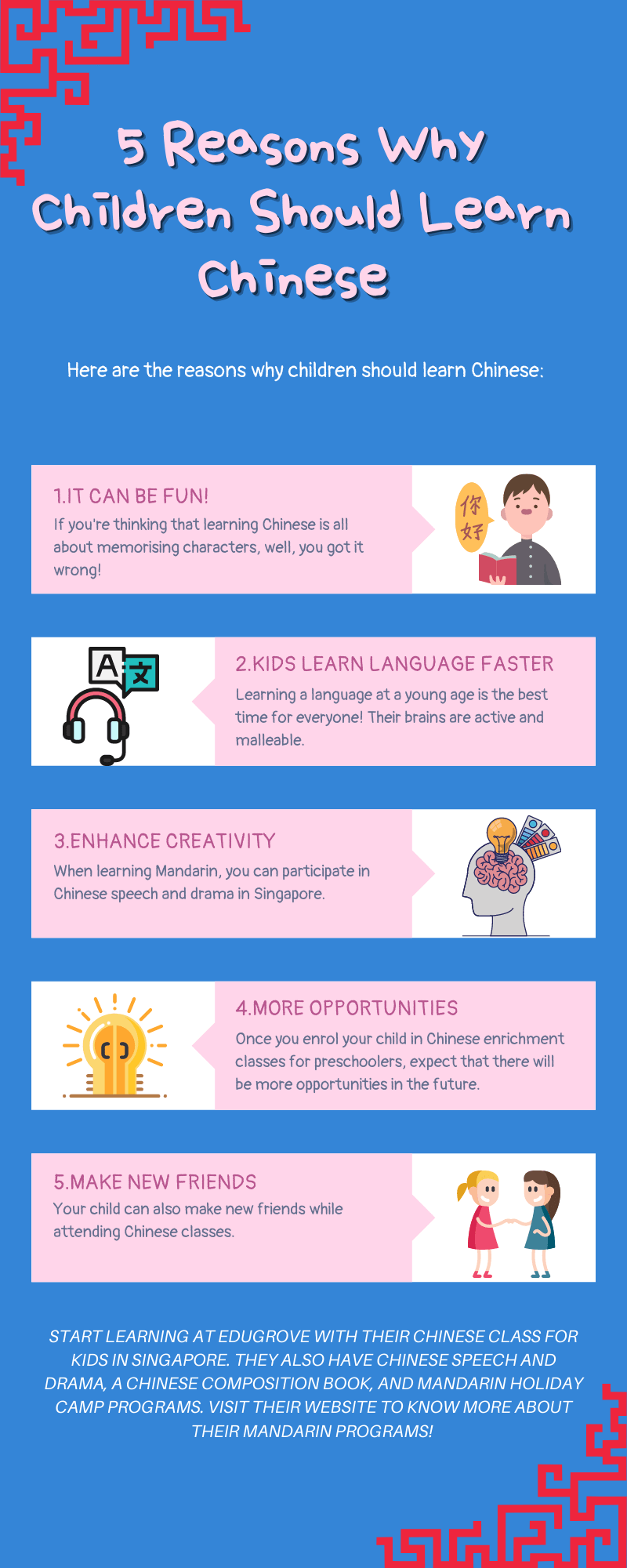
Career Opportunities and Professional Growth
Learning Chinese opens doors to numerous career opportunities, especially in industries like international business, trade, and diplomacy. China's growing global influence makes Mandarin a valuable skill for professionals. Here’s why:
- Competitive edge: Bilingual candidates stand out in job markets, particularly in multinational companies.
- Business expansion: Many corporations seek employees who can navigate Chinese markets and negotiate with local partners.
- Higher earning potential: Proficiency in Mandarin often leads to better-paying roles due to high demand.
Cultural Understanding and Travel Benefits
Mastering Chinese enhances cultural appreciation and makes travel in China more immersive. Understanding the language allows deeper connections with locals and access to authentic experiences. Key advantages include:
See Also7 kinds of tone problems in Mandarin and what to do about them- Deeper interactions: Communicating directly with native speakers fosters meaningful exchanges.
- Navigating with ease: Reading signs, menus, and public transport becomes effortless.
- Exploring traditions: Grasping the language unlocks insights into Chinese history, literature, and customs.
Cognitive and Academic Advantages
Studying Chinese boosts brain function and academic performance. The complexity of Mandarin characters and tones sharpens mental agility. Notable benefits:
- Memory improvement: Learning characters strengthens recall and pattern recognition.
- Multitasking skills: Switching between tones and scripts enhances cognitive flexibility.
- Academic performance: Bilingualism is linked to better problem-solving and creativity.
Access to a Growing Global Market
China's economy is a global powerhouse, making Mandarin essential for entrepreneurs and investors. Proficiency in the language facilitates market access and networking. Key points:
- Market insights: Understanding local trends and consumer behavior is easier.
- Networking: Building relationships with Chinese clients or partners becomes seamless.
- Investment opportunities: Navigating regulations and business practices is more efficient.
Technological and Digital Influence
China leads in technology and innovation, making Mandarin valuable in tech-related fields. From e-commerce to AI, language skills provide an edge. Highlights include:
See AlsoHow To Use Rhetorical Language Structures In Chinese- Tech trends: Staying updated on advancements from Chinese giants like Alibaba or Huawei.
- Digital content: Accessing untapped resources like apps, forums, and research papers.
- Collaboration: Partnering with Chinese tech professionals on global projects.
Does learning Chinese make you better at math?

The Connection Between Chinese Language and Math Skills
Learning Chinese may indirectly improve math skills due to the structure of the language. Research suggests that the way numbers are represented in Chinese is more logical, which could aid numerical understanding.
- Number words in Chinese are shorter and more consistent, making mental calculations faster.
- The base-10 system is more transparent in Chinese, helping children grasp place value earlier.
- Studies show Chinese-speaking children often outperform peers in early arithmetic.
Does Chinese Grammar Enhance Logical Thinking?
The grammatical structure of Chinese may promote logical reasoning, a key component of math. Its lack of verb conjugations and tenses simplifies pattern recognition.
- Chinese relies on context rather than complex grammar rules, training the brain to identify patterns.
- The tonal nature of the language may improve auditory processing, useful for problem-solving.
- Learning characters involves memorization and spatial awareness, skills transferable to math.
Cultural Factors: Education and Math Performance
Cultural emphasis on education in Chinese-speaking regions may explain higher math performance, not just the language itself.
- Strong focus on rote memorization and practice in Chinese schools.
- Parental involvement and high expectations in academic achievement.
- Early exposure to abacus training, which enhances mental calculation skills.
Neuroscientific Evidence: Brain Benefits of Bilingualism
Learning Chinese as a second language may enhance cognitive flexibility, which supports mathematical reasoning.
- Bilingual individuals often show improved executive function, aiding complex problem-solving.
- Studies link language switching to better multitasking, useful in math.
- Chinese character recognition activates visual-spatial regions of the brain, also used in geometry.
Limitations: Is Chinese Alone Enough to Boost Math Skills?
While Chinese may offer advantages, math proficiency depends on multiple factors beyond language.
- Individual aptitude and interest in math play a significant role.
- Quality of math instruction is more critical than language alone.
- Practice and application of concepts are essential for mastery.
Is it more useful to learn traditional or simplified Chinese?
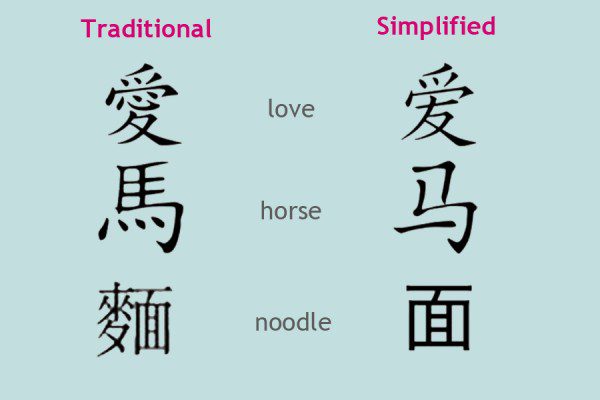
Which Version of Chinese is More Widely Spoken?
The choice between traditional and simplified Chinese depends on where you plan to use the language. Simplified Chinese is the official script in mainland China, Singapore, and Malaysia, making it more widely spoken globally. However, traditional Chinese remains dominant in Taiwan, Hong Kong, and Macau.
- Simplified Chinese is used by over 1 billion people in mainland China.
- Traditional Chinese is still prevalent in media and literature in Taiwan and Hong Kong.
- Overseas Chinese communities may use either script depending on their origins.
Which Script is Easier to Learn for Beginners?
Simplified Chinese has fewer strokes and is generally considered easier for beginners. However, traditional Chinese retains more etymological clues, which can help in understanding character meanings.
- Simplified characters reduce writing time and memorization effort.
- Traditional characters provide deeper insights into historical and cultural context.
- Learners aiming for speed may prefer simplified, while those interested in classical texts may choose traditional.
Which Script is More Useful for Business and Travel?
If your goal is business or travel, simplified Chinese is more practical for mainland China, while traditional Chinese is essential for Taiwan and Hong Kong.
- Most international companies operating in China use simplified characters.
- Taiwan’s tech industry often requires knowledge of traditional characters.
- Tourist materials in Hong Kong and Macau are primarily in traditional script.
Does Learning One Script Help with Understanding the Other?
Yes, learning one script provides a foundation for recognizing the other. Many simplified characters are derived from traditional characters, so transitioning between them becomes easier with experience.
- Around 30% of simplified characters differ significantly from traditional.
- Exposure to both scripts improves overall literacy in Chinese.
- Bilingual materials can help bridge the gap between the two systems.
Which Script is Better for Academic or Cultural Studies?
For academic research or cultural studies, traditional Chinese is often necessary since classical literature and historical documents use this script.
- Most pre-20th century texts are written in traditional characters.
- Linguistics and sinology programs frequently require traditional script knowledge.
- Art, calligraphy, and philosophy often reference traditional forms.
Is English or Chinese more useful?
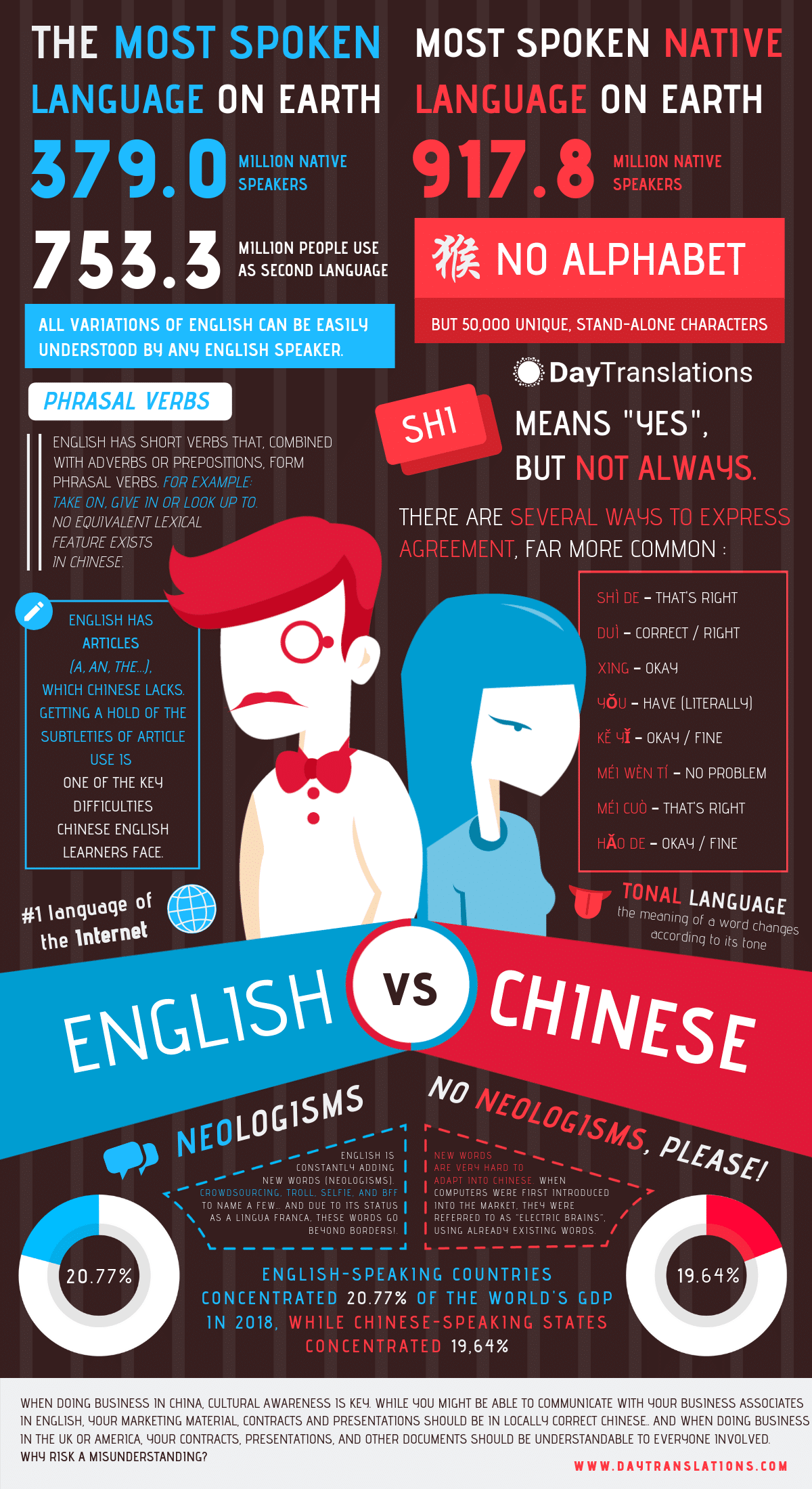
Global Usage and Influence
English is the most widely spoken language globally, serving as the primary or secondary language in over 60 countries. It is the dominant language in business, science, and aviation. Chinese, specifically Mandarin, has the most native speakers but is concentrated in fewer regions.
- English is the official language of international organizations like the UN and WTO.
- Mandarin is essential for engaging with China's growing economy.
- English dominates digital content, with over 60% of websites in English.
Economic Opportunities
English opens doors to multinational companies and global markets, while Chinese is critical for trade with China, the world's second-largest economy.
- English is the lingua franca of global finance (e.g., Wall Street, London Stock Exchange).
- Chinese proficiency is valuable for industries like manufacturing and e-commerce.
- Bilingual professionals in English and Chinese command higher salaries.
Cultural and Educational Impact
English provides access to a vast array of literature, films, and academic research. Chinese offers insights into one of the oldest civilizations and its cultural exports.
- English is the primary language of top universities (e.g., Harvard, Oxford).
- Chinese learners gain access to classical texts and modern media.
- English dominates scientific publications (over 80% of journals).
Technological and Digital Reach
English is the default language of coding, software, and tech innovation. Chinese is growing in tech due to China's advancements in AI and 5G.
- English is used in programming languages (e.g., Python, JavaScript).
- Chinese tech giants (e.g., Alibaba, Huawei) require Mandarin for collaboration.
- English dominates social media platforms like Twitter and LinkedIn.
Travel and Communication
English is the most useful language for travelers, spoken in most tourist destinations. Chinese is beneficial for travel within Asia and Chinese-speaking communities.
- English is the default language for international tourism.
- Chinese is useful in countries like Singapore and Malaysia.
- English is the primary language for airline communication and safety instructions.
Frequently Asked Questions (FAQ)
Will learning only in Chinese accelerate my language progress?
Immersion in a Chinese-only environment can significantly boost your learning by forcing you to think and respond in the target language. This method eliminates reliance on your native tongue, helping you develop fluency and natural comprehension faster. However, beginners might find it overwhelming without foundational vocabulary or grammar explanations in their first language. Balancing immersion with structured guidance often yields the best results.
What are the potential drawbacks of a Chinese-only rule for learners?
A strict Chinese-only policy can create frustration, especially for early-stage learners who lack the tools to express complex thoughts. Without occasional translations or explanations, misunderstandings may solidify into incorrect habits. Additionally, some learners might feel discouraged if they struggle to communicate basic needs or ideas. Supplementing with bilingual resources at key moments can prevent these pitfalls while maintaining immersion benefits.
How does a Chinese-only approach affect vocabulary acquisition?
Learning exclusively in Chinese encourages contextual understanding, helping you grasp words through real-life usage rather than translations. This strengthens recall and helps avoid direct translation pitfalls. However, abstract or nuanced terms might require clarification in another language to ensure accuracy. Combining immersive practice with targeted vocabulary explanations can optimize retention and precision.
Is a Chinese-only rule suitable for all proficiency levels?
While advanced learners thrive in a Chinese-only setting, beginners or intermediate students may need scaffolding to build confidence. For lower levels, gradual immersion—starting with bilingual support and transitioning to full Chinese—works better than an abrupt shift. Tailoring the approach to individual comfort levels and goals ensures steady progress without unnecessary stress.
Leave a Reply
Related Posts