
Best AI-Powered Chatbot Apps to Help You Learn Chinese

Learning Chinese can be a challenging yet rewarding journey, and AI-powered chatbot apps are revolutionizing the way learners practice and improve their skills. These innovative tools offer real-time conversations, personalized feedback, and interactive exercises to make mastering Mandarin more engaging and effective. Whether you're a beginner or an advanced learner, AI chatbots provide an immersive experience that mimics natural dialogue, helping you build vocabulary, refine pronunciation, and grasp grammar effortlessly. In this article, we explore the best AI-powered chatbot apps designed to support your Chinese learning journey, highlighting their unique features and how they can accelerate your progress. Discover the perfect digital companion to enhance your language skills today.
Best AI-Powered Chatbot Apps to Help You Learn Chinese
1. Duolingo: Gamified Learning with AI Chatbots
Duolingo is a popular language-learning app that uses AI-powered chatbots to simulate real conversations. Its interactive exercises help users practice Mandarin Chinese in a fun, game-like environment. The chatbot adapts to your skill level, offering personalized feedback to improve vocabulary, grammar, and pronunciation.
| Feature | Description |
|---|---|
| AI Chatbot | Simulates natural conversations in Chinese |
| Gamification | Uses rewards and streaks to motivate learners |
| Adaptive Learning | Adjusts difficulty based on user progress |
2. HelloTalk: Language Exchange with Native Speakers
HelloTalk connects learners with native Chinese speakers through an AI-enhanced chat interface. Users can practice writing and speaking while receiving corrections from real people or AI tools. The app also includes translation and pronunciation aids to facilitate smoother conversations.
See Also5 Measure Words Explained| Feature | Description |
|---|---|
| Native Speaker Chat | Direct messaging with Chinese speakers |
| AI Corrections | Instant grammar and vocabulary fixes |
| Voice Messages | Practice speaking and listening skills |
3. LingoDeer: Structured Lessons with AI Assistance
LingoDeer offers structured courses for learning Chinese, supported by AI chatbots that provide contextual practice. The app focuses on building a strong foundation in grammar and sentence structure, making it ideal for beginners and intermediate learners.
| Feature | Description |
|---|---|
| Structured Curriculum | Step-by-step lessons for Mandarin |
| AI-Powered Exercises | Interactive drills with instant feedback |
| Offline Mode | Learn without an internet connection |
4. Mondly: Conversational Practice with AI
Mondly uses AI-driven chatbots to teach Chinese through real-life dialogues. The app emphasizes practical conversations, helping users quickly adapt to everyday scenarios like ordering food or asking for directions.
| Feature | Description |
|---|---|
| Daily Conversations | Practice common phrases and dialogues |
| Speech Recognition | Improves pronunciation accuracy |
| Augmented Reality (AR) | Interactive 3D lessons for immersive learning |
5. ChatGPT: Customized Learning with Advanced AI
ChatGPT can be a powerful tool for learning Chinese by generating personalized exercises, translations, and explanations. Users can engage in text-based conversations to practice vocabulary, grammar, and cultural nuances.
See AlsoDuolingo Guides – Learn Languages Effectively with Duolingo| Feature | Description |
|---|---|
| Customized Practice | Tailored conversations based on user input |
| Instant Translations | Quickly translates words and sentences |
| Cultural Insights | Explains idioms and contextual usage |
What is the best AI for learning Chinese?

Top AI Tools for Learning Chinese Efficiently
When it comes to learning Chinese, several AI-powered tools stand out for their effectiveness. These platforms leverage natural language processing (NLP) and adaptive learning to tailor lessons to your proficiency level.
- Duolingo: Uses gamification to teach vocabulary and grammar.
- HelloChinese: Focuses on speaking and listening with interactive exercises.
- Lingodeer: Offers structured courses for Mandarin, including writing practice.
Features to Look for in a Chinese Learning AI
The best AI for learning Chinese should include key features like speech recognition, personalized feedback, and cultural context.
See AlsoLearn Chinese by playing Mahjong (麻将, májiàng)- Speech Recognition: Helps improve pronunciation accuracy.
- Spaced Repetition: Reinforces vocabulary retention over time.
- Interactive Dialogues: Simulates real-life conversations.
How AI Personalizes Chinese Language Learning
AI-driven platforms adapt to your learning pace and preferences, making them ideal for mastering Mandarin.
- Adaptive Algorithms: Adjust difficulty based on performance.
- Progress Tracking: Monitors strengths and weaknesses.
- Customized Lessons: Focuses on areas needing improvement.
Free vs. Paid AI Tools for Learning Chinese
While free tools like Duolingo are accessible, paid options like Rosetta Stone offer deeper immersion.
- Free Tools: Great for beginners but lack advanced features.
- Paid Subscriptions: Provide comprehensive courses and tutor support.
- Trial Versions: Test premium features before committing.
Integrating AI with Traditional Chinese Learning Methods
Combining AI tools with traditional methods like textbooks or tutors enhances learning outcomes.
See Also10 Reasons to Learn Chinese- Supplemental Practice: Use AI for daily drills outside classes.
- Hybrid Learning: Blend AI feedback with human instruction.
- Cultural Immersion: Pair AI with media like Chinese films or podcasts.
What app is best for learning Chinese?
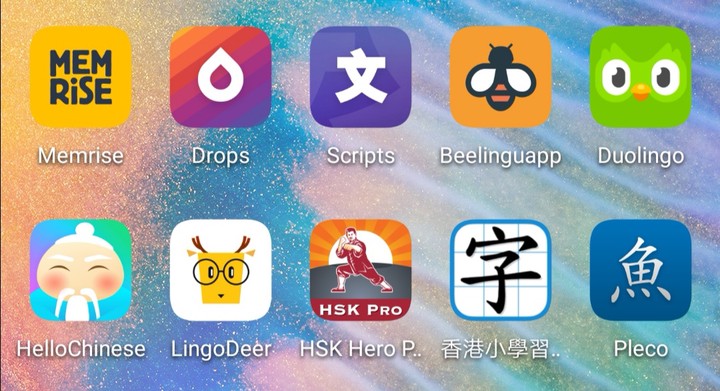
Best Overall App for Learning Chinese
When it comes to the best overall app for learning Chinese, HelloChinese stands out due to its interactive and structured approach. Here’s why:
- Gamified lessons make learning engaging and fun.
- Speech recognition helps improve pronunciation accuracy.
- Offline mode allows study without an internet connection.
Best App for Beginners in Chinese
For beginners, Duolingo is a great choice because of its simplicity and gradual progression. Key features include:
- Bite-sized lessons that focus on basic vocabulary and grammar.
- Daily reminders to keep learners consistent.
- Visual aids to reinforce memorization.
Best App for Advanced Chinese Learners
Advanced learners benefit from Pleco, a powerful dictionary and learning tool. Its advantages are:
- Comprehensive dictionary with example sentences.
- Flashcard system for custom vocabulary building.
- OCR feature to scan and translate text in real-time.
Best App for Learning Chinese Characters
For mastering Chinese characters, Skritter is highly recommended. It specializes in:
- Stroke-by-stroke writing practice for accurate character formation.
- Spaced repetition to enhance long-term retention.
- Customizable study decks tailored to individual progress.
Best App for Conversational Chinese Practice
To improve conversational skills, Tandem connects learners with native speakers. Highlights include:
- Language exchange with real-time messaging and calls.
- Correction feature to learn from mistakes.
- Cultural insights through direct interaction.
What is China's top AI chatbots?

Top AI Chatbots Developed in China
China has developed several advanced AI chatbots that compete globally. Here are the most prominent ones:
- ERNIE Bot by Baidu: A large-scale AI model with multimodal capabilities, excelling in language understanding and generation.
- Tongyi Qianwen by Alibaba: A powerful chatbot integrated into Alibaba's ecosystem for business and consumer applications.
- Hunyuan by Tencent: Focused on enterprise solutions, offering high-precision natural language processing.
Key Features of China's Leading AI Chatbots
Chinese AI chatbots stand out due to their unique features:
- Multilingual Support: Many support Chinese, English, and other languages for global usability.
- Deep Integration: Seamlessly work with e-commerce, cloud services, and social platforms.
- Advanced NLP: Leverage cutting-edge natural language processing for accurate responses.
Industries Utilizing China's AI Chatbots
These AI chatbots are transforming multiple sectors:
- E-commerce: Enhancing customer service and personalized recommendations.
- Healthcare: Assisting in diagnostics and patient interactions.
- Finance: Automating customer support and fraud detection.
How China's AI Chatbots Compare Globally
Chinese AI chatbots compete with Western counterparts like ChatGPT:
- Localization: Better adapted for Chinese language and cultural nuances.
- Regulatory Compliance: Designed to meet China's strict data and content regulations.
- Innovation Pace: Rapid advancements due to heavy investment in AI research.
Future Trends for AI Chatbots in China
The evolution of AI chatbots in China is expected to focus on:
- Greater Personalization: Hyper-targeted user interactions based on behavior.
- Enhanced Multimodality: Combining text, voice, and image processing.
- Broader Adoption: Expanding into education, government, and smart cities.
Frequently Asked Questions (FAQ)
What are the best AI-powered chatbot apps for learning Chinese?
AI-powered chatbot apps have revolutionized language learning, especially for Mandarin Chinese. Some of the top choices include Duolingo, which uses gamification to teach vocabulary and grammar, and HelloChinese, designed specifically for Mandarin learners with interactive exercises. Another excellent option is Lingodeer, which offers structured lessons and real-life dialogue simulations. For more advanced learners, ChatGPT-based tutors like TalkPal or Mondly provide personalized conversational practice. These apps leverage natural language processing (NLP) to simulate real conversations, making learning engaging and effective.
How do AI chatbots improve Chinese language learning?
AI chatbots enhance Chinese learning by offering instant feedback, personalized lessons, and 24/7 accessibility. Unlike traditional methods, they adapt to the learner's pace, focusing on weak areas like tones, pronunciation, or grammar. Many apps use speech recognition to correct mistakes in real time, while others employ spaced repetition to reinforce vocabulary. Additionally, AI chatbots simulate real-world conversations, helping learners practice speaking and listening in a low-pressure environment. This interactive approach boosts retention and confidence faster than textbooks alone.
Are AI chatbot apps suitable for beginners learning Chinese?
Yes, AI chatbot apps are ideal for beginners because they break down complex concepts like Pinyin, characters, and tones into manageable steps. Apps like HelloChinese and Duolingo start with basic greetings and gradually introduce more advanced material. The interactive exercises and visual aids help beginners grasp foundational skills without feeling overwhelmed. Moreover, AI chatbots provide immediate corrections, preventing bad habits early on. For absolute beginners, choosing apps with English instructions and pronunciation guides is crucial for a smooth start.
Can AI chatbots replace human teachers for learning Chinese?
While AI chatbots are powerful tools, they cannot fully replace human teachers. They excel in vocabulary drills, grammar practice, and conversational simulations, but lack the nuanced feedback a teacher provides on intonation, cultural context, or advanced syntax. However, they are excellent supplements, offering affordable and flexible practice outside the classroom. For comprehensive learning, combining AI apps with live tutoring or language exchange partners yields the best results. AI is ideal for self-study, but human interaction remains vital for mastering fluency and cultural nuances.
Leave a Reply
Related Posts