
Bite-sized learning isn’t enough to learn Chinese

Learning Chinese is often seen as a monumental task, and many turn to bite-sized learning methods—short lessons, apps, or flashcards—to make it more manageable. While these tools offer convenience, they fall short in delivering the depth needed to truly master the language. Chinese requires a strong foundation in characters, tones, grammar, and cultural context, elements that fragmented learning struggles to provide. Without consistent practice, immersion, and structured study, progress remains superficial. This article explores why bite-sized learning alone isn’t enough to achieve fluency in Chinese and what more comprehensive approaches are necessary for meaningful, long-term success.
Why Bite-Sized Learning Falls Short for Mastering Chinese
The Complexity of Chinese Characters
Chinese characters (Hanzi) are not phonetic, meaning their pronunciation isn't directly tied to their written form. Unlike alphabetic languages, each character must be memorized individually, including its stroke order, radicals, and multiple meanings. Bite-sized lessons often oversimplify this process, leading to superficial recognition rather than deep understanding. For example, the character 好 (hǎo, meaning good) combines the radicals for woman (女) and child (子), a nuance rarely explored in short lessons.
| Character | Radicals | Strokes |
|---|---|---|
| 好 (hǎo) | 女 + 子 | 6 |
| 爱 (ài, love) | 爪 + 冖 + 友 | 10 |
Tonal Nuances Require Sustained Practice
Mandarin Chinese has four tones plus a neutral tone, which drastically alter word meanings. For instance, mā (妈, mother) versus mà (骂, scold). Bite-sized learning may introduce tones but lacks the repetition needed for muscle memory. Research shows that consistent auditory exposure over weeks is essential to distinguish tones accurately. A 5-minute daily lesson cannot replicate the immersion needed for tonal mastery.
See AlsoWhy spaced repetition software is uniquely well suited to learning Chinese characters| Pinyin | Tone | Meaning |
|---|---|---|
| mā | 1st (high flat) | Mother |
| mà | 4th (falling) | Scold |
Grammar Structures Demand Context
Chinese grammar relies heavily on particles (e.g., 了 for completed actions) and word order, which bite-sized lessons often isolate without context. For example, the sentence 我吃了饭 (Wǒ chī le fàn, I ate) requires understanding how 了 interacts with time markers. Micro-lessons may teach 了 in isolation but fail to show its use in narratives or questions, where exceptions abound.
| Particle | Function | Example |
|---|---|---|
| 了 (le) | Completed action | 我吃了 (I ate) |
| 的 (de) | Possession | 我的书 (My book) |
Cultural Idioms Resist Fragmentation
Chinese idioms (成语 chéngyǔ) like 对牛弹琴 (playing lute to a cow, meaning wasted effort) are deeply rooted in history. Bite-sized platforms might translate them literally but miss the cultural anecdotes behind them. For instance, 画蛇添足 (adding feet to a drawn snake) originates from a Warring States parable about unnecessary actions. Without context, learners memorize phrases but cannot apply them appropriately.
| Idiom | Literal Meaning | Actual Meaning |
|---|---|---|
| 对牛弹琴 | Play music to a cow | Wasted effort |
| 画蛇添足 | Draw legs on a snake | Overcomplicating |
Conversational Fluency Needs Real-Time Interaction
Chinese conversational norms involve rapid turn-taking and context-dependent honorifics (e.g., 您 vs. 你 for formal/informal you). Bite-sized apps simulate dialogues but cannot replicate the pressure of real-time exchanges. A study by Peking University found that learners need 100+ hours of spoken practice to handle basic social interactions—far beyond what fragmented lessons provide.
See AlsoThe tones in Mandarin are more important than you think| Scenario | Formal Phrase | Casual Phrase |
|---|---|---|
| Greeting | 您好 (Nín hǎo) | 你好 (Nǐ hǎo) |
| Thank you | 非常感谢 (Fēicháng gǎnxiè) | 谢谢 (Xièxie) |
How long does it realistically take to learn Chinese?
Factors That Influence the Time Required to Learn Chinese
The time it takes to learn Mandarin Chinese varies based on several key factors:
- Prior language experience: Knowing a tonal language like Vietnamese or having exposure to logographic systems (e.g., Japanese kanji) can accelerate learning.
- Study intensity: Full-time immersion programs (20+ hours/week) yield faster progress than casual study (1–5 hours/week).
- Learning methods: Structured classes, tutors, or apps like Anki for characters improve efficiency compared to self-study alone.
Proficiency Levels and Estimated Timeframes
Breaking down the CEFR framework for Chinese:
See AlsoReview: Mandarin Companion graded readers (Level 1)- Basic (A1–A2): 6–12 months for simple conversations and recognizing 300–500 characters.
- Intermediate (B1–B2): 2–3 years to discuss abstract topics and read newspapers with 2,000+ characters.
- Advanced (C1+): 5+ years for near-native fluency, including idioms and specialized vocabulary.
The Role of Character Mastery in Learning Speed
Hanzi (Chinese characters) are a major hurdle:
- Recognition vs. writing: Learning to recognize 1,000 characters takes ~1 year; writing them adds significant time.
- Radicals and mnemonics: Understanding character components speeds up retention.
- Frequency prioritization: Focusing on the top 1,000 most-used characters covers ~90% of written texts.
Impact of Immersion on Learning Efficiency
Immersion environments drastically reduce learning time:
- Study abroad: 6 months in China can equal 2 years of classroom study elsewhere.
- Daily practice: Conversing with natives or using media (e.g., dramas, podcasts) reinforces retention.
- Cultural context: Exposure to idioms and gestures deepens understanding beyond textbooks.
Common Challenges That Extend the Learning Timeline
Obstacles that slow progress in Mandarin:
- Tones: Mispronouncing mā (mother) vs. mà (scold) can cause confusion.
- Grammar nuances: Particles like 了 (le) for tense require repeated practice.
- Dialect variations: Regional accents (e.g., Cantonese vs. Mandarin) may complicate listening skills.
Is 1 year enough to learn Chinese?
Can You Become Fluent in Chinese in 1 Year?
Becoming fluent in Chinese within a year is highly challenging but possible with intensive study and immersion. Mandarin Chinese is classified as a Category IV language by the U.S. Foreign Service Institute, meaning it requires significant time and effort. Here are key factors:
- Daily practice: Dedicate at least 2–3 hours daily to focused study.
- Immersion: Surround yourself with the language through media, conversations, or living in a Chinese-speaking environment.
- Structured learning: Follow a curriculum covering grammar, vocabulary, and pronunciation systematically.
What Level of Chinese Can You Reach in 1 Year?
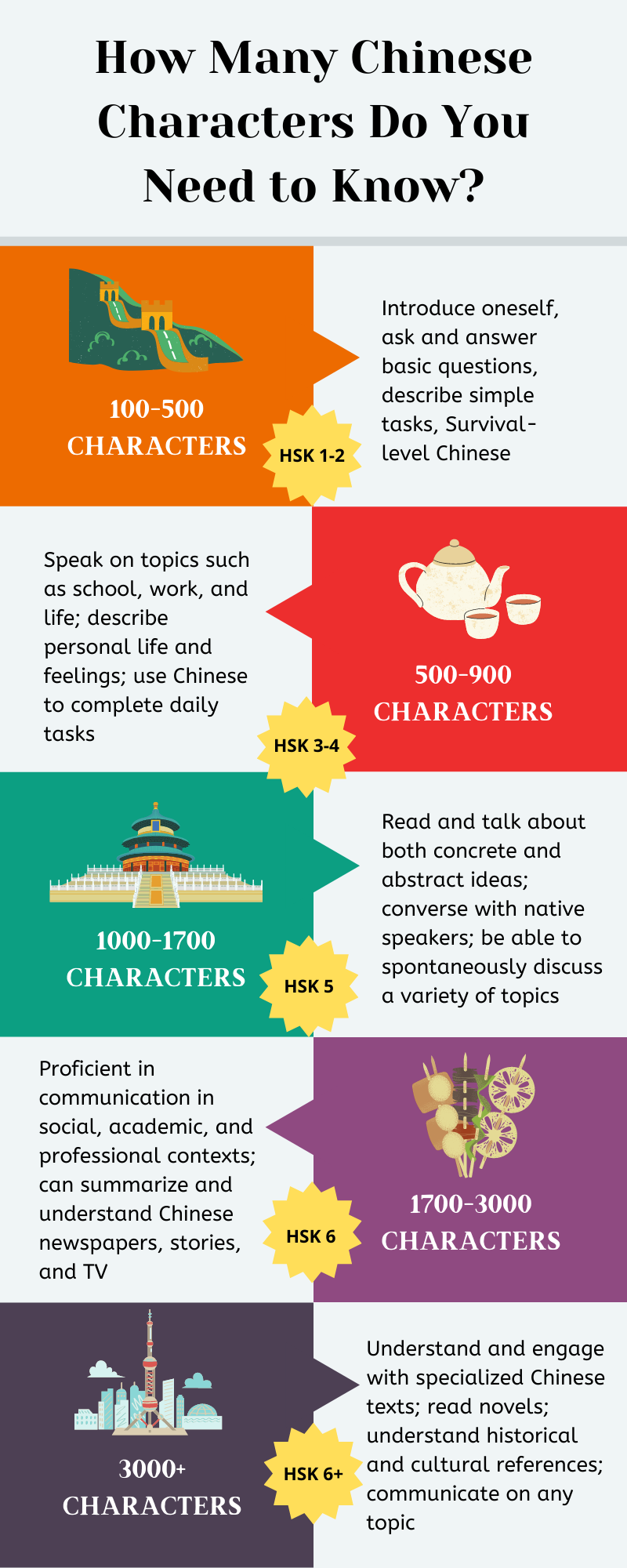
In one year, a dedicated learner can achieve intermediate proficiency (HSK 3–4). However, fluency depends on prior experience and learning methods. Key milestones include:
- Basic conversations: Ordering food, asking for directions, and simple social interactions.
- Reading/Writing: Recognizing ~1,000 characters and understanding short texts.
- Listening: Comprehending slow, clear speech in everyday contexts.
How Many Hours Are Needed to Learn Chinese in 1 Year?
The U.S. FSI estimates 2,200 class hours are needed for fluency. For self-study, aim for:
- 500–600 hours: Reach basic conversational level (HSK 2–3).
- 1,000+ hours: Achieve intermediate proficiency (HSK 4).
- Consistency: Spread study sessions evenly across the year.
What Are the Best Methods to Learn Chinese Quickly?
To maximize progress in a year, combine these effective strategies:
- Spaced repetition: Use apps like Anki for vocabulary retention.
- Language exchange: Practice with native speakers via platforms like Tandem.
- Structured courses: Enroll in programs like HSK prep or online tutors.
What Challenges Will You Face Learning Chinese in 1 Year?
Learners often encounter these obstacles when rushing Mandarin:
- Tones: Mastering four tones plus neutral tones requires constant practice.
- Characters: Memorizing thousands of unique symbols is time-consuming.
- Grammar differences: Adapting to topic-comment structures and measure words.
Why is Chinese the easiest language to learn?

Simple Grammar Structure
One reason Chinese is considered easy to learn is its grammar simplicity. Unlike many languages, Chinese lacks verb conjugations, tenses, and grammatical gender, making sentence construction straightforward.
- No verb conjugations: Verbs remain the same regardless of subject or tense.
- No plural forms: Nouns stay unchanged; context indicates quantity.
- Fixed word order: Sentences follow a predictable Subject-Verb-Object (SVO) pattern.
No Alphabet to Memorize
Unlike languages with complex alphabets, Chinese characters represent whole words or ideas, eliminating the need to learn an extensive letter system.
- Characters are logograms: Each symbol conveys meaning directly.
- Pinyin system: Uses the Roman alphabet for pronunciation guidance.
- Reduced spelling errors: No phonetic spelling inconsistencies.
Consistent Pronunciation Rules
Mandarin Chinese has a relatively small set of syllables, and tones, though challenging, follow consistent patterns.
- Four main tones: Once mastered, pronunciation becomes predictable.
- No silent letters: Every part of a word is pronounced.
- Pinyin assistance: Helps learners associate sounds with characters.
Logical Character Formation
Many Chinese characters are built from radicals, which provide clues to meaning and pronunciation.
- Radicals indicate categories: Like water (氵) in characters related to liquids.
- Phonetic components: Some characters hint at pronunciation.
- Visual learning: Pictographic characters (e.g., 山 for mountain) aid memory.
High Frequency of Useful Words
Basic Chinese vocabulary covers a wide range of daily communication with fewer words compared to other languages.
- Common characters recur: Learning 1,000 characters covers ~90% of written texts.
- Compound word logic: New words often combine familiar characters (e.g., 电话 = electric + talk = phone).
- Contextual flexibility: Single words adapt to multiple meanings.
Am I too old to learn Chinese?

Is There an Ideal Age to Learn Chinese?
No, there is no ideal age to learn Chinese. While children may absorb languages faster, adults have advantages like cognitive maturity and self-discipline.
- Adults can leverage prior language-learning experience.
- Motivation plays a bigger role than age in success.
- Older learners often have better problem-solving skills for grammar.
How Does Age Affect Chinese Language Learning?
Age influences learning speed but not ultimate proficiency. Older learners may take longer but can still achieve fluency with consistent effort.
- Pronunciation may be harder but improves with practice.
- Memory techniques can compensate for slower recall.
- Older learners often focus better on complex characters.
What Are the Challenges for Older Learners of Chinese?
While age isn’t a barrier, older learners face unique challenges, such as tonal mastery and character memorization.
- Tones require more repetition for adult ears.
- Character retention benefits from spaced repetition.
- Busy schedules may limit practice time.
What Advantages Do Older Learners Have?
Adults bring strategic thinking and real-world context to learning, making Chinese more practical.
- Better grasp of grammar patterns through logic.
- Ability to connect vocabulary to professional or personal interests.
- Higher consistency due to self-directed learning.
How Can Older Learners Optimize Their Chinese Study?
Success depends on effective methods, not youth. Tailored approaches help overcome age-related hurdles.
- Use mnemonics for character memorization.
- Focus on high-frequency words first.
- Incorporate listening practice daily for tonal acclimation.
Frequently Asked Questions (FAQ)
Why is bite-sized learning insufficient for mastering Chinese?
Bite-sized learning often focuses on short, isolated lessons that may not provide the depth needed for a complex language like Chinese. While it can help with basic vocabulary or simple phrases, Chinese requires understanding characters, tones, grammar, and cultural context—elements that demand sustained practice and immersion. Without structured progression and longer study sessions, learners may struggle to retain or apply knowledge effectively.
Can bite-sized learning help with Chinese pronunciation and tones?
While bite-sized lessons can introduce tones and pronunciation, they often fall short in providing enough repetition and feedback. Chinese tones are subtle and critical for meaning, and mastering them requires consistent practice and real-time correction. Short sessions may not offer the immersive listening or speaking drills needed to develop an ear for tones or the muscle memory for accurate pronunciation.
How does bite-sized learning affect long-term retention of Chinese characters?
Chinese characters are logographic and require repetition, context, and active recall to memorize. Bite-sized learning may introduce characters in small chunks, but without spaced repetition and meaningful application (e.g., reading sentences or writing), learners often forget them quickly. Long-term retention demands dedicated study time and engagement with the language beyond fragmented lessons.
Is bite-sized learning suitable for achieving fluency in Chinese?
Fluency in Chinese requires comprehensive exposure to the language, including listening, speaking, reading, and writing. While bite-sized learning can supplement study, it lacks the depth and continuity needed for fluency. Achieving proficiency involves extended conversations, cultural understanding, and complex grammar mastery—goals that are difficult to reach through sporadic, short sessions alone.
Leave a Reply
Related Posts