
How to create mnemonics for general or abstract character components

Creating mnemonics for general or abstract character components can significantly enhance memory retention, especially when learning complex writing systems like Chinese or Japanese. Unlike concrete elements, abstract components lack obvious visual or conceptual connections, making them harder to recall. The key lies in transforming these components into vivid, relatable associations. By leveraging imagination, wordplay, and personal relevance, even the most obscure symbols can become memorable. This article explores practical techniques to craft effective mnemonics, from breaking down components to linking them with familiar objects or stories. Whether for language learning or cognitive training, mastering this skill unlocks faster and more durable memorization of abstract characters.
- How to Create Effective Mnemonics for General or Abstract Character Components
- How do I create mnemonics?
- What mnemonics include?
-
Frequently Asked Questions (FAQ)
- What are mnemonics, and why are they useful for learning abstract character components?
- How can I create effective mnemonics for abstract or general character components?
- What are some common challenges when creating mnemonics for abstract components, and how can I overcome them?
- Can mnemonics be used for learning multiple languages with abstract characters, like Chinese and Japanese?
How to Create Effective Mnemonics for General or Abstract Character Components
Creating mnemonics for general or abstract character components can be challenging since they lack concrete imagery. However, with the right techniques, you can turn these components into memorable mental hooks. Below, we explore strategies to craft effective mnemonics for such elements.
1. Understanding Abstract vs. Concrete Components
Abstract components, like symbols or strokes, don’t have obvious real-world counterparts. To create mnemonics:
- Break down the component into smaller, recognizable parts.
- Associate each part with a familiar object or concept.
- Exaggerate the imagery to make it more memorable.
For example, the abstract component ⺌ (three dots) could be visualized as raindrops or stars.
| Abstract Component | Mnemonic Idea |
|---|---|
| ⺌ (Three dots) | Raindrops falling |
| 丿 (Slash stroke) | A knife cutting |
2. Using Personification for Abstract Elements
Assigning human traits to abstract components makes them easier to recall.
- Example: The component 冫 (two strokes) could be imagined as ice skates gliding.
- Action-based mnemonics work well—e.g., 勹 (wrapping stroke) as arms hugging.
| Component | Personification |
|---|---|
| 冫 (Ice radical) | Skating penguin |
| 勹 (Wrapping stroke) | A hug |
3. Leveraging Sound-Alike Associations
If a component resembles a sound or word, use it:
- The 宀 (roof radical) sounds like my, so imagine my house's roof.
- Puns and homophones strengthen recall.
| Component | Sound-Alike |
|---|---|
| 宀 (Roof) | My roof |
| 乛 (Hook stroke) | Hook (literal) |
4. Creating Story-Based Mnemonics
Weave abstract components into a mini-story:
- Combine multiple components into a narrative.
- Example: 口 (mouth) + 木 (tree) = A mouth eating a tree.
| Components | Story Snippet |
|---|---|
| 口 + 木 | Monster eating a tree |
| 氵 + 目 | Tears (water + eyes) |
5. Reinforcing Mnemonics with Spaced Repetition
To ensure long-term retention:
- Review mnemonics at increasing intervals.
- Use flashcards (digital or physical) for practice.
| Technique | Tool |
|---|---|
| Spaced repetition | Anki flashcards |
| Active recall | Quiz-style practice |
How do I create mnemonics?
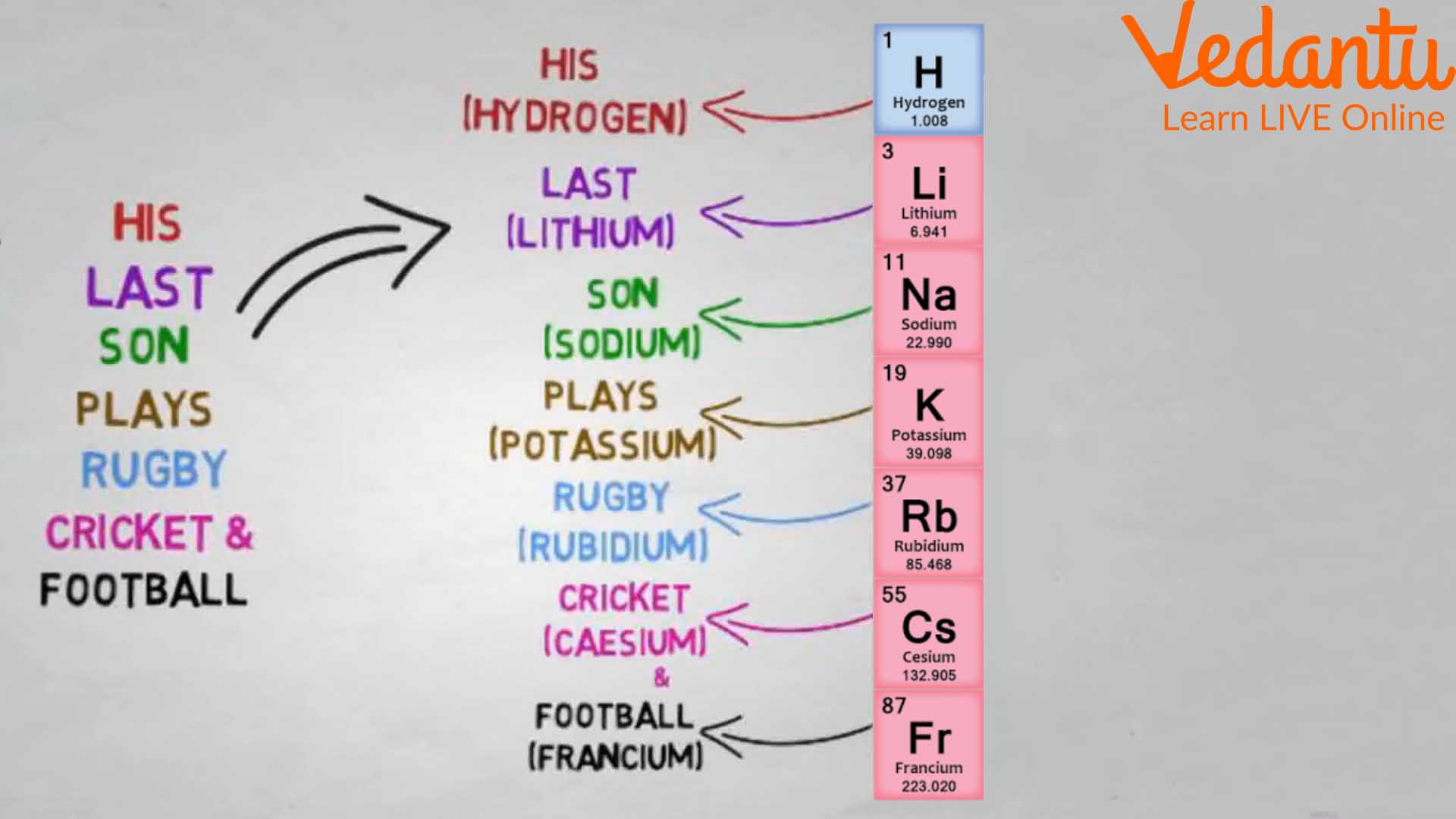
What Are Mnemonics and Why Use Them?
Mnemonics are memory aids that help you recall information more easily by associating it with familiar patterns, phrases, or images. They are useful for learning complex data, such as vocabulary, formulas, or sequences. Here’s why they work:
- Simplify information: Break down complex data into manageable chunks.
- Leverage associations: Connect new knowledge to existing memories.
- Engage multiple senses: Use visuals, sounds, or emotions to reinforce retention.
Types of Mnemonic Techniques
There are several mnemonic techniques, each suited for different kinds of information. Here are the most effective ones:
- Acronyms: Create a word from the first letters of items (e.g., HOMES for the Great Lakes).
- Rhymes and songs: Turn information into catchy rhymes or melodies.
- Visual imagery: Associate facts with vivid mental pictures.
Steps to Create Effective Mnemonics
To build a strong mnemonic, follow these steps:
- Identify key information: Focus on the most critical details to remember.
- Choose a technique: Pick a method (acronym, rhyme, etc.) that fits the data.
- Make it personal: Use humor, emotions, or familiar references to enhance recall.
Examples of Mnemonics in Practice
Here are real-world mnemonic examples to inspire your own creations:
- Order of planets: My Very Educated Mother Just Served Us Noodles (Mercury, Venus, Earth, Mars, Jupiter, Saturn, Uranus, Neptune).
- Musical notes: Every Good Boy Does Fine (E, G, B, D, F for treble clef lines).
- Math formulas: SOHCAHTOA for trigonometric ratios.
Tips to Improve Mnemonic Retention
To ensure your mnemonics stick, apply these strategies:
- Repeat regularly: Reinforce the mnemonic through spaced repetition.
- Combine techniques: Use visuals alongside acronyms for better recall.
- Test yourself: Quiz your memory to identify weak spots.
What mnemonics include?
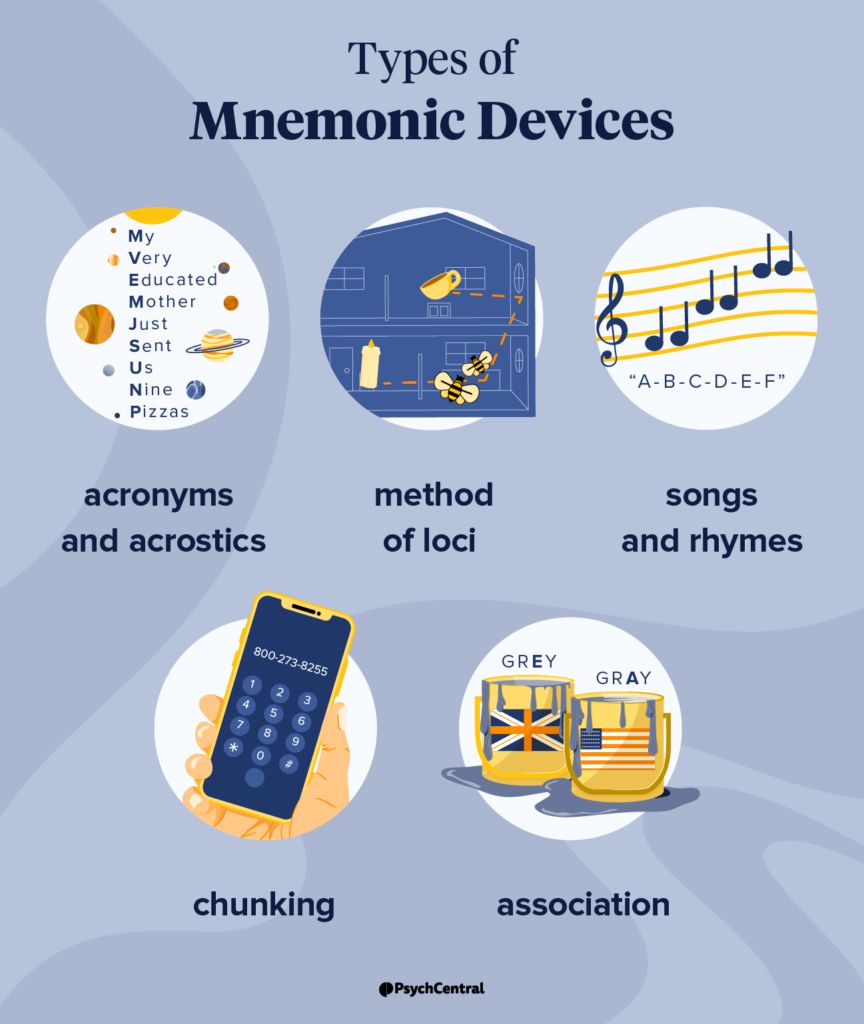
Types of Mnemonic Devices
Mnemonic devices are techniques designed to improve memory retention. They include various methods tailored to different learning styles and needs. Here are some common types:
- Acronyms: Short forms created from the first letters of a series of words (e.g., HOMES for the Great Lakes).
- Acrostics: Sentences where the first letter of each word represents a concept (e.g., My Very Educated Mother Just Served Us Noodles for planet order).
- Rhymes and songs: Using rhythmic patterns or melodies to recall information (e.g., Thirty days hath September...).
Visual Mnemonics
Visual mnemonics rely on imagery to enhance memory. These techniques are particularly useful for spatial or pictorial learners. Key examples include:
- Method of loci: Associating information with specific locations in a familiar place.
- Peg-word system: Linking numbers to visual objects (e.g., one-bun, two-shoe).
- Mind maps: Diagrams that organize concepts hierarchically around a central idea.
Auditory Mnemonics
Auditory mnemonics use sound patterns to aid recall. These are ideal for auditory learners. Common forms include:
- Chunking: Breaking information into smaller, pronounceable units (e.g., phone numbers).
- Alliteration: Repetition of initial sounds (e.g., Peter Piper picked a peck).
- Jingles: Catchy tunes or slogans (e.g., advertising jingles for brand recall).
Kinesthetic Mnemonics
Kinesthetic mnemonics involve physical movement or tactile associations. These work well for hands-on learners. Examples are:
- Gesture-based learning: Using hand motions to represent concepts (e.g., sign language).
- Writing repetition: Rewriting notes to reinforce memory.
- Object association: Touching objects while memorizing related information.
Contextual Mnemonics
Contextual mnemonics tie information to specific scenarios or stories. These help with complex data retention. Notable methods include:
- Narrative chaining: Creating a story linking unrelated items.
- Keyword method: Associating foreign words with similar-sounding native words.
- Symbolism: Using metaphors or analogies to explain abstract concepts.
Frequently Asked Questions (FAQ)
What are mnemonics, and why are they useful for learning abstract character components?
Mnemonics are memory aids that help learners retain and recall complex information by associating it with simpler, more familiar concepts. When dealing with abstract character components, such as those in languages like Chinese or Japanese, mnemonics can transform seemingly arbitrary symbols into meaningful, memorable stories or images. For example, the Chinese character for tree (木) can be visualized as an actual tree with branches and roots. This technique leverages the brain's natural ability to remember visual and narrative cues more effectively than rote memorization.
How can I create effective mnemonics for abstract or general character components?
To craft effective mnemonics, start by breaking down the character into its smaller components or strokes. Then, associate each part with something concrete or familiar. For instance, if a component resembles a table, imagine a story where the table plays a role. The key is to make the association vivid, exaggerated, or humorous—this enhances recall. Additionally, linking the mnemonic to the character's meaning or pronunciation can reinforce learning. Consistency and personal relevance are crucial; the more the mnemonic resonates with you, the better it will work.
What are some common challenges when creating mnemonics for abstract components, and how can I overcome them?
One major challenge is dealing with highly abstract components that lack obvious visual or conceptual connections. To overcome this, try using metaphors or analogies—for example, a squiggly line could represent a snake or a river. Another issue is overloading mnemonics with too many details, which can confuse rather than aid memory. Keep mnemonics simple and focused. Lastly, if a mnemonic isn't working, don't hesitate to revise or replace it. Flexibility and experimentation are key to finding what works best for you.
Can mnemonics be used for learning multiple languages with abstract characters, like Chinese and Japanese?
Absolutely! Mnemonics are versatile and can be adapted to any language with abstract or logographic characters, such as Chinese Hanzi or Japanese Kanji. While the components may differ between languages, the underlying principle remains the same: create vivid, associative links to aid memory. For example, the Chinese character 人 (person) and its Japanese Kanji counterpart can both be memorized by picturing a stick figure walking. The cross-application of mnemonics can even help bilingual learners by highlighting similarities or differences between the languages.
Leave a Reply
Related Posts